2026-07-21
Breast Augmentation Side Effect Terms: Let's Clarify Them All at Once!
This article from Melon Plastic Surgery clarifies common breast augmentation side effect terms like capsular contracture, rippling, implant displacement, and animation, providing essential information for those considering surgery.
Breast Augmentation Side Effect Terms: Let's Clarify Them All at Once!
Hello, this is Melon Plastic Surgery.
Today, we're going to provide a comprehensive overview of breast augmentation side effect terms.
If you're curious about these terms, please pay close attention!

Capsular Contracture
Capsular contracture is a phenomenon where the fibrous capsule surrounding the implant becomes thick and hard. It's a common concern regarding side effects in breast surgery. When an implant is placed in the breast, our body recognizes it as a foreign object. To protect itself from this foreign object, the body forms a thin capsule around the implant. This is a natural self-protective mechanism.
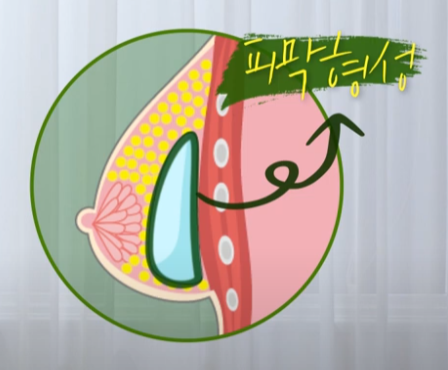
Why is capsular contracture considered a side effect? If the capsule becomes thick and hard, it can pull on surrounding tissues or inhibit the tissues that should stretch, ultimately leading to breast shape deformation or implant displacement. Not all causes of capsular contracture are clearly understood, but the only identified cause is smoking. Quitting smoking is the best thing a patient can do, which is why we recommend abstaining from smoking after surgery.
Rippling
Rippling, as the name suggests, refers to the phenomenon where the breast implant appears to have a wave-like or ripple-like texture. The occurrence of rippling can be determined by factors such as the wrinkles on the implant's surface or the thickness of the muscle and soft tissues covering the implant.
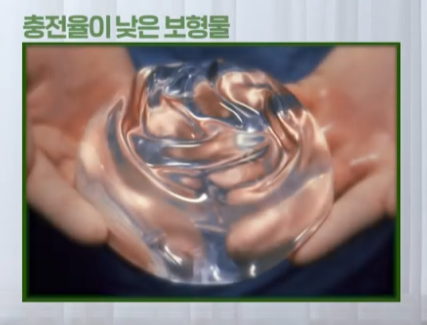
For example, implants with a low fill rate may feel very soft to the touch, but they can have deeper wrinkles on their surface. If an implant with surface wrinkles is covered by thin skin, the likelihood of those wrinkles showing through increases. However, a low fill rate doesn't automatically mean rippling will occur. The decision involves a highly specialized and multi-faceted process, from choosing the right implant for you to achieving the desired feel and shape, making thorough consultation with a specialist crucial.
Bottoming Out and Side Displacement
Bottoming out refers to the phenomenon where the breast implant appears to have dropped too low. Side displacement is when the breast implant appears to have shifted to the side.
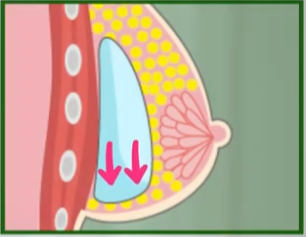
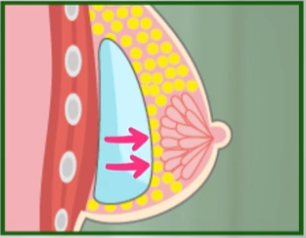
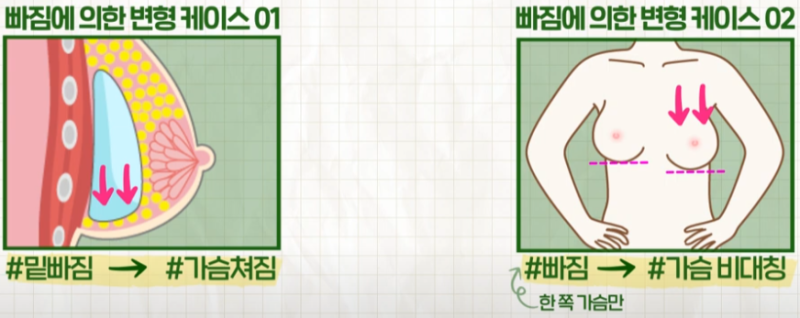
When bottoming out occurs, the breasts may appear saggy, and if it happens on only one side, the breasts may look asymmetrical. Generally, when displacement occurs, a visible deformation is noticeable. Preventing bottoming out and side displacement relies heavily on the surgeon's experience. Key preventive measures include selecting an implant appropriate for your body, ensuring a meticulous surgical process, diligent post-operative care, and wearing corrective shapewear and sports bras!
Animation
What is ‘animation’ in breast augmentation? It refers to the phenomenon where the movement of the breast implant can be felt when the pectoral muscles are flexed. This can be a temporary occurrence after surgery or it can be persistent.
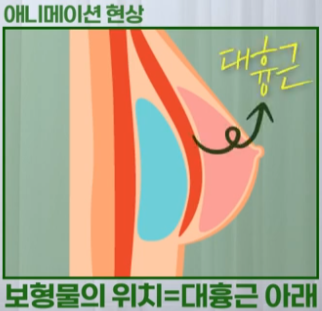
The animation phenomenon occurs because the implant is located beneath the pectoral muscle, and it is not considered a side effect. It is more common in individuals who regularly exercise or have professions that involve using their pectoral muscles. A higher muscle mass increases the likelihood of animation, while a lower muscle mass decreases it.




Frequently Asked Questions
Why does capsular contracture occur after breast augmentation?
Capsular contracture is a phenomenon where the fibrous capsule surrounding the implant becomes thick and hard. Our body recognizes the implant as a foreign object and forms a capsule to protect it; if this capsule becomes excessively thick, it can cause breast shape deformation or implant displacement. Smoking is one of the only known causes.
What is rippling and what causes it?
Rippling refers to the phenomenon where the breast implant inside the breast appears wavy. Its occurrence depends on the wrinkles on the implant's surface and the thickness of the muscle and soft tissues covering the implant. Rippling is more likely to be visible when implants with a low fill rate are covered by thin skin.
How can I prevent bottoming out or side displacement after breast augmentation?
Bottoming out or side displacement is when the implant moves out of its correct position, and to prevent this, the surgeon's experience is crucial. Additionally, selecting an implant suitable for your body, meticulous surgical execution, thorough post-operative care, and wearing corrective underwear and sports bras can help.
Is animation deformity a side effect of breast augmentation?
No, animation deformity is not a side effect of breast augmentation. It is a phenomenon where the movement of the implant inside the breast is felt when the chest muscles are tensed, occurring because the implant is located beneath the chest muscle. It primarily appears in individuals who exercise regularly or have a large muscle mass.
Are there ways to prevent capsular contracture?
Yes, one way to prevent capsular contracture is to stop smoking. Smoking is one of the only known causes of capsular contracture, so we recommend quitting smoking after surgery.