2026-07-21
Gangnam Station Breast Augmentation Side Effects? Key Points from Female Doctor Kim Ju-won
Dr. Kim Ju-won discusses common breast augmentation side effects, their causes, and management to help alleviate patient concerns.
Gangnam Station Breast Augmentation Side Effects? Key Points from Female Doctor Kim Ju-won
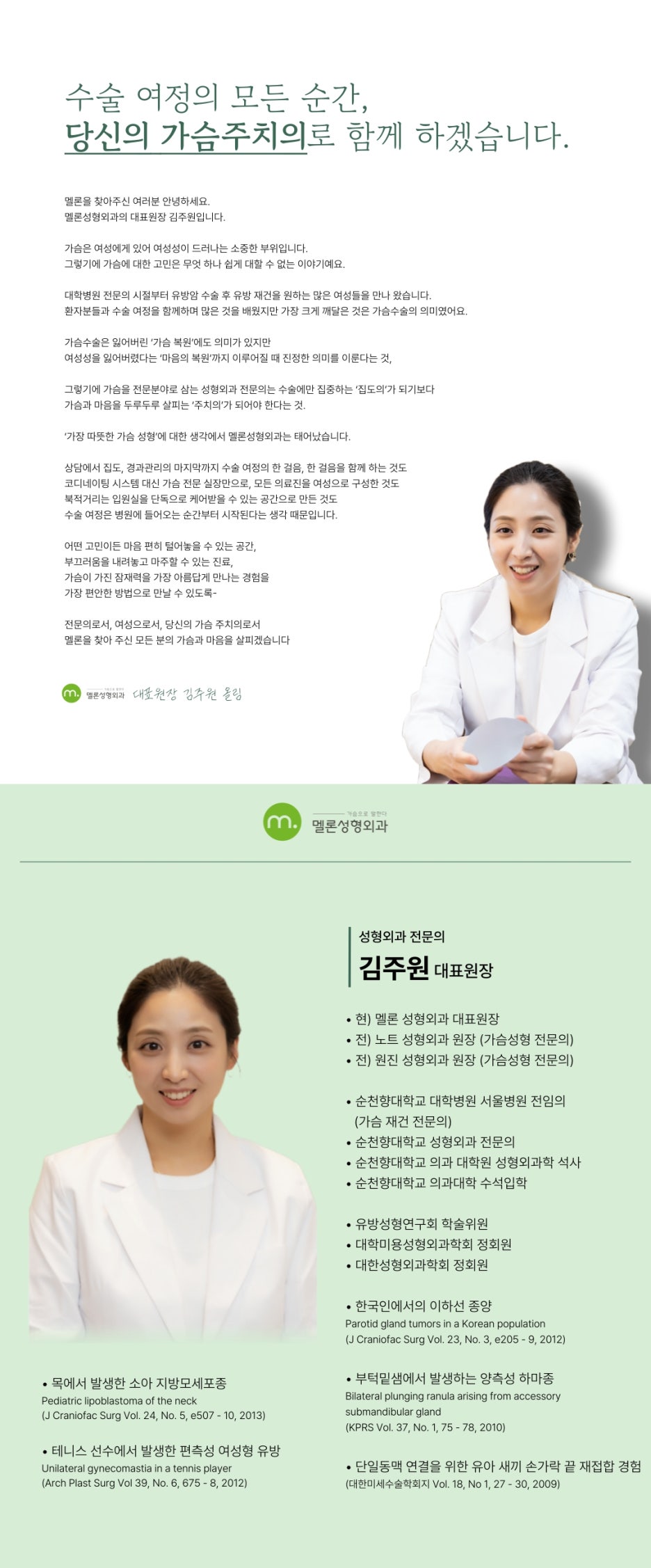
Hello. I am Dr. Kim Ju-won, the chief director of Melon Plastic Surgery, your breast specialist who can share your concerns.
When considering breast augmentation, the biggest concern is side effects.
While many side effects appear in searches, the medical terms are unfamiliar, and there's no guarantee you'll avoid them, so it's common for your mind to waver even after scheduling surgery.
‘I've heard implants can harden, will I be okay?’‘What if the pain continues after surgery?’
Today, I will discuss potential side effects after breast augmentation, their causes, and recovery and management methods that can help prevent them. I hope today's discussion can alleviate some of your worries about side effects.
Breast Augmentation Side Effects | Why do side effects occur?
Even if breast augmentation is performed using the same surgical method, the results can vary depending on post-operative care and individual constitution. Side effects can occur due to imprecise surgery and insufficient care during recovery, but some are unpredictable.
During breast augmentation, an implant is inserted into the breast. Our body recognizes this sudden foreign object as an intruder and forms a protective membrane around the implant to separate it from the body.
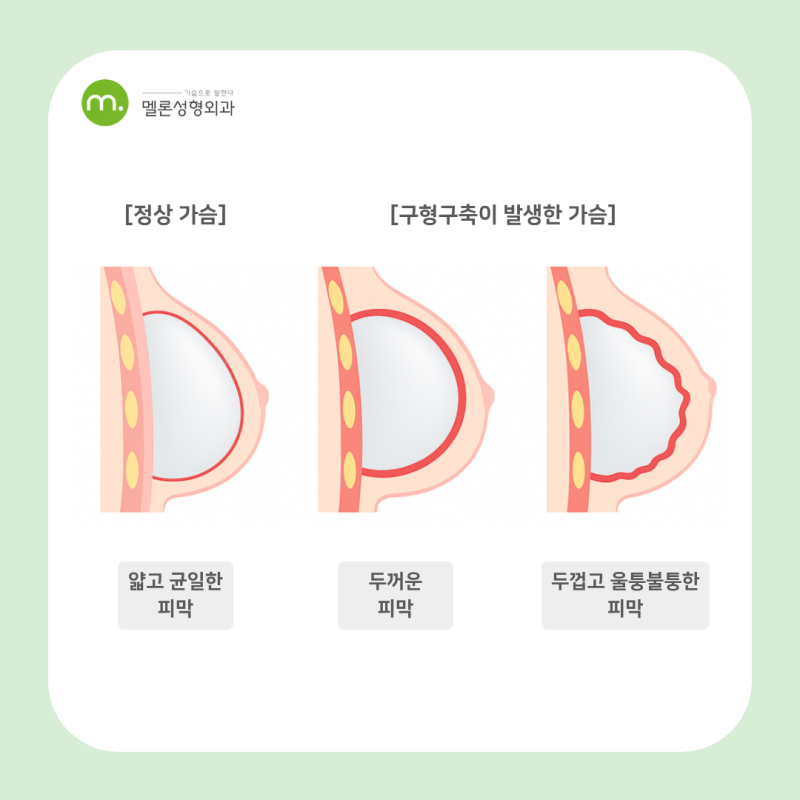
This protective membrane is called a capsule. Capsule formation is a natural phenomenon, and if it settles normally, it maintains stable results, but rarely, it can form thickly or rigidly.
This phenomenon, where the capsule forms abnormally thick and the breast becomes firm, is called ‘capsular contracture,’ which is a common side effect of breast augmentation.
Currently, smoking is the only proven factor causing capsular contracture, so consistently taking prescribed medication to prevent capsular contracture after surgery and refraining from smoking for a while helps in prevention.
The early post-operative period is when the implant settles and the operated breast recovers. Excessive movements that use the chest muscles or applying pressure to the operated breast can affect the implant's settling.
Pain generally does not persist. After surgery, the nipples become sensitive, so you might feel a tingling sensation in the nipples or incision area for some time, but this naturally disappears with time.
After Breast Augmentation | 3 Common Side Effects
‘If my breasts become hard, is it capsular contracture?’‘Can I tell immediately if an implant ruptures?’
These two are common questions I hear during consultations.
Capsular contracture, in particular, is a side effect many people worry about. As mentioned above, capsular contracture is a phenomenon where the capsule around the implant forms abnormally, causing the breast to harden, and in severe cases, shape deformation can occur.
With preventive medication and regular check-ups, most cases can be managed early, but it is best to refrain from smoking, the only known cause of capsular contracture, for a while.
Secondly, inflammation and infection can occur. Although rare, inflammation and infection are not symptoms included in side effects. They can appear due to bacterial infection during surgery, bleeding from pressure, or insufficient hygiene management.
If abnormal fever above 38 degrees Celsius, swelling to the extent that one breast becomes excessively large, or severe pain occurs, it is crucial to contact the surgical institution immediately and check your condition. Most cases are treated with antibiotics, but in severe cases, implant replacement may be necessary.
Third is implant rupture or damage. Rupture or damage can occur due to strong pressure or trauma immediately after surgery, or due to the aging of implants from long ago.
From the perspective of the breast, the post-operative period is a time for recovery immediately after surgery. It is best to avoid actions like massaging or applying pressure and focus on recovery according to your doctor's guidance.
A long time ago, saline implants were used for breast surgery. Saline implants can age in terms of durability. Therefore, if they rupture, the size noticeably decreases, making it obvious.
If you feel any changes in breast shape or the implant, you should check the implant's condition with an ultrasound and, if necessary, undergo implant replacement surgery.
The three points mentioned above are frequently cited as side effects in breast augmentation, but they are not without preventive measures. By carefully managing according to the institution's and doctor's guidance and undergoing regular check-ups, you can maintain beautiful breasts stably.
After Breast Augmentation | Management Methods to Reduce Side Effects
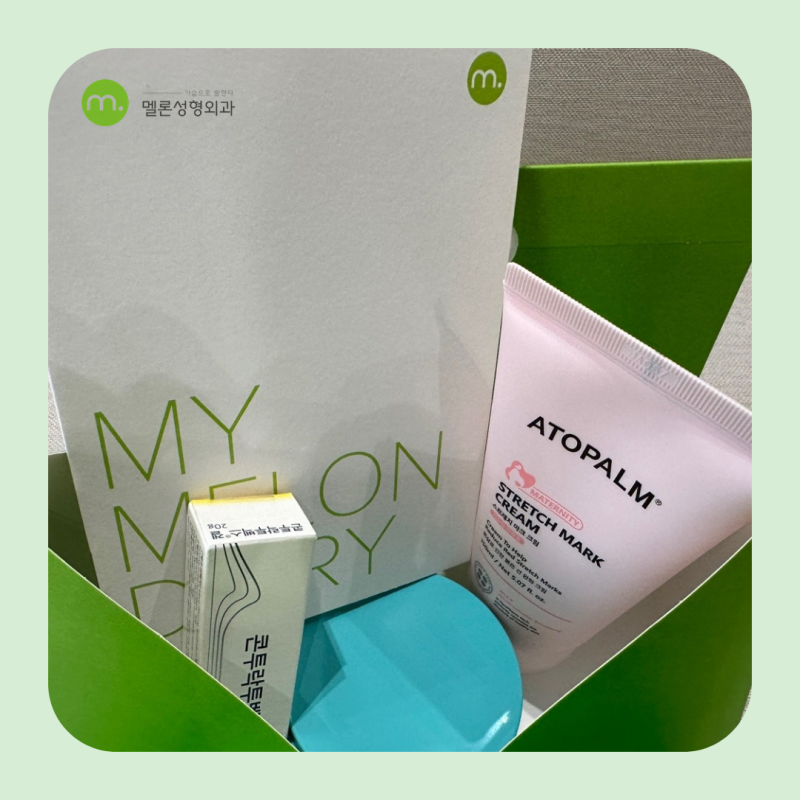
The first two weeks immediately after surgery are a critical period for recovery.
During this time, avoid movements that significantly use the chest muscles or habits like lying on your side. Sufficient hydration, maintaining body temperature, and rest can lead to a more stable recovery.
The compression garment provided by the institution immediately after surgery helps the implant settle stably, but if it feels too tight, it might impede blood flow, so it is necessary to consult and adjust with your doctor immediately.
The post-operative recovery period is as important as pre-operative communication and surgery, which is why Melon Plastic Surgery cares for the post-operative period through the ‘Safe & Secure Melon Care Program.’
This includes systematic post-operative care that progresses in stages for swelling, touch, heat sensation in the operated breast, irritated skin, and scars, but also includes my direct confirmation of progress as the chief director, and an emergency call system for handling emergency situations at night.
This is because only careful, multi-faceted management between the institution, the doctor, and the patient can prevent side effects and help maintain natural and beautiful breasts for a long time.
Breast Augmentation | Reasons to Choose a Female Doctor
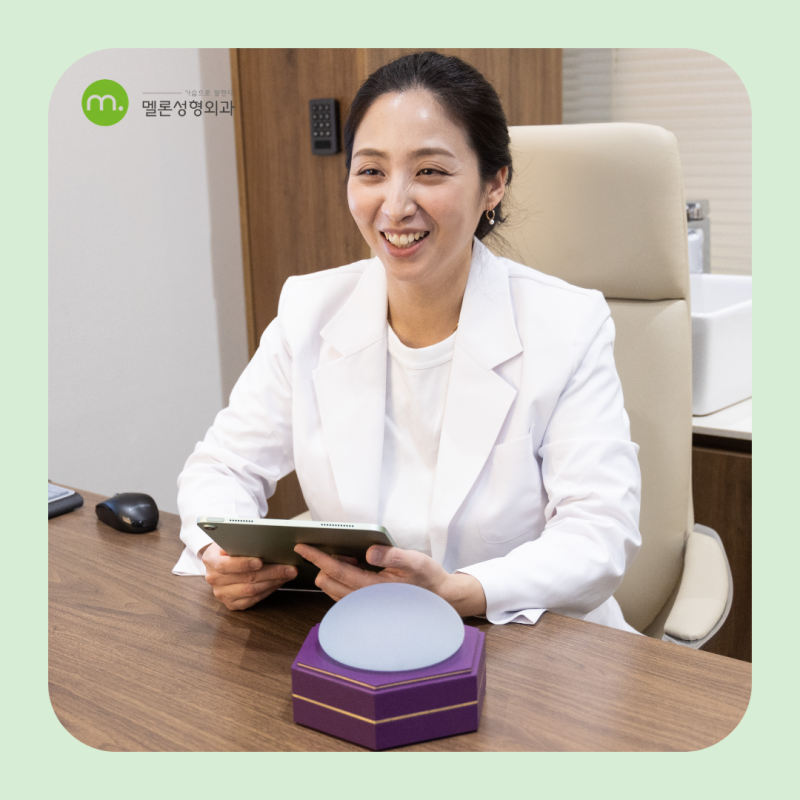
Breast augmentation is an area of plastic surgery where many people seek female doctors. While it might seem like a gender issue, empathy in the communication process plays a large part.
This is because patients can relatively easily open up about their feelings before and after surgery, such as why they want breast surgery and what changes they desire as a woman, and I, as a listener, can empathize in detail based on my own experiences as a woman.
Female doctors often approach surgery with the thought, ‘If this were my body, my breasts.’ The same reason applies to choosing incision locations to minimize visible scars and considering changes in sensation. The advantage of a female doctor is the ability to provide a more delicate approach.
However, when deciding on surgery, I recommend looking at surgical experience and know-how, post-operative care system, and the communication process, rather than just choosing based on the doctor's gender.
Based on the female doctor's meticulousness and medical expertise in breasts, I will accompany each individual's ‘breast journey’ from pre-operative communication to surgery and post-operative recovery.
Thank you.
Frequently Asked Questions
What are the most common side effects after breast augmentation?
The most commonly reported side effect after breast augmentation is capsular contracture. Capsular contracture refers to the phenomenon where the capsule formed around the implant becomes abnormally thick and hard, causing the breast to feel firm.
How can I prevent capsular contracture?
To prevent capsular contracture, it is important to refrain from smoking and consistently take preventive medications prescribed after surgery. Additionally, in the early stages after surgery, avoid excessive movement or pressure to allow the implant to settle stably.
How long does pain last after breast augmentation?
Generally, the pain does not continue indefinitely. You may feel a tingling sensation in your nipples or incision sites for some time after surgery, but this usually disappears naturally over time.
How can I tell if an implant has ruptured?
If saline implants were used a long time ago, a rupture can be identified by a noticeable decrease in breast size. If you notice changes in breast shape or the implant, you should confirm the condition with an ultrasound examination.
What should I do if I suspect inflammation or infection after surgery?
If you experience abnormal fever above 38 degrees Celsius, disproportionate swelling in one breast, or excessive pain, you should immediately contact the institution where you had the surgery to check your condition. Most cases are treated with antibiotics, but severe cases may require implant replacement.
When is the critical period for recovery after breast augmentation?
The first two weeks immediately after surgery are the critical period for recovery. During this time, avoid movements that significantly engage the chest muscles and habits like sleeping on your side. Adequate hydration, maintaining body temperature, and rest are helpful for stable recovery.