2026-07-21
Gangnam Station Breast Augmentation | Post-Surgery Scar Management and Scar Ointment Recommendations
Learn about breast augmentation scar management, including different incision types, post-operative care, and recommended scar ointments to help you achieve beautiful results.
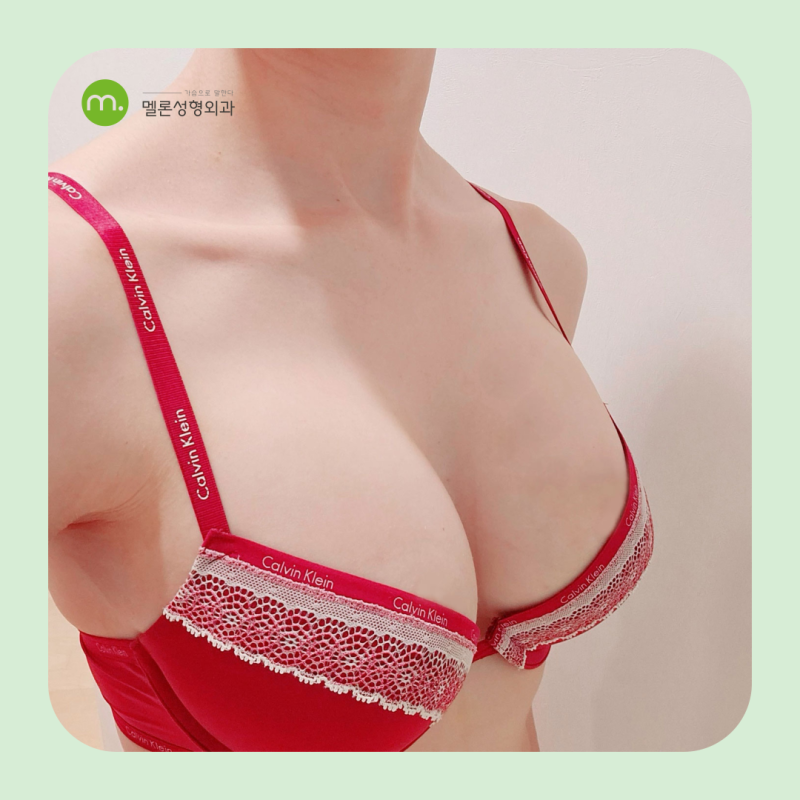
Gangnam Station Breast Augmentation | Post-Surgery Scar Management and Scar Ointment Recommendations
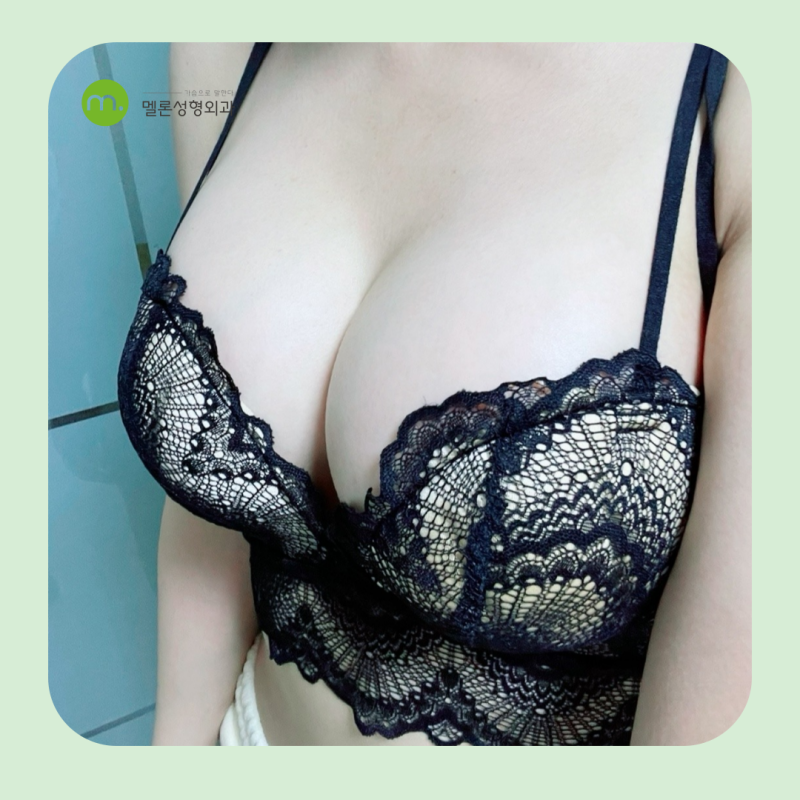
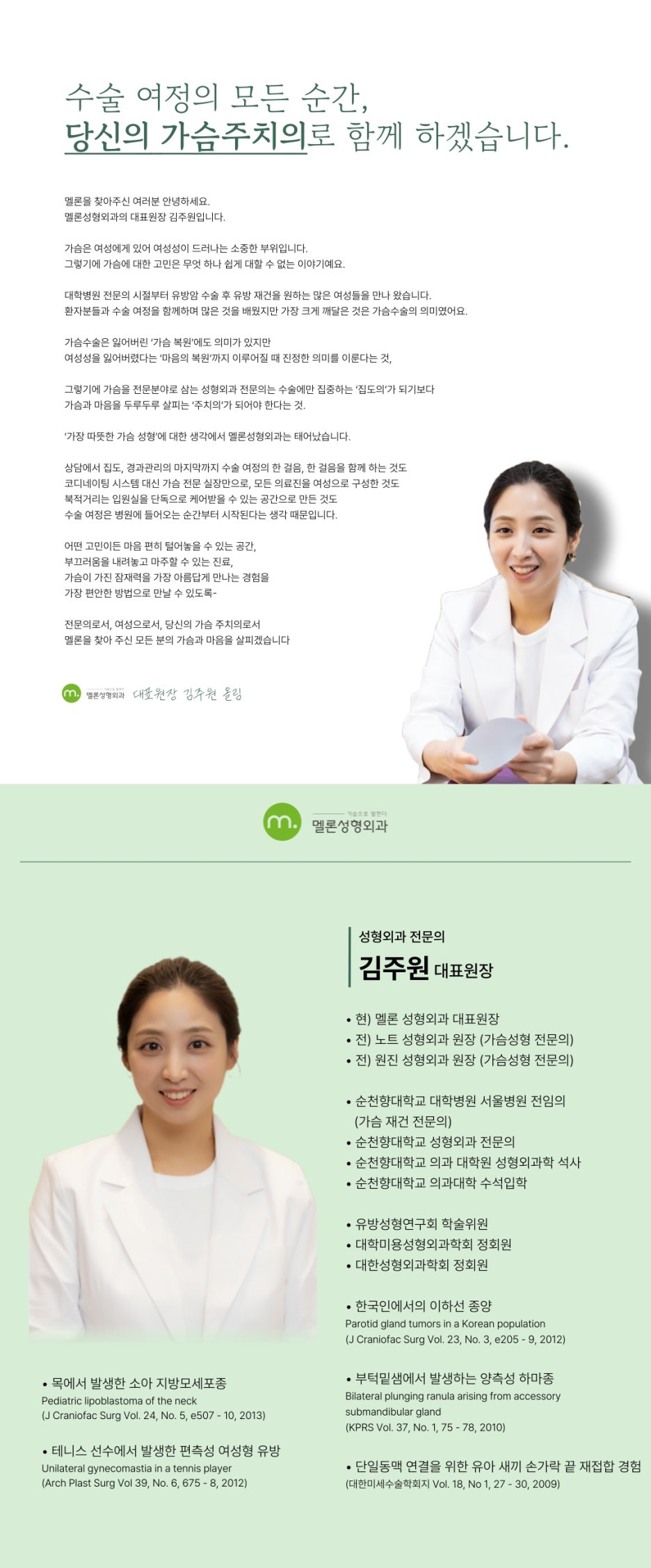
Hello. I am Dr. Kim Ju-won, the chief representative director of Melon Plastic Surgery, your breast specialist.
Many people ask about how much scarring will remain at the incision site and how to manage scars after breast augmentation.
‘Will an armpit incision scar last longer?’ ‘Will the surgical scar be visible if I wear short clothes?’
Today, I would like to discuss breast augmentation and scars, including the characteristics of scars by incision site, post-operative management methods for each period, and which scar ointments are recommended.
I hope today's discussion helps with your pre-surgery scar concerns and post-surgery scar management.
Breast Augmentation | Scar Characteristics by Incision Site
There are three incision methods for breast augmentation: axillary incision, inframammary fold incision, and periareolar incision.
The most commonly performed incision methods are the axillary incision (armpit incision), which uses the crease line in the armpit, and the inframammary fold incision (IMF incision), which uses the breast crease. The recovery process can vary depending on the incision site.
An axillary incision follows the crease line in the armpit. During surgery, the incised skin is bonded with ergonomic glue, so there are no stitches, and the scar is naturally hidden within the skin folds.
The advantage is that the scar is barely visible when wearing everyday clothes like short-sleeved shirts or sleeveless tops after recovery.
The inframammary fold incision is made along the crease line located at the bottom of the breast. It is suitable for implant insertion and has the advantage of naturally maintaining the breast's line and shape after surgery.
Since the inframammary fold incision involves suturing, one or two stitches may remain immediately after surgery, but the scar is hidden in the inframammary fold, often making it inconspicuous even when wearing short tops.
A periareolar incision is performed by suturing along the circular border of the nipple. Due to the difference in skin tone between the nipple and breast skin, the scar tends to be less noticeable than expected.
While the incision method largely depends on your preference, it is best to make a careful decision through thorough communication with your doctor, considering your natural breast shape, skin thickness, and daily habits.
Breast Augmentation | Does the scar change over time?
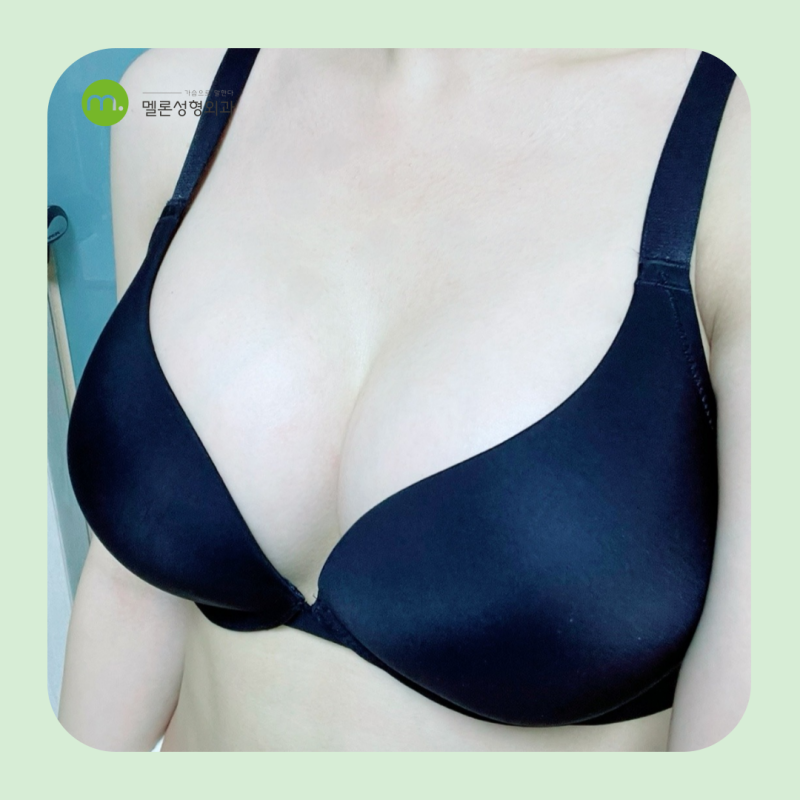
The prognosis of the scar does not change with the season. However, it might feel different because summer is a humid and sweaty season, which can make the surgical site more bothersome.
‘When and how long should I apply scar ointment?’ ‘Will the scar darken if I have surgery in the summer?’
Scars are not affected by the weather. Satisfactory outcomes largely depend on how diligently you manage them. The key to management is consistently combining hospital care with self-care, following your medical team's guidance.
For the first week after surgery, be careful not to let water touch the incision site. Although it varies by individual progress, it is generally good to apply scar ointment diligently starting about a month later.
Combining ointment with laser treatment can also show improved results in terms of scar appearance. Regular check-ups to periodically assess the scar's condition are also an important part of management.
Melon Plastic Surgery | Scar Care for Beautiful Breasts
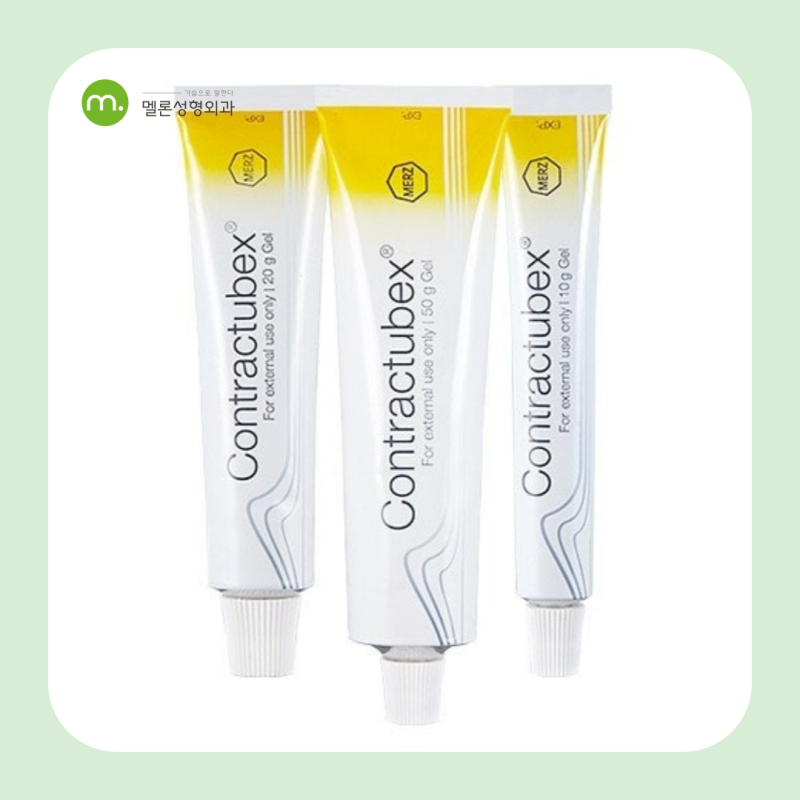
Melon Plastic Surgery provides a ‘Melon Box’ containing self-care products to all breast augmentation patients and also offers in-hospital recovery care.
The Melon Box contains Contractubex Gel scar ointment, which helps prevent the incision site from scarring. While it varies by individual, we generally recommend applying scar ointment once or twice a day.
For in-hospital recovery care, we perform QURAS scar laser treatment and scar injections, which help remodel deep skin tissues and promote scar tissue regeneration.
Combining scar ointment with laser treatment can help alleviate some of the scar's hyperpigmentation and promote skin regeneration, helping to fade the scar.
Breast augmentation is not just about changing size. It requires a long-term perspective, including breast shape, contour, and scar management. Therefore, meticulous care is needed not only for the surgery itself but also for communication and post-operative management.
Melon Plastic Surgery's recovery program, which cares for post-surgical scars, is meticulously designed based on this philosophy.
Melon Plastic Surgery | The Beginning of Confident Breast Transformation

Some people hesitate to undergo breast augmentation due to scar concerns, but in fact, the prognosis of scars is more about how consistently and diligently they are managed rather than the incision method or timing.
At Melon Plastic Surgery, we ensure the beautiful long-term transformation of breasts through various care methods, including post-surgical scar ointment, laser, and injections.
Scars are an area where improved results can be seen if management methods are followed consistently over the long term.
Melon Plastic Surgery wholeheartedly accompanies everyone considering breast concerns on their ‘breast journey’ from pre-surgical consultation to surgery, recovery, and post-operative care, so that they can enjoy a life full of confidence 😊
Thank you.
Frequently Asked Questions
What are the types of incision methods for breast augmentation?
There are three types of incision methods for breast augmentation: axillary incision, inframammary fold incision, and periareolar incision. The axillary incision follows the armpit crease, the inframammary fold incision follows the breast crease, and the periareolar incision follows the border of the nipple. Each method differs in where the scar is hidden and the recovery process.
When is it best to start applying scar cream after breast augmentation?
It is recommended to carefully apply scar cream starting about one month after the surgery. For the first week after surgery, care should be taken to prevent water from touching the incision site. It is recommended to apply the cream once or twice a day, depending on the individual.
Does breast augmentation in the summer make scars darker?
No, scars are not affected by the weather. The prognosis of scars does not change depending on the timing of the surgery, and in the summer, it may feel more bothersome due to humidity and sweating. Satisfactory scar outcomes depend on consistent management.
Are there other methods for scar management besides cream?
Yes, combining laser treatment with scar cream can yield better results for scar improvement. Melon Plastic Surgery uses Q-switched scar laser and scar injections to help remodel deep skin tissue and regenerate scar tissue. It is also important to have regular check-ups to monitor the scar condition.
How should I decide on the incision site for breast augmentation?
While your own preference is important for the incision method, it is best to carefully decide through thorough communication with your doctor, considering your natural breast shape, skin thickness, and daily habits. You should fully understand the pros and cons of each incision method before making a choice.