2026-07-21
Gangnam Station Breast Revision Surgery: Addressing Causes of Side Effects, Asymmetry, Capsular Contracture, and Rippling
Melon Plastic Surgery's Dr. Kim Joo-won discusses breast revision surgery, focusing on common issues like asymmetry, capsular contracture, and rippling, and how to resolve them for a safer, more satisfying outcome.
Gangnam Station Breast Revision Surgery: Addressing Causes of Side Effects, Asymmetry, Capsular Contracture, and Rippling

Hello. I am Dr. Kim Joo-won, the chief director of Melon Plastic Surgery, your breast specialist for all breast concerns.
Most individuals who visit us for breast revision surgery approach it with a cautious mindset. During our conversations, many tend to blame themselves while discussing the concerns that arose after their initial surgery.
The situation requiring revision surgery is not your fault. It's usually due to insufficient body analysis during the first surgery, an inappropriate surgical method, or unexpected bodily reactions.
‘I'm curious about why side effects occur.’‘I'm scared the same problem will happen again.’
When considering revision surgery, anxiety and fear from the failure of the first surgery are often present. Today, I will discuss the reasons why revision surgery is needed and the surgical methods for improvement.
Breast Revision Surgery | Reasons for Revision and Major Problems

Breast revision surgery is performed to correct problems that occurred after the initial surgery.
Typical issues include breasts hardening due to capsular contracture, implant displacement (slipping down or spreading apart), asymmetry, rippling, implant rupture, and dissatisfaction with size.
Many also seek revision because the shape of their previously implanted prosthesis is no longer in vogue, or older implants (10 years or more) need replacement. Some teardrop implants, once popular, are now recommended for removal due to safety concerns.
Capsular contracture is a condition where the capsule around the implant becomes excessively thick and contracts, causing the breast to harden and change shape. In severe cases, it can also cause pain. The main causes are a combination of excessive fibrotic reaction, bleeding or hematoma during surgery, bacterial biofilm, and implant rupture.
Asymmetry can result from insufficient body analysis during the first surgery, uneven dissection spaces created on each side, or a capsule that thickens more on one side. Asymmetry can also worsen if implants of the same size are used without considering natural differences in breast size.
Rippling occurs when an overly large implant is used for a thin body type with little subcutaneous fat, or when an implant with a low fill rate is chosen. If the dissection is excessive, thinning the tissue, implant wrinkles can also become visible through the skin.
These side effects are more likely to occur if the first surgery did not thoroughly analyze body type, skin elasticity, and chest wall, or if an excessively large implant was used, or if the dissection range and position were inappropriate.
Breast Revision Surgery | Capsular Contracture, Asymmetry, and Lifting
‘My breasts have become too hard due to contracture.’‘One breast is positioned higher than the other.’
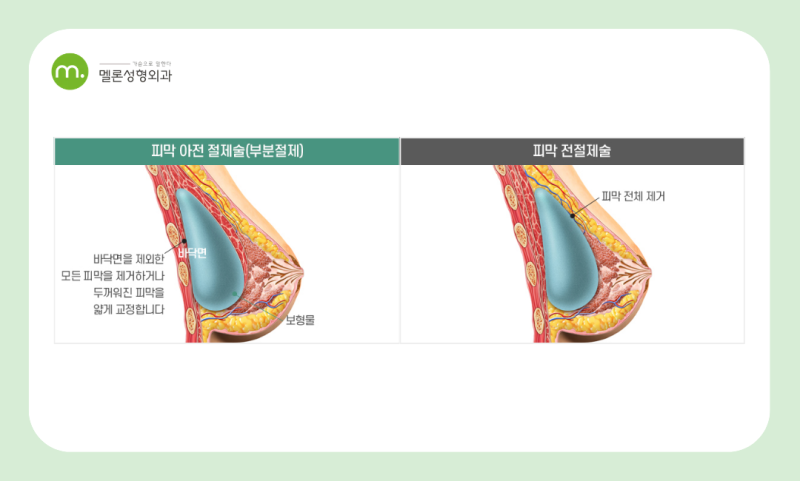
For capsular contracture revision surgery, if symptoms are severe, the capsule around the implant is removed. If the implant was inserted above the muscle, a total capsulectomy is performed to completely remove the capsule. If the implant is inserted below the muscle or if the implant is palpable due to thin skin, a partial capsulectomy is performed to remove or thin all but the base of the capsule to improve feel and shape.
Asymmetry is addressed by meticulously analyzing nipple position, inframammary fold height, chest wall asymmetry, and capsule thickness, followed by partial removal or reshaping of the capsule and adjustment of implant position. If necessary, different volume implants are used on each side to achieve balance.
For rippling, the implant pocket is reshaped, and the size and material are adjusted. For areas with thin tissue, artificial support structures are used to reinforce thickness.
Revision surgery is more complex than the initial surgery because it involves delicately handling existing capsules and understanding the tissue condition. The duration varies depending on the tissue condition; if not complex, it's similar to a standard augmentation, but complex cases can take up to 3 hours.
At Melon, we communicate thoroughly before surgery, meticulously check the type of implant from the first surgery, insertion position, and capsule condition, and evaluate the implant status and tissue thickness with ultrasound. We then precisely remove the thick capsule and implant using the first surgical incision, replace the implant, and change the insertion position to lower the chance of recurrence.
Breast Revision Surgery | Timing and Importance of Safety
While the typical lifespan of breast implants is known to be about 10 years, it doesn't mean revision surgery is mandatory every decade. The timing and reasons for considering revision surgery vary for each individual, depending on changes in skin elasticity, desire for size alteration, or implant abnormalities.
If there is capsular contracture accompanied by pain, clear deformation, or rupture, a quick diagnosis is necessary. Dissatisfaction with shape can be decided after waiting for tissue recovery, which usually stabilizes around 6 months post-surgery.
At Melon, safety is paramount. We never proceed with surgery if general anesthesia is risky due to conditions like heart disease, immediately after breast cancer surgery, or if the patient's condition is otherwise precarious.
Surgery is only possible after pre-operative examinations, communication with the anesthesiologist, and a determination that there are no safety concerns. Even if other places offer to perform the surgery, I advise against it if I deem it risky.
Breast Revision Surgery | Recovery Process and Achieving Stable Results

Revision surgery may have a longer recovery period than the initial surgery.
This is because it involves handling the capsule and readjusting tissues. After surgery, swelling and bruising may occur, and the breasts might feel sore, but there's no need to rush as the tissues will settle and the feel will soften over time.
Melon Plastic Surgery manages recovery step-by-step through its safe and secure Melon Care program. We regularly check the skin, feel, and scar condition to monitor progress. We also provide a Melon Box containing self-care products and guides for comfortable recovery at home.
The 9.9 emergency call system is even more crucial for those who have undergone revision surgery, allowing them to contact us in emergency situations even at night or on weekends, alleviating anxiety. While recovery speed varies individually, it's important to respect one's own recovery rhythm and progress slowly.
Those who come to me for revision surgery are often emotionally and physically exhausted. They fear repeating the discomfort they once experienced and sometimes blame themselves. However, revision surgery can significantly improve the situation and yield positive results.
If you are considering revision surgery, please feel comfortable sharing your concerns. We will examine any issues together and accompany each individual on their breast journey.
Thank you.
Frequently Asked Questions
What are the main reasons for breast revision surgery?
Breast revision surgery is necessary to correct problems that arise after the initial surgery. Common reasons include capsular contracture leading to hardened breasts, implant malposition, asymmetry, rippling, implant rupture, and dissatisfaction with size. In some cases, replacement of old implants or removal due to safety concerns is also recommended.
Why does capsular contracture occur, and how is it resolved with revision surgery?
Capsular contracture is a condition where the capsule around the implant thickens excessively and contracts, causing the breast to become firm. The main causes include excessive fibrotic reaction, bleeding, and bacterial biofilm. During revision surgery, the periprosthetic capsule is either completely or partially removed, depending on the severity, to improve feel and shape.
Can breast asymmetry be corrected with revision surgery?
Yes, breast asymmetry can be corrected with revision surgery. It often occurs due to insufficient body analysis during the first surgery, differences in dissection space, or variations in capsule thickness, and sometimes because natural breast size differences were not considered. During revision surgery, the capsule is partially removed or reshaped, the implant position is adjusted, and if necessary, different volume implants are used on each side to achieve balance.
Why does rippling occur, and how can it be improved?
Rippling occurs due to using implants that are too large for a thin body type with little subcutaneous fat, choosing implants with a low fill rate, or thinning of tissues due to excessive dissection. During revision surgery, the implant pocket is reshaped, and the size and material are adjusted. For areas with thin tissue, artificial support is used to reinforce the thickness and improve the condition.
When is the most appropriate time to undergo breast revision surgery?
The timing for breast revision surgery varies for each individual. If there is capsular contracture accompanied by pain, clear deformation, or rupture, prompt diagnosis is necessary. For dissatisfaction with shape, it is generally best to decide after about 6 months post-initial surgery, once the tissues have stabilized.
How long is the recovery period after breast revision surgery?
The recovery period after breast revision surgery may be longer than after the initial surgery. This is because the capsule is handled and tissues are readjusted. Swelling, bruising, and soreness may occur after surgery, but it is important not to rush the process as tissues will settle and the feel will soften over time.