2026-07-21
Gangnam Station Nipple Asymmetry, Hypertrophy, and Inversion: Causes Explained
Learn about the causes of nipple asymmetry, hypertrophy, and inversion, and how surgical correction can improve both aesthetics and function.
Gangnam Station Nipple Asymmetry, Hypertrophy, and Inversion: Causes Explained
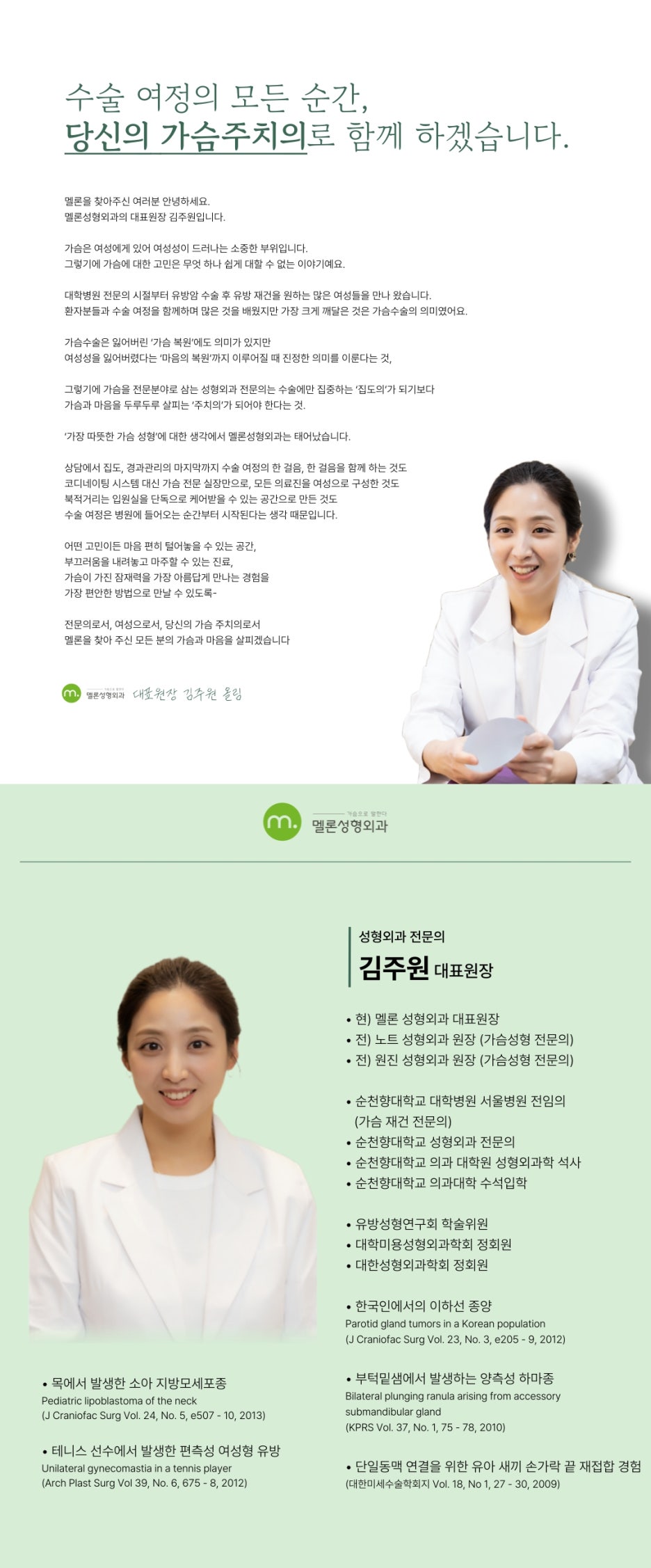
Hello. I'm Dr. Kim Joo-won, the head director of Melon Plastic Surgery, your breast specialist.
Though often overlooked, the nipples are a part of the breast that can cause various discomforts when their shape changes.
If your nipple size is too large and shows through your clothes, it can make you self-conscious about your attire. If they are asymmetrical, you might feel uncomfortable every time you look in the mirror or are undressed.
In cases of inverted nipples, difficulties can arise during breastfeeding after childbirth, such as milk pooling. Nipple issues have a greater impact than we might think.
This is because they can make you self-conscious in public bathhouses or saunas, and can also cause feelings of inadequacy in romantic or marital relationships.
‘Why do nipple asymmetries occur?’‘Can inverted nipples also be corrected?’
Today, I will discuss the causes of nipple asymmetry, hypertrophy, and inversion, as well as nipple correction, a surgical method for improvement. I hope this information is helpful to those who experience daily discomfort or psychological distress due to nipple issues.
Nipple Correction | Causes of Asymmetry, Hypertrophy, and Inversion
Nipple shape is determined by a combination of congenital and acquired factors.
Being born with large nipples is a congenital case, while nipples that stretch or enlarge after childbirth and breastfeeding are acquired cases.
Asymmetry, where the shape of both nipples differs, can begin during the growth process, and in such cases, the asymmetry can become more pronounced over time.
Inverted nipples are caused by tissue pulling the nipple inward from inside the breast. If a person with inverted nipples breastfeeds, milk can pool, making hygiene difficult and potentially leading to recurrent inflammation.
Many people avoid activities that expose their bodies, such as exercise or swimming, which limits their range of activities, and dissatisfaction with clothing fit often increases.
Thus, morphological issues with the nipples can be linked not only to aesthetic discomfort but also to daily inconveniences.
Nipple Correction | Nipple Reduction Surgery
Discomfort caused by nipple size and shape often leads to seeking surgical solutions.
‘How can large nipples be reduced?’‘Can the width and height of the areola also be corrected?’
Nipple reduction surgery is a procedure to reduce nipples that are congenitally large or have stretched due to breastfeeding.
Generally, an ideal nipple diameter is considered to be about 1 to 1.5 cm. Based on this, the size and position of the nipple are adjusted to suit your current breast size and shape.
To reduce the width of the nipple, the upper part of the nipple is incised, and the remaining tissues are gathered and sutured. To reduce the height of the nipple, the lower part of the nipple is excised and repositioned.
Nipple reduction surgery is performed precisely to preserve breastfeeding function. If there are issues with the areola, surgery to correct the width and height of the areola can also be performed simultaneously.
Nipple reduction surgery generally has a faster recovery compared to breast augmentation. After surgery, it is important to minimize irritation and avoid nipple compression for a certain period.
Nipple reduction surgery not only corrects hypertrophy and asymmetry but also reduces the discomfort experienced in daily life. One of these benefits is the restoration of lost confidence.
Nipple Correction | Inverted Nipple Surgery

Inverted nipples cause aesthetic dissatisfaction, but the biggest problem lies in functional discomfort.
If nipple inversion is severe, secretions cannot be properly discharged. Accumulated secretions can lead to nipple inflammation, including odor, infection, and pain.
The discomfort of inverted nipples is greatest during breastfeeding. Milk discharge may not be clean, leading to inflammation, and if this phenomenon repeats, discomfort in terms of health and function also recurs.
Ultimately, this can lead to a decrease in quality of life, so depending on the degree, inverted nipples often require correction.
Inverted nipple surgery is performed under sedation or local anesthesia. Tiny incisions of about 3mm are made on both sides of the nipple, and the adhesive tissue that pulls the nipple inward, causing the inversion, is excised. Afterward, the nipple is fixed to prevent it from retracting inward again, creating an ideal shape.
The surgery is performed to make scars inconspicuous, and after correction, a naturally protruding shape becomes possible.
Even if it's not very noticeable externally, many people with inverted nipples experience discomfort and pain due to difficulties with breastfeeding or recurring hygiene problems. Therefore, nipple correction can be seen as a meaningful process that goes beyond improving appearance to also alleviate distress experienced in terms of health and function.
Nipple Correction | Will Nipple Surgery Affect Breastfeeding?
The concern, ‘Will nipple surgery make breastfeeding difficult?’ is a common worry for those considering nipple surgery.
Nipple reduction surgery and inverted nipple surgery are performed while preserving the milk ducts through which milk is discharged, so the possibility of losing breastfeeding function is low. Since only the necessary areas are corrected without excising the entire milk duct during the surgical process, breastfeeding is possible even after childbirth.
However, immediately after surgery, the nipple tissue is in a recovery phase, so careful management is required to minimize irritation and aid recovery for a certain period. While individual recovery speeds may vary, it is rare for significant problems with breastfeeding function to occur in the long term.
Breastfeeding function is a precious part of the body that women, whether married or unmarried, wish to preserve. Therefore, Melon Plastic Surgery prioritizes not only aesthetic correction but also functional preservation, engaging in thorough communication about each patient's body, situation, and lifestyle to design the surgery.
Of course, we also assist with recovery for one year after surgery through our ‘Safe and Secure Melon Care’. Nipple correction is a surgery that can alleviate daily discomfort caused by nipples and achieve aesthetic improvement. The ability to continue breastfeeding after childbirth is also an advantage.
Understanding the discomfort caused by asymmetrical, hypertrophic, and inverted nipples, Melon Plastic Surgery approaches nipple correction carefully, considering both aesthetic improvement and functional preservation.
The surgery is also performed delicately according to the patient's condition and situation. Please feel free to discuss any breast concerns you may have. All of Melon's medical staff and your doctor will accompany you on your breast journey.
Thank you.

Frequently Asked Questions
Why do nipple asymmetry or hypertrophy occur?
Nipple asymmetry or hypertrophy results from a combination of congenital and acquired factors. Some individuals are born with naturally large nipples, while others experience nipple elongation or enlargement due to acquired factors such as childbirth and breastfeeding. Asymmetry can also begin during growth and become more pronounced over time.
What problems can inverted nipples cause?
Inverted nipples can cause functional discomfort in addition to cosmetic dissatisfaction. Secretions may not drain properly, leading to odor, inflammation, and pain. During breastfeeding, milk expulsion can be difficult, causing recurring hygiene issues and inflammation. This can often reduce quality of life, making correction necessary.
In what cases is nipple reduction surgery necessary?
Nipple reduction surgery is performed to reduce nipples that are congenitally large or have elongated due to breastfeeding. The ideal nipple diameter is considered to be about 1 to 1.5 cm, and the size and position of the nipple are adjusted to match the current breast size and shape. It helps correct hypertrophy and asymmetry by reducing the width or height of the nipple and alleviates daily discomfort.
Is breastfeeding possible after nipple correction surgery?
Yes, breastfeeding is possible even after nipple correction surgery. Both nipple reduction and inverted nipple surgeries are performed while preserving the milk ducts, so the likelihood of losing breastfeeding function is low. This is because only the necessary parts are corrected during surgery, without excising the entire milk duct. However, during the immediate recovery period after surgery, it is important to minimize stimulation and manage the area carefully.
How is inverted nipple surgery performed?
Inverted nipple surgery is performed under conscious sedation or local anesthesia. Tiny incisions, about 3mm, are made on both sides of the nipple, and the adhesive tissue that pulls the nipple inward is excised. Afterward, the nipple is fixed to prevent it from becoming inverted again, creating a naturally protruding, ideal shape. The scars are meticulously managed to be inconspicuous.
How long is the recovery period after nipple correction surgery?
Nipple reduction surgery generally has a faster recovery than breast augmentation. After surgery, it is important to minimize stimulation to the nipple and avoid pressure for a certain period. While individual recovery speeds may vary, it is rare for significant problems with breastfeeding function to occur in the long term.