2026-07-21
If You Feel a Lump in Your Male Chest? Symptoms of Male Gynecomastia
Male gynecomastia, often mistaken for simple weight gain, involves the development of breast tissue in men due to glandular and/or fatty tissue changes. This condition can cause significant psychological distress and is often not resolved by exercise alone, requiring medical intervention.
If You Feel a Lump in Your Male Chest? Symptoms of Male Gynecomastia
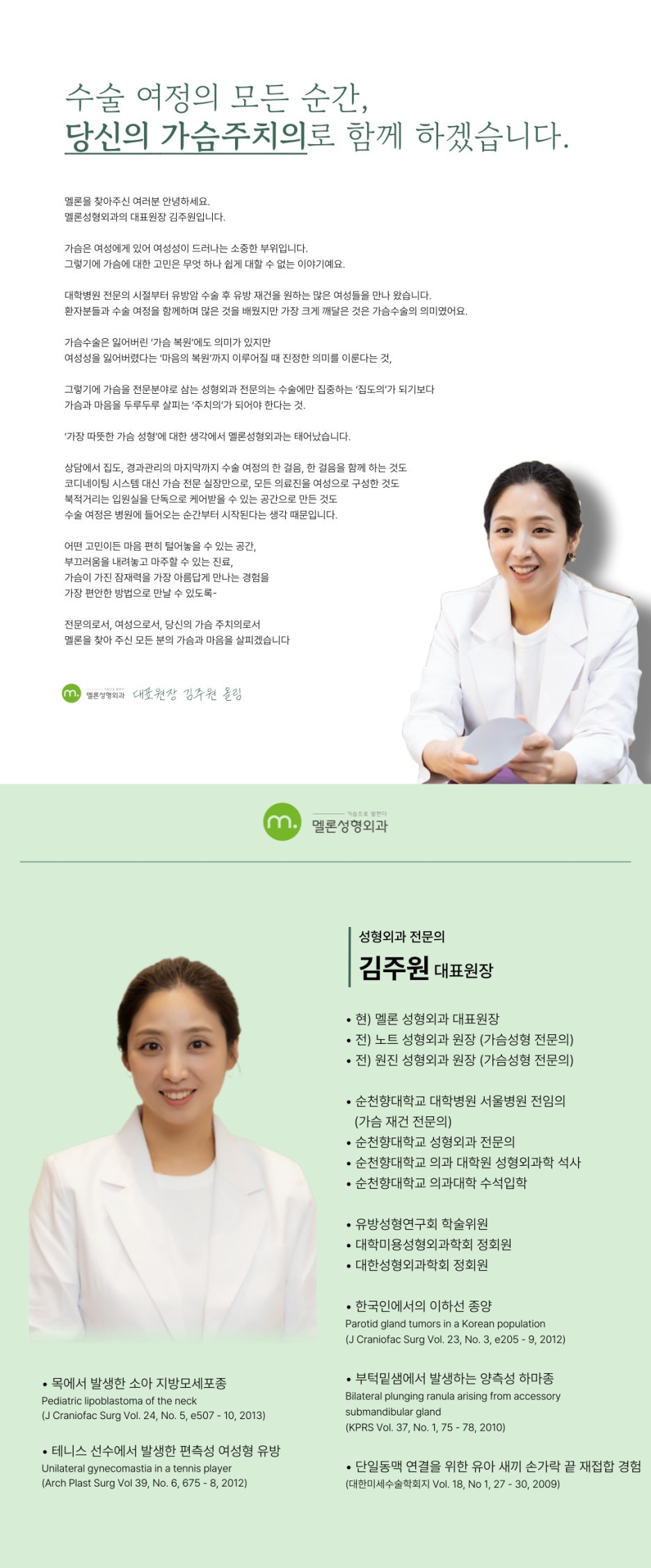
Hello. I’m Dr. Kim Ju-won, the chief director of Melon Plastic Surgery, your breast specialist.
Concerns about breasts aren't exclusive to women. Men also have a variety of breast concerns, just as diverse as women's.
Male gynecomastia is a common breast issue that men worry about. While it might appear to be a simple weight problem on the surface, the psychological distress and stress experienced by those with gynecomastia are immense.
Wearing shirts or t-shirts might make the chest appear prominent, and situations requiring shirtless exposure, such as public baths, swimming pools, military service, or intimate relationships, can feel burdensome.
Many men with gynecomastia try to overcome it through exercise. However, many express frustration because, despite consistent exercise, their large chests don't firm up significantly.
‘Does male gynecomastia occur due to weight gain?’‘Can it be eliminated with exercise?’
Today, I’ll discuss the characteristics, causes, and surgical improvement methods for male gynecomastia. In most cases, male gynecomastia is something people can't openly talk about. I hope this article can help many who are struggling with gynecomastia.
Male Breast Surgery | What is Male Gynecomastia?
Male gynecomastia is sometimes misunderstood as simply having fat on the chest. However, gynecomastia is a condition that requires a medical approach.
Just like women, men's chests also contain glandular tissue and fatty tissue. Gynecomastia refers to the phenomenon where a man's chest develops like a woman's due to changes in glandular and fatty tissues.
If the glandular tissue is developed, symptoms such as a firm chest and a palpable lump may appear. If fatty tissue is the cause, the chest will generally appear soft and saggy. There are also many complex cases where both symptoms appear simultaneously.
Surprisingly, many individuals suffering from gynecomastia unanimously describe psychological inhibition, rather than physical appearance, as their greatest distress.
They often mention that even when choosing clothes or exercising diligently, it's difficult to achieve the body shape they envision, which hinders their motivation for body management. The discomfort experienced during military service is also a significant factor that cannot be overlooked.
Therefore, male gynecomastia cannot be dismissed as merely a cosmetic issue. Its impact on overall daily life is unexpectedly significant, so if you are experiencing any problems, it's time to communicate with medical professionals.
Male Breast Surgery | Causes of Gynecomastia
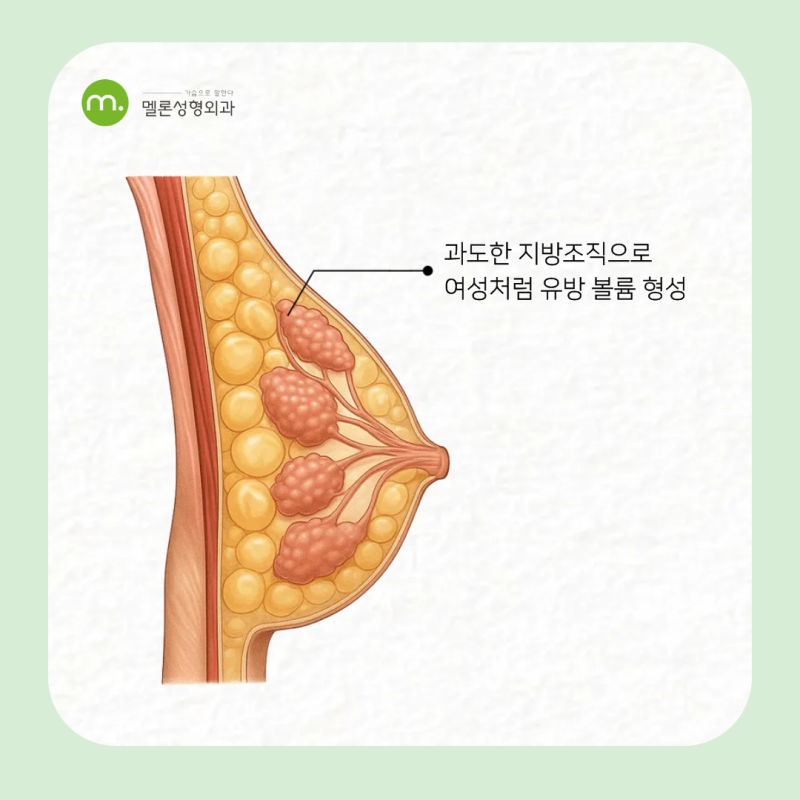
What causes male gynecomastia?
‘What are the causes of male gynecomastia?’‘Can it be resolved with diet or exercise?’
The primary cause of male gynecomastia is hormonal imbalance.
Although it can be a temporary phenomenon, during puberty, the ratio of female hormones to male hormones can increase, leading to the development of glandular tissue. Most cases improve over time, but some persist into adulthood as gynecomastia.
Accumulation of fatty tissue is also one of the causes of gynecomastia. If fat accumulates in the chest area, it can make the chest appear like a woman's. If both fatty tissue and glandular tissue are developed, this is a complex type of gynecomastia that is difficult to correct with weight loss alone, requiring surgical treatment.
The final causes of gynecomastia are medication use or specific diseases. Liver or kidney diseases, steroids, and some antidepressants can be contributing factors.
If you are experiencing gynecomastia, it is helpful to consult with medical professionals for a thorough discussion and diagnosis to determine the ratio of glandular and fatty tissues in your chest. This can be the first step in resolving long-standing concerns about gynecomastia.
Male Breast Surgery | Surgical Methods to Improve Gynecomastia

Most cases of male gynecomastia can be improved through surgery. The surgical method varies depending on the cause.
If glandular tissue is developed, a small incision is made along the border of the areola, and an endoscope is inserted to remove the unnecessary glandular tissue.
If fat is the primary cause, laser liposuction can be performed to reduce excessively accumulated fat cells and adjust skin thickness and contour.
If both glandular and fatty tissues are developed (complex type), the two methods mentioned above can be combined. In this case, not only is the breast size reduced, but the contour of the chest muscles can also be enhanced, allowing for a more masculine chest.
The surgery is performed with pain-reducing injections, and most patients can be discharged on the same day. Recovery speed varies by individual, but most can resume daily activities after about 2-3 days, though several weeks are needed for the tissues to settle.
Post-operative recovery care involves managing the treated chest through various stages, including high-frequency laser treatment to enhance skin elasticity. Recovery care for male gynecomastia is no different from general breast augmentation.
If you are concerned about male gynecomastia, please remember that recovery care plays a crucial role in maintaining long-term satisfaction with the results. The key to completing the entire surgical journey, from pre-surgery to post-surgery, with a happy ending lies in meticulous recovery care.
Male Breast Surgery | Male Gynecomastia Aftercare is ‘Safe and Reassuring Melon Care’
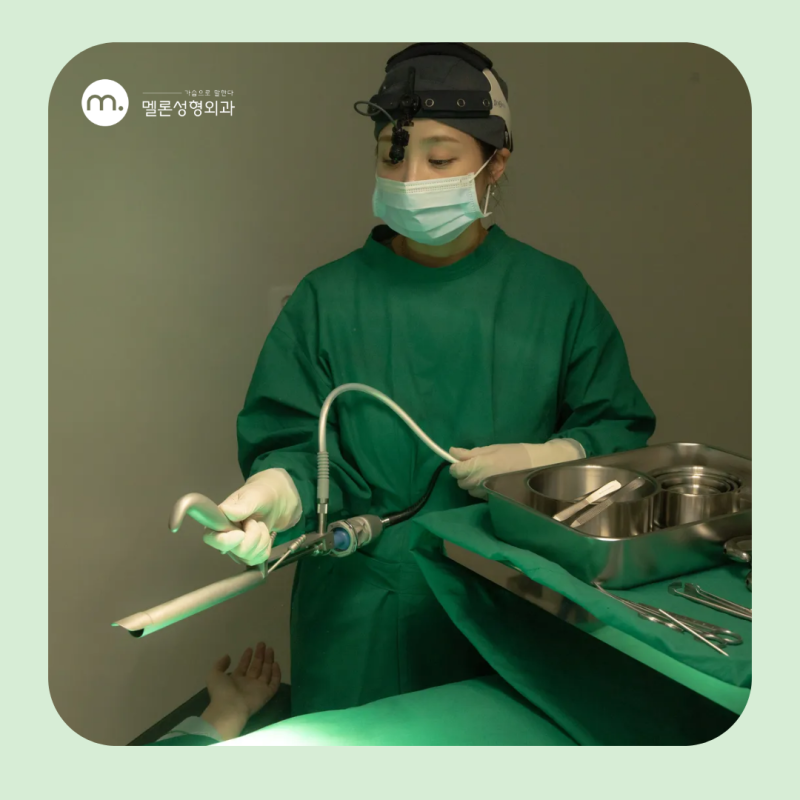
As mentioned earlier, post-operative care is extremely important for all breast surgeries, and male gynecomastia is no exception. For a certain period after surgery, compression bandages or garments are needed to help the breast tissue recover and settle.
Melon Plastic Surgery operates the ‘Safe and Reassuring Melon Care’ program, caring for the treated chest from immediately after surgery through a one-year recovery process.
We prescribe medication to prevent capsular contracture, reducing the possibility of this complication, and use equipment like Omega Light Laser and Capsulitis to alleviate swelling, bruising, and pain while aiding skin regeneration. RF high-frequency treatment to promote blood and lymphatic circulation, restoring skin elasticity, and follow-up consultations directly with the chief surgeon are also included in the recovery process.
Male gynecomastia surgery is a procedure that reduces breast size, but it also reduces feelings of inhibition in daily life and interpersonal relationships.
If you are reading this and feel trapped by the effects of gynecomastia, please feel free to share your concerns with us anytime. Melon Plastic Surgery will listen to each individual's concerns to help men break free from gynecomastia worries.
Thank you.
Frequently Asked Questions
What are the symptoms of male gynecomastia?
Male gynecomastia refers to the phenomenon where a man's chest develops like a woman's due to changes in glandular and fatty tissues. It is sometimes mistaken for a simple weight problem, but it is a condition that requires a medical approach.
Can exercise eliminate male gynecomastia?
No, it is often difficult to resolve with exercise alone. Especially when glandular tissue is developed, or when both glandular and fatty tissues are complexly developed, correction through weight loss alone is difficult.
Why does male gynecomastia occur?
The primary cause of male gynecomastia is hormonal imbalance, and it can sometimes appear temporarily during puberty. Additionally, accumulation of fatty tissue, certain medication use, and liver or kidney diseases can also be causes.
How is male gynecomastia surgery performed?
The surgical method varies depending on the cause. If glandular tissue is developed, the glandular tissue is removed. If fat is the primary cause, laser liposuction is performed. For complex types, both methods can be combined.
How long is the recovery period after gynecomastia surgery?
Most patients can be discharged on the same day, and daily activities can be resumed after about 2-3 days. It takes several weeks or more for the tissues to fully settle, and recovery care is important.
Is post-operative care important for gynecomastia surgery?
Yes, post-operative care is very important. Melon Plastic Surgery operates a program that assists with the one-year recovery process, including wearing compression garments, prescribing medication to prevent capsular contracture, laser treatments to alleviate swelling and pain, and high-frequency care.