2026-07-21
Tips to Consider for Breast Sagging After Dieting
Learn why breasts sag after weight loss and how to prevent it or correct it with surgery.
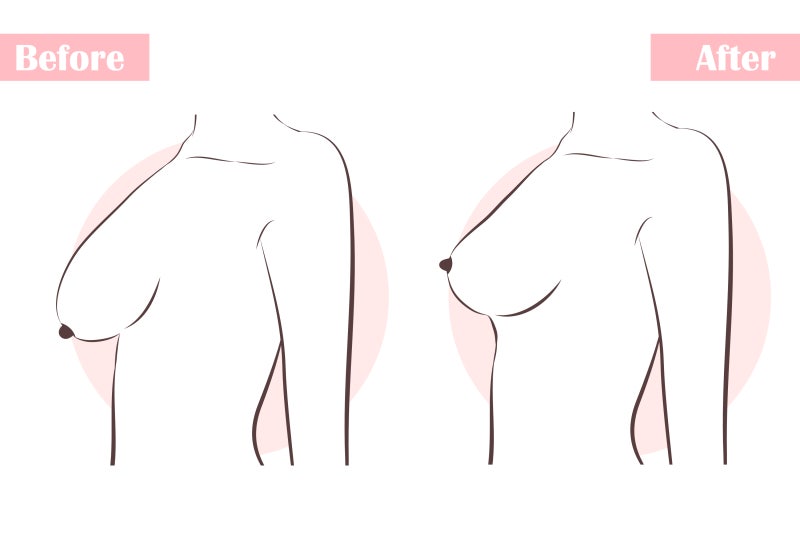
Tips to Consider for Breast Sagging After Dieting
Breasts are often considered a symbol of femininity. Therefore, everyone desires breasts with good volume and shape, but it's also one of the body parts that undergoes the most significant changes, making it difficult to achieve a consistently satisfactory appearance. Concerns can grow, especially due to the direct impact of pregnancy, childbirth, and rapid weight fluctuations. Furthermore, as elasticity rapidly declines with aging, breasts can sag downwards, losing volume. Among various factors, many individuals struggle with breast sagging due to dieting. While there's no clear reported correlation stating that weight loss directly reduces breast elasticity, general observations suggest that breasts tend to sag when weight loss exceeds 5kg. So, why does this relationship form?
The Relationship Between Sagging Breasts and Weight Loss
First, during dieting, the overall water content in the body decreases. Consequently, the elasticity of the skin, which relies heavily on moisture, naturally diminishes. Additionally, the density of breast structures also decreases with weight loss. From dehydration, the skin in the breast area, which reduces in volume, cannot keep up with the structural changes, leading to a loss of elasticity. Moreover, not only for weight loss but also during regular aerobic exercise, wearing the wrong bra or no bra can stimulate and stretch the ligaments in the breast area, leading to concerns about breast sagging after successful dieting.
How Can It Be Prevented?
So, what should you do to maintain firm and voluminous breasts even after successful weight loss?
Firstly, it's crucial to maintain skin elasticity by combining moderate exercise with diet control, rather than overly restrictive diets. It's also advisable to aim for a weight loss of no more than 1.5kg per month and to consume foods containing plant-based estrogens. During exercise, wearing a tight sports bra is essential to stabilize the ligaments. Additionally, consistent breast massage can greatly help maintain elasticity. Most importantly, once breasts have sagged and changed, they do not naturally return to their previous state.
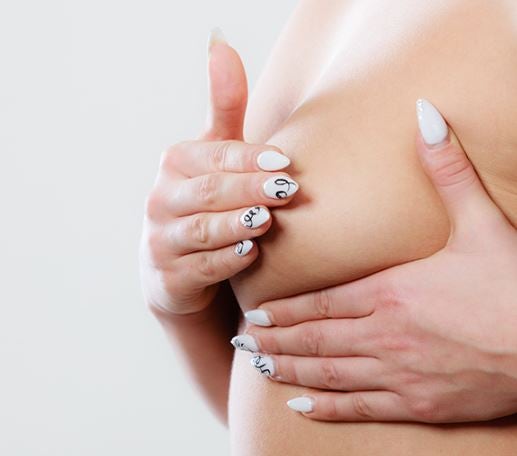
How to Restore Sagging Breasts?
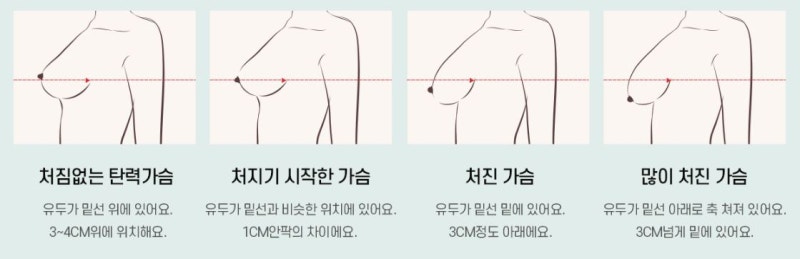
Therefore, breast correction surgery can help address these concerns. Since the approach varies depending on individual circumstances, when choosing where to undergo the procedure, you should look for a place where a breast specialist, not just a surgeon focused on the operation, takes responsibility for everything from consultation and examination to surgery and post-operative care. It's also advisable to self-diagnose the degree of breast sagging – the lower the nipple is below the inframammary fold, the more severe the sagging – and then undergo a precise examination. After a systematic examination, a personalized plan should be established, considering not only the correction of sagging but also the shape of the rib cage, volume, body condition, personal preferences, and specific concerns.
Types of Sagging Breast Correction
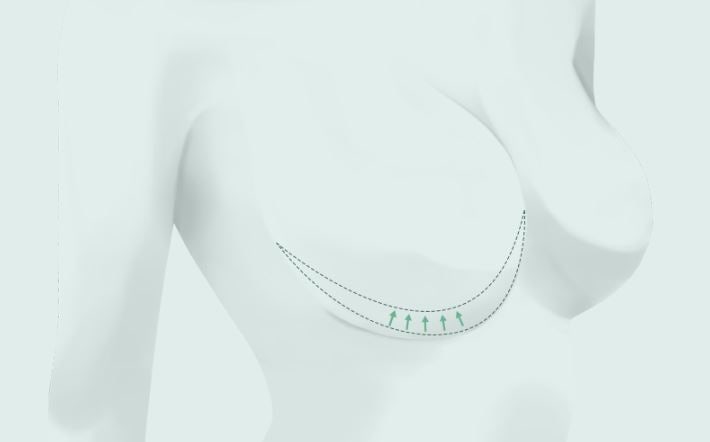
The method for redesigning changed breasts can vary depending on the volume and degree of sagging, broadly categorized into periareolar incision, vertical incision, and inverted T-incision. The periareolar incision can be applied when the breast volume is not large. It involves an incision around the areola and minimal tissue dissection, making it advantageous for nerve preservation, nipple sensation, and not affecting pregnancy or breastfeeding. Most importantly, it leaves minimal scarring. The vertical incision is chosen for larger breast volumes when a significant amount of tissue needs to be removed and is the most commonly used method. For breasts that are somewhat large with a wide range of tissue to be excised, the inverted T-incision is used. This involves an incision from the nipple to the inframammary fold for severe sagging and large breasts, which inevitably leaves a larger scar. However, it is the most efficient method for reduction.
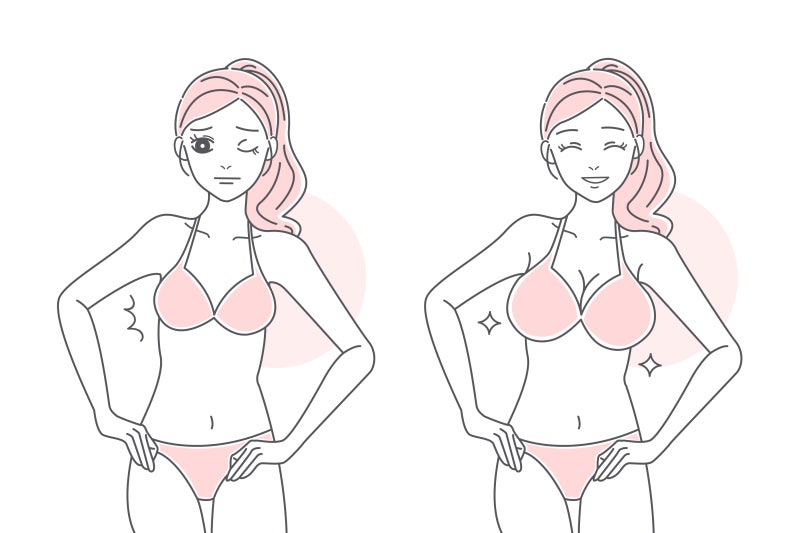
Criteria for Choosing a Hospital
Accurately assessing the degree of breast sagging and volume, and choosing the optimal incision method for the best results, is essential to achieve both correction and volume. Scarring is also a concern, but with a medical team that has ample clinical experience in this area, you can proceed with confidence. Most importantly, since a plan must be established after meticulously observing, touching, and understanding the condition of your breasts, having a professional medical team that can alleviate psychological burden will bring stability even to the detailed aspects. Furthermore, to ensure safety throughout all surgical procedures, the presence of an anesthesiologist, pre-operative full-body care, and the use of the latest surgical equipment to enable micro-dissection help reduce concerns about scarring. Providing recovery care that allows for a quicker return to daily life ensures both satisfactory results and, most importantly, a safe surgery.
For concerns about breast sagging due to dieting, as well as various other breast-related issues, all aspects including skin, volume, environment, and daily life must be considered to achieve the most ideal line and volume. Therefore, choose a place where a breast specialist, not just a surgeon, provides comprehensive care.
Frequently Asked Questions
Do breasts sag after dieting?
Yes, breasts can sag during dieting. Especially when weight decreases rapidly by more than 5kg, the body's water content and the density of breast structures can both decrease, leading to a loss of breast elasticity and sagging.
How can breast sagging be prevented during dieting?
To prevent sagging, it's important to maintain skin elasticity by combining moderate exercise with diet control, rather than overly restrictive diets. Losing about 1.5kg per month, consuming foods containing plant-based estrogens, wearing a tight sports bra during exercise, and consistent breast massage can help.
Can already sagged breasts be restored?
No, once breasts have sagged and changed, it's difficult for them to naturally return to their previous state. Therefore, breast correction surgery can help address these concerns, and the appropriate surgical method should be chosen based on the individual's degree of sagging and condition.
What types of sagging breast correction surgery are there?
Sagging breast correction surgery can be broadly categorized into periareolar incision, vertical incision, and inverted T-incision. The appropriate method varies depending on the breast volume and degree of sagging. The periareolar incision is used when the volume is not large, while the inverted T-incision is primarily used for severe sagging and large breasts.
What are important criteria when choosing a hospital for breast correction surgery?
When choosing a hospital, you should look for a place where the surgeon takes responsibility for everything from consultation and examination to surgery and post-operative care. It's also important to check for a medical team with ample clinical experience, the presence of an anesthesiologist, the use of the latest surgical equipment, and the provision of quick recovery care.