2026-07-22
20s Breast Augmentation: Unwavering Volume, Even in Summer! Post-Surgery Recovery and Swelling Management Tips
For women in their 20s considering breast augmentation, this article offers essential information on tissue characteristics, recovery tips, and swelling management, especially for summer surgeries.
20s Breast Augmentation: Unwavering Volume, Even in Summer! Post-Surgery Recovery and Swelling Management Tips

Many people in their twenties feel the need to manage their physique.
It's a time when opportunities to show off your body, such as trips with friends, water parks, and body profiles, become increasingly frequent.
As a result, some individuals become concerned about the size difference between their left and right breasts when looking in the mirror, or the lines that show through their clothes.
We often hear stories of people avoiding swimsuits or tight-fitting tops due to small breast volume.
However, the thought of surgery can often bring fear first.
‘Am I too young for surgery?’
‘Will it cause problems with pregnancy and breastfeeding later?’
‘What if I'm left with scars?’
Today, for those in their twenties with these concerns, I'll systematically explain the characteristics of breast tissue and management methods to keep in mind when considering breast augmentation, purely for informational purposes.
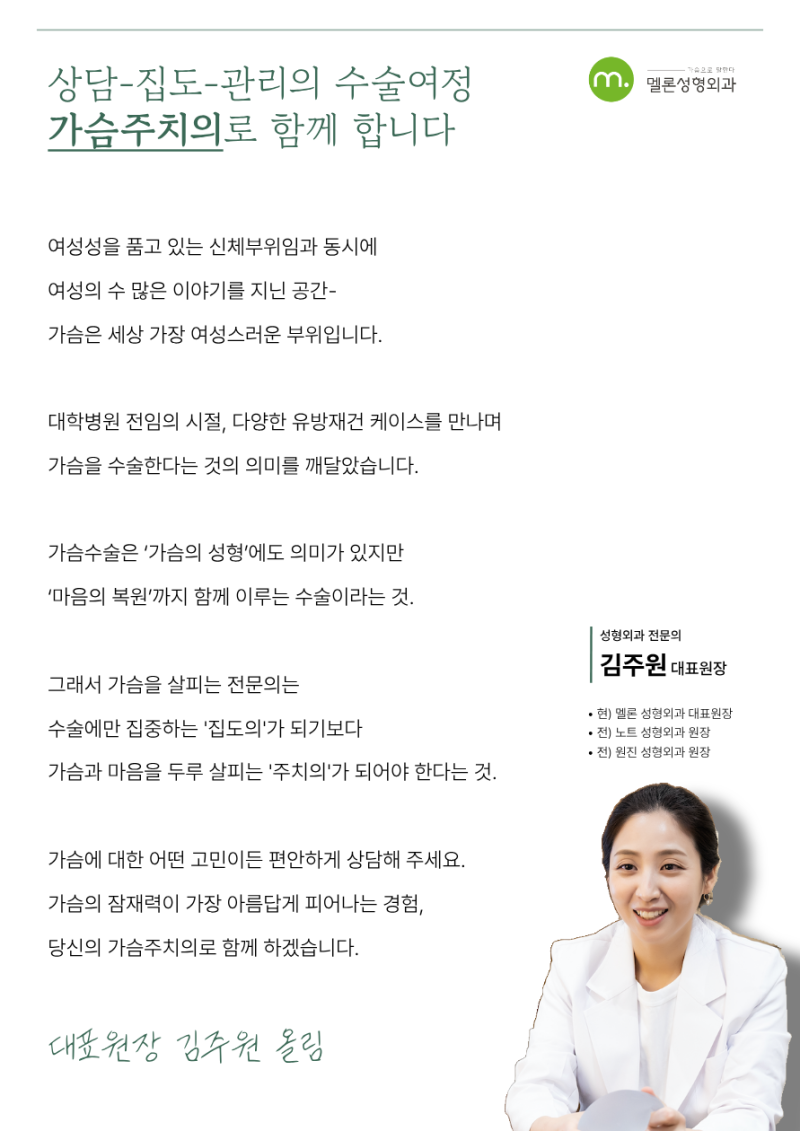
I'm Dr. Kim Joo-won, Chief Director of Melon Plastic Surgery, your breast specialist.
Breast Augmentation | Three Reasons Why Twenties Hesitate
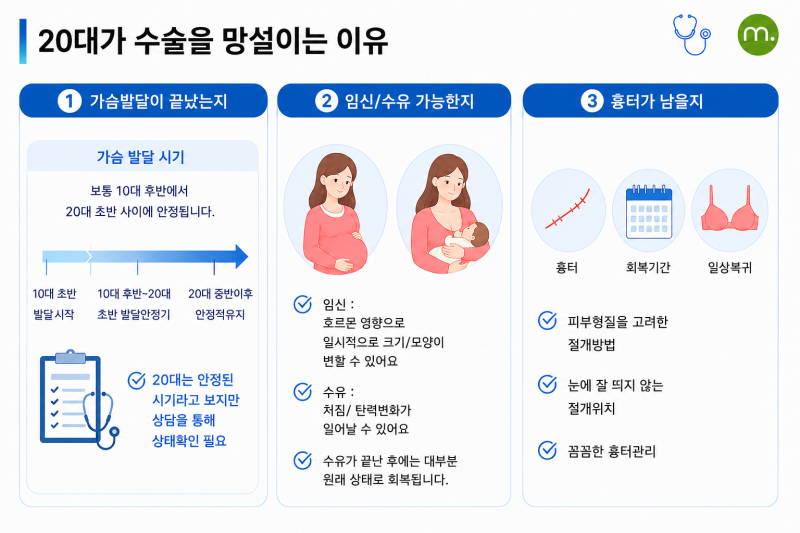
There are common reasons why people in their twenties hesitate to undergo surgery.
The first concern that comes to mind is age. If surgery is performed before breast development is complete, the size and shape may change further, so it's generally recommended to wait until development has stabilized. Breast development usually stabilizes between the late teens and early twenties, but there are individual differences, so a consultation is needed to confirm your condition.
The second is concern about pregnancy and breastfeeding, and the third is the burden of scars and recovery. These three points are worth considering when researching breast augmentation. Knowing accurate information, rather than vague worries, can help with your decision.
Breast Augmentation | Characteristics of Breast Tissue in Your Twenties
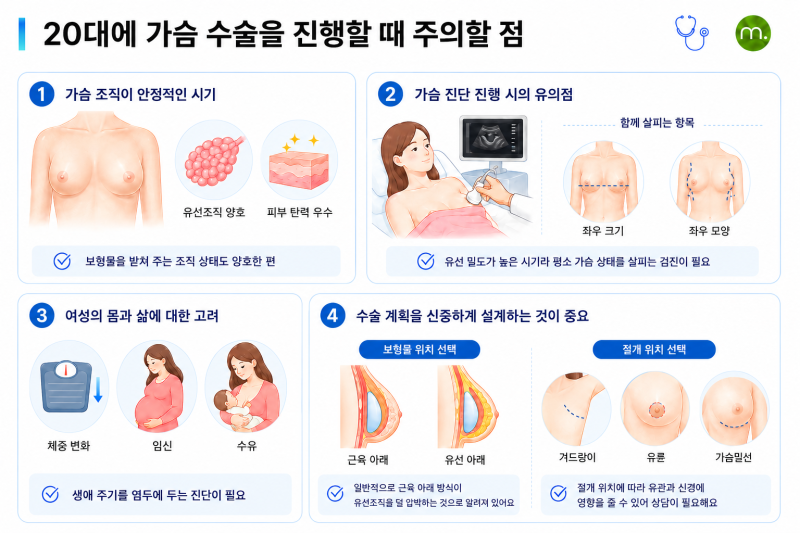
Breast tissue in your twenties is known to be relatively stable. The glandular tissue and skin elasticity are generally good, so the tissue condition supporting the implant is also favorable.
On the other hand, the twenties is a period of high glandular density, so a regular check-up that also examines the overall breast condition is helpful. Differences in the size or shape of the left and right breasts are also examined during diagnosis.
However, the twenties is a time when changes that affect the breasts, such as weight fluctuations, pregnancy, and breastfeeding, are still ahead. Therefore, it's better to consider your life cycle together rather than making a decision based solely on your current appearance.
Whether to place the implant under the muscle or under the glandular tissue is also linked to future breastfeeding plans. Generally, placing it under the muscle is known to put less pressure on the glandular tissue, and the incision site can also affect milk ducts and nerves, so this will be discussed during your consultation.
After surgery, it's important to develop a habit of regular check-ups to monitor your breast condition and implants. It's best to understand breast augmentation not as a one-time event, but as an ongoing management process.
Breast Augmentation | What to Pay More Attention to in Summer
If you're planning surgery in the summer, you need to consider the characteristics of the season.
‘Can I tolerate a compression garment in the heat?’
‘I sweat a lot; will it affect the scars?’
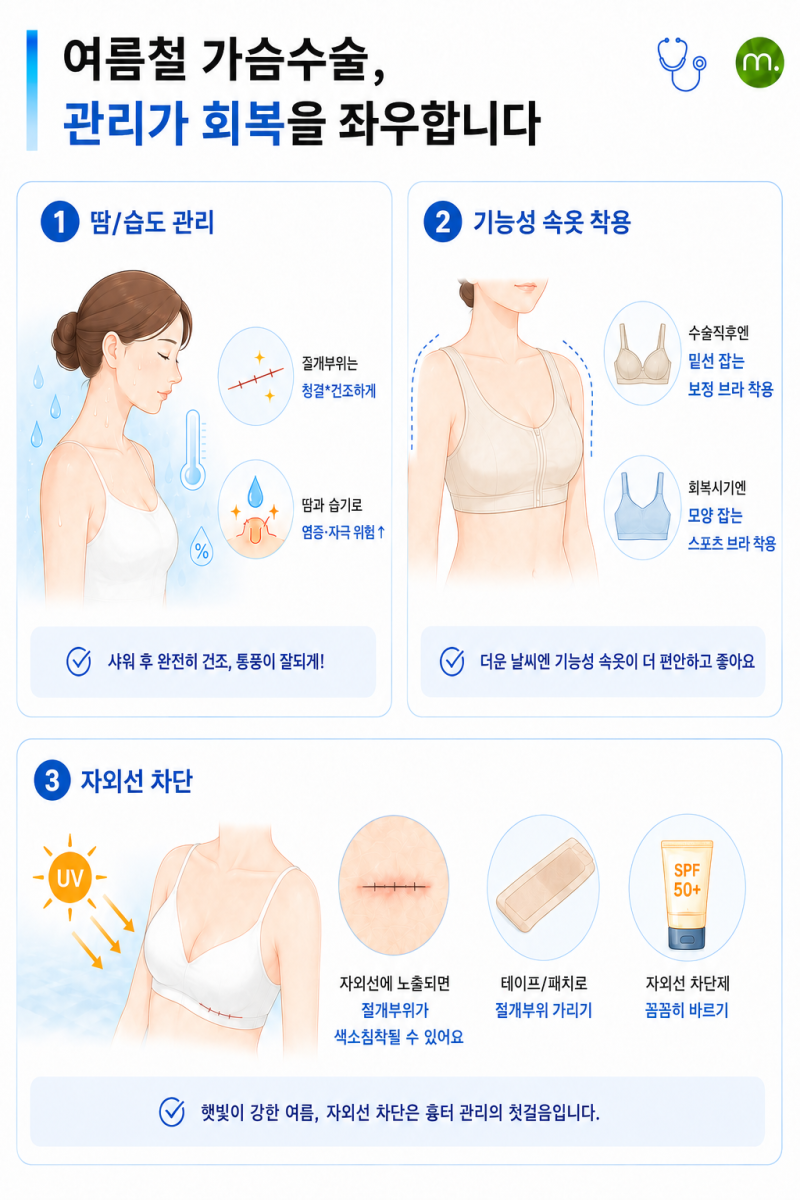
The most concerning aspects are sweat and humidity.
Cleanliness and dryness are crucial for the incision site, but management can become more challenging in hot weather. During the recovery period, a compression garment is worn, which can feel burdensome in the intense heat.
Strong UV rays are also something to consider.
If the scar area is exposed to sunlight, pigmentation can darken, so covering and UV protection are necessary. Activities involving water, such as swimming pools, beaches, and saunas, should be avoided until the wound heals. Strenuous exercise that causes a lot of sweating or prolonged outdoor activities should also be postponed during the early recovery period.
Maintaining a cool indoor temperature and resting sufficiently also aids recovery. If you schedule your recovery period to coincide with a vacation or break, management becomes much easier. If you proceed in the summer, it's better to plan your recovery environment and schedule more meticulously.
Breast Augmentation | Method Selection and Post-Surgery Care

The first step is choosing a method that suits your body condition.
The type and size of the implant vary depending on your body type, skin condition, and existing breast tissue. Cohesive gel implants, for example, may be discussed for a natural feel, and the implant type and incision site are discussed during the consultation to match your tissue condition. A choice that suits your body type can aid recovery and maintenance.
There are several incision locations, including around the areola, armpit, and inframammary fold. Each has its pros and cons, which will be discussed during your consultation. If you plan to breastfeed in the future, a discussion about both the implant placement and incision location is necessary.
After surgery, you'll receive guidance on compression, follow-up observations, and care tailored to the type of implant. Whether massage is needed varies depending on the implant type, so it's best to follow the instructions given.
The recovery period and return to daily life vary by individual, so it's accurate to confirm this during your consultation. Since implants need to be monitored over time, the habit of regular check-ups is important.
Breast Augmentation | Side Effects and Precautions to Be Aware Of
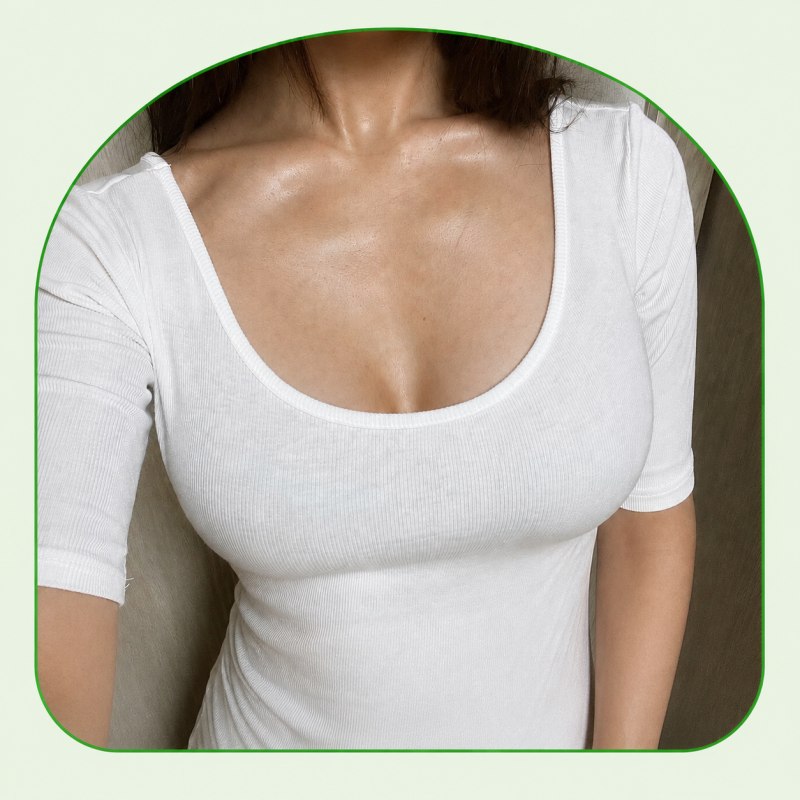
All surgeries carry the possibility of side effects along with their benefits, so it's important to be aware of these before making a decision.
After breast augmentation, complications such as bleeding, hematoma, swelling, infection, scarring, asymmetry, and temporary or rarely persistent sensory loss or abnormalities may occur.
Regarding implants, factors such as capsular contracture (hardening around the implant), implant displacement or rupture, and the possibility of needing reoperation over time must be considered, along with anesthesia-related risks.
The type, severity, and recovery pattern of these side effects vary depending on an individual's tissue and health status. Therefore, we recommend that you thoroughly consult with the medical staff about your condition, possible side effects, and coping methods during your pre-operative consultation before making a careful decision.
If you're hesitating at this moment,
Your twenties is a time when information is abundant, and it's easy to be swayed by advertisements or prices. However, since surgery is a process that is difficult to reverse once performed, it's best to make a decision after thorough research.
During the consultation, discuss not only your desired appearance but also future plans such as pregnancy, breastfeeding, and weight changes. Hearing about implant types and placement, the recovery process, and regular check-up plans in advance can help with your decision.
Most importantly, consider whether the choice is right for your body and lifestyle, not based on someone else's standards. You can confirm whether breast augmentation is the right choice for you and which method suits you best through a consultation with experienced medical staff.
Melon Plastic Surgery will be by your side until your worries lighten.
Frequently Asked Questions
Can I get breast augmentation in my early 20s?
Yes, it's recommended after breast development is complete. Breast development usually stabilizes between the late teens and early twenties, but there are individual differences, so a consultation is needed to confirm your condition.
Can breast augmentation cause problems with pregnancy or breastfeeding?
Depending on the implant placement and incision site, milk ducts and nerves can be affected. If you plan to breastfeed, you should discuss this thoroughly with the medical staff during your consultation. Generally, placing the implant under the muscle is known to put less pressure on the glandular tissue.
I'm worried about scarring after breast augmentation.
Scars vary depending on the incision site, with several methods available such as around the areola, armpit, and inframammary fold. If the scar area is exposed to sunlight after surgery, pigmentation can darken, so covering and UV protection are necessary.
Is it okay to have breast augmentation in the summer?
Yes, it's possible. However, in summer, you need to pay more attention to managing sweat, humidity, and strong UV rays. It's advisable to meticulously plan your recovery environment and schedule, including keeping the incision site clean, managing the discomfort of wearing a compression garment, UV protection, and avoiding water activities and strenuous exercise.
How should I manage my breasts after augmentation surgery?
After surgery, compression, follow-up observations, and care tailored to the type of implant are necessary. Whether massage is needed varies depending on the implant type, so follow the instructions given, and it's important to have regular check-ups to monitor the implant's condition.
What are the possible side effects of breast augmentation?
Bleeding, hematoma, swelling, infection, scarring, asymmetry, and sensory loss or abnormalities (temporary or rarely persistent) may occur. Regarding implants, factors such as capsular contracture, displacement, rupture, and the possibility of reoperation must be considered, along with anesthesia-related risks. You should consult thoroughly with the medical staff before surgery.