2026-07-21
20s First Breast Augmentation Guide: From Cost to Method to Recovery, All You Need to Know!
A comprehensive guide for women in their 20s considering their first breast augmentation, covering costs, methods, and recovery.

20s First Breast Augmentation Guide: From Cost to Method to Recovery, All You Need to Know!
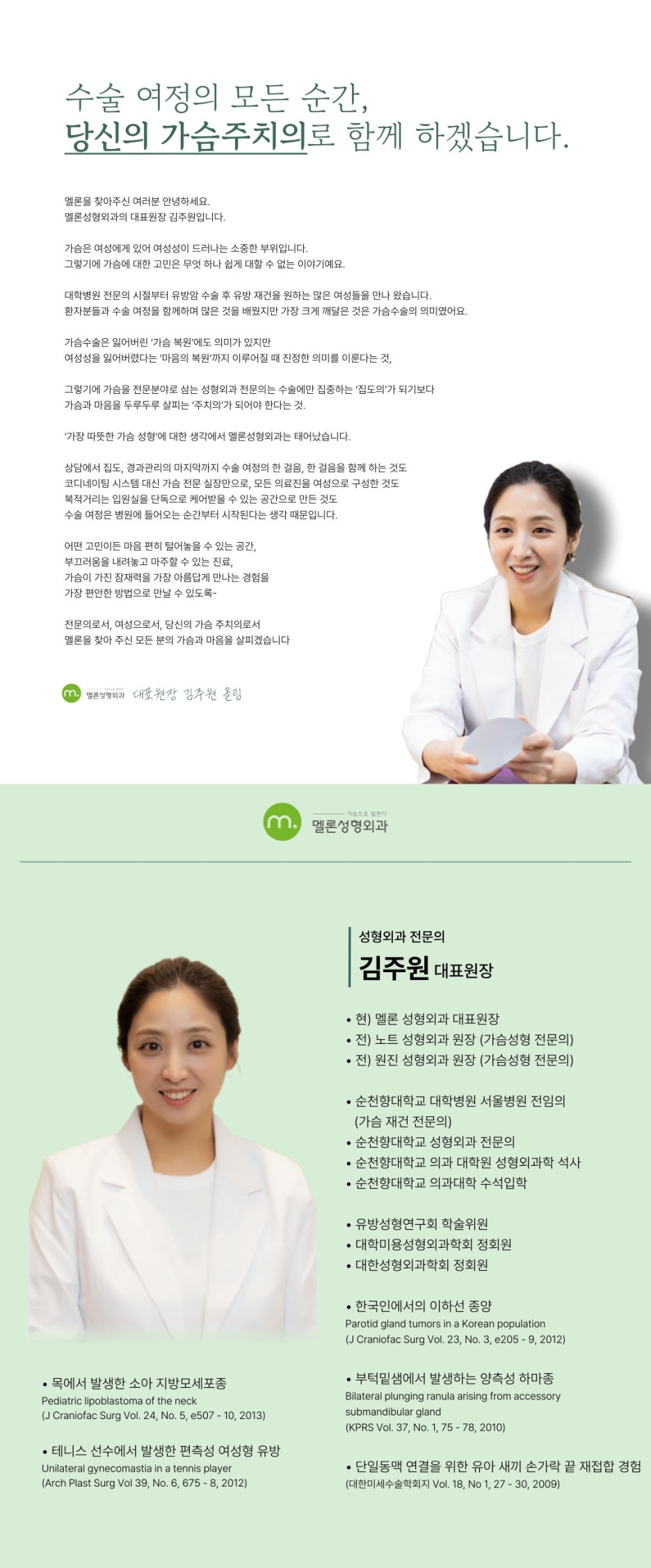
Hello. I'm Dr. Kim Ju-won, the chief representative director of Melon Plastic Surgery, your breast specialist who addresses all breast concerns.
What kind of feeds do you see most often on your SNS? SNS often features others' daily lives, hobbies, and tastes, and it's common to feel a stir when you see beautiful images of peers similar to yourself.
In particular, if someone suddenly becomes more stylish and beautiful, and their body line changes, it makes you wonder what kind of transformation they underwent. Breast augmentation can bring about changes in body line and style.
This is also why friends in their 20s choose breast augmentation. There are many ‘beginnings’ in your 20s—new schools, new friends, new jobs, new fields, new hobbies, new tastes—and many friends want to start with a confident new look.
‘It's my first surgery, where should I start looking?’‘How do most people in their 20s get surgery?’
It's natural to feel that your first breast surgery is vague. Today, I'd like to summarize a few things that those preparing for their first breast augmentation in their 20s should know.
20s First Breast Augmentation | Breast Augmentation, Why Consider It?
The 20s are a period with the most ‘beginnings’ and ‘changes’ in life.
From graduates to university students, from job seekers to professionals, you encounter various relationships and environments you haven't met before, and there are more opportunities to express yourself. As opportunities to expose yourself increase, interest in appearance naturally rises.
If you felt a deficiency during your school years or were teased, you might experience a lack of confidence. For women, a common example is a complex about small breasts. Many people in their 20s want to boost their self-esteem because they were teased for their flat chests.
In your 20s, breast and thoracic growth can be considered complete, so surgery is possible without hindering growth. Generally, around 18 years of age, when height and weight changes are deemed stable, surgery can be considered. Recovery is also excellent compared to other age groups, so the post-operative course is generally good.
However, before deciding on surgery, I hope you consider this: the decision for surgery should be made by ‘yourself’ and be centered on your own desires. Decisions influenced by others, such as seeing SNS, recommendations from acquaintances, or a partner's wishes, can lead to regret later on.
When deciding on shape or size, it's better to consider a size and shape that you won't regret even after 10 years, rather than just what you like at this moment.
20s First Breast Augmentation | Incision and Insertion Locations for Implants?
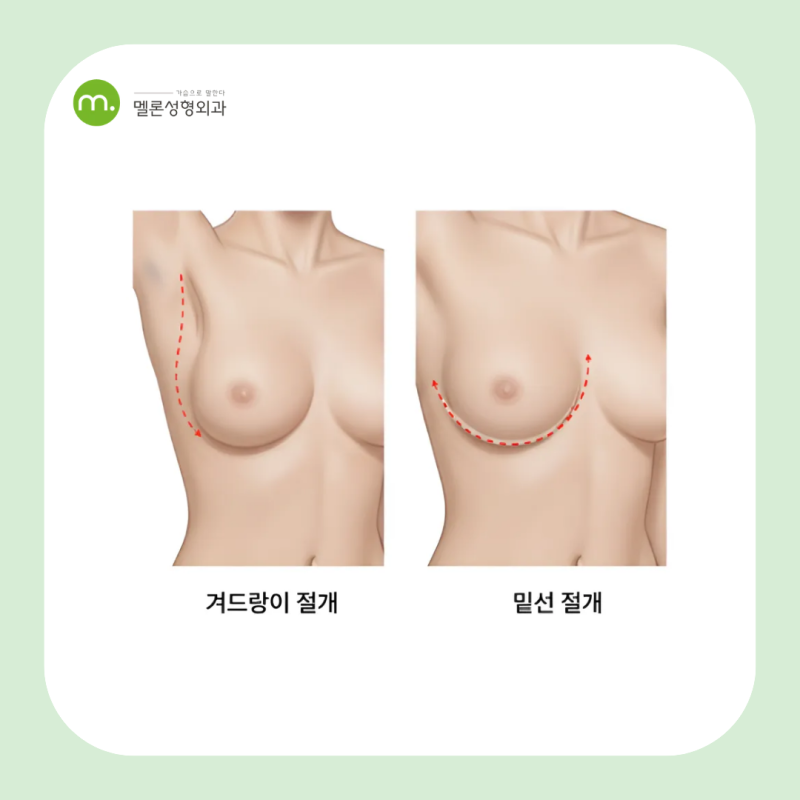
‘Armpit VS Inframammary fold, which incision is better?’‘Above the muscle VS Below the muscle, where is it better to place it?’
When undergoing breast augmentation, you'll choose the implant through communication with your surgeon, but you'll also decide on the incision and insertion locations.
There are two main incision locations for implants: the armpit incision and the inframammary fold incision. The armpit incision, also known as ‘axillary incision’, is popular among those in their 20s who wear revealing clothing like bikinis or yoga wear, as it leaves no scar on the breast.
The inframammary fold incision, made along the circular line at the bottom of the breast, provides a wider surgical field of view. This allows for more precise implant insertion. Although a scar forms after surgery, it's hidden in the inframammary fold and is not often noticeable. Satisfaction tends to be high even after time, as it has the distinct advantage of maintaining the breast shape for a long time.
The insertion location also greatly influences the breast's shape and natural feel. The breast has a large pectoral muscle that covers the heart. The implant's position varies depending on whether it's placed above or below this pectoral muscle.
Subfascial placement, a surgical method where the implant is positioned between the muscle and fascia, allows for natural movement and faster recovery, which can be an advantage for those who enjoy exercise. However, a disadvantage is that the round boundary of the implant can be visible because the breast tissue covering the implant is a thin ‘membrane’ rather than muscle.
Submuscular placement (dual plane, etc.) means a portion of the implant is covered by a large muscle, making the surgery less noticeable and the results more natural, but it requires a longer recovery time. For slender body types, it has the advantage of offering a more natural line.
Although I'm explaining this, everyone's body is different. Since each person has different inherent conditions such as their rib cage, breast pocket, and breast shape, it's best to examine your conditions with your surgeon and choose the implant, incision location, and insertion location that are right for you to achieve the most beautiful results.
20s First Breast Augmentation | Choosing Implants and Surgical Methods
Choosing breast implants is always a point of concern.
The most commonly used implant brands include Motiva and Mentor. Both implants are approved by the US FDA and European CE, have countless clinical data confirmed, and their safety is also recognized.
Mentor has three lines: Smooth, which boasts a soft touch; Mentor Xtra, which adds elasticity to a moderately soft feel; and Mentor Boost, a premium line that integrates all of Mentor's technology. The gel filling degree and texture of each implant differ, so you can consider them based on your skin thickness and other factors.
Motiva is a relatively recently popular implant that boasts a full, elastic feel and natural movement, allowing for natural-looking results even for those with thin skin or slender body types. It is divided into two types: with and without a tracking chip inside the implant.
Those in their 20s have excellent tissue elasticity, including breast tissue, and a fast recovery rate, so satisfactory results can be expected. Therefore, when choosing an implant, it's better to consider your own body's conditions rather than choosing based on an acquaintance's recommendation or its popularity.
Please remember that the best results always come when you choose the implant and surgical method that are appropriate for your body type and conditions.
20s First Breast Augmentation | Recovery Period and Return to Daily Life
Your 20s are also a time with many schedules, such as classes, part-time jobs, and exams. Surgery is important, but personal schedules are also important, so it's helpful to consider post-operative care when scheduling surgery.
Please secure a period of 1-2 weeks without any major commitments for your surgery date. It's also good to consider if you can adjust your exercise or part-time job schedule for 4-6 weeks. Breast augmentation is relatively quick to return to daily life, but it is a major surgery involving general anesthesia. It's best to consider at least 6 months as the recovery period.
The first week after surgery is when the newly operated breasts begin to recover, and pain and swelling may occur. During this period, care is needed to ensure the implant's position, which was set during surgery, does not change. When sleeping, avoid positions that put pressure on the breasts. It's better to sleep in a semi-reclined position with your upper body on a large cushion rather than lying on your stomach or side.
Around 2 weeks, bruising and swelling decrease, and light movements like walking or raising your arms are possible. If you need to do work that uses your chest muscles, such as serving or carrying heavy items, you should postpone it for at least 4 weeks.
About a month later, as the implants begin to settle, most daily routines and light exercises become possible. The upper breast and inframammary fold lines also start to take shape. High-intensity activities such as swimming, fitness, Pilates, ballet, and golf must be discussed with medical staff.
Drinking and smoking are also common questions. Alcohol expands blood vessels and can cause swelling, and smoking has been identified as a cause of ‘capsular contracture,’ a common side effect of breast augmentation, so caution is needed. I usually recommend quitting smoking while you're at it.
For post-operative recovery, institutional care is important, but self-care also has a positive impact, including sleep posture, timing of exercise, communication with the institution, scar management, and swelling management.
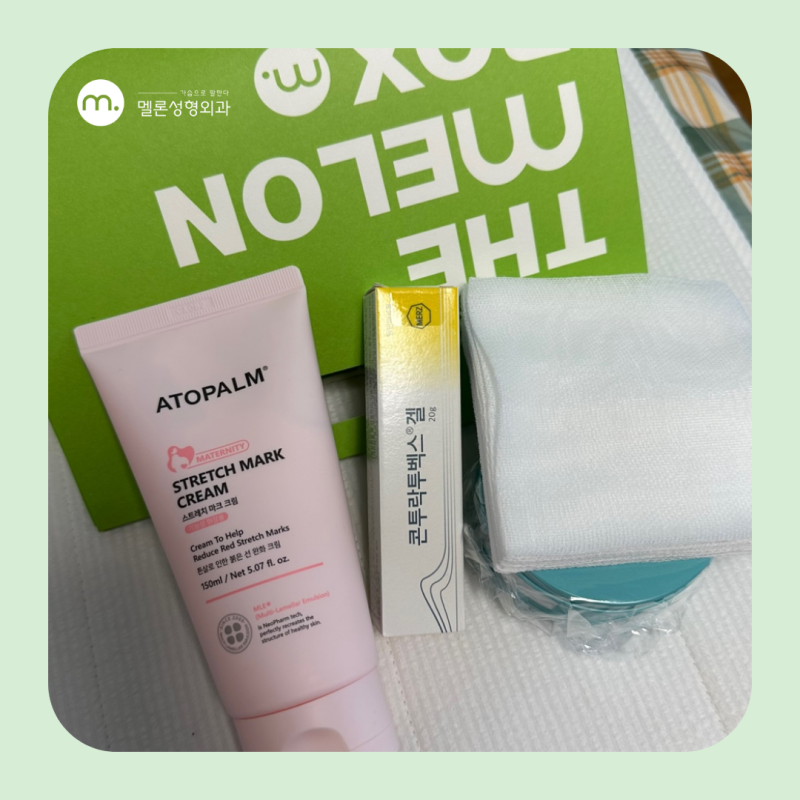
For this, Melon provides a ‘Melon Box’ containing self-care products at no additional cost. It includes medical bras to wear after surgery, scar cream, nipple patches, and other breast care products, allowing for thorough self-care even when you're alone.
Dealing with emergencies that occur at night or suddenly is also something to check during the recovery period. Melon operates a 24-hour emergency call service, ‘9.9 Emergency Call,’ allowing contact with medical staff.
It's natural to feel scared and unfamiliar with your first surgery. If you've decided to meet with medical staff, it's a good idea to write down your questions so you don't forget them and ask them thoroughly.
Checking for ongoing events at the institution can also provide financial benefits. Melon offers year-end/new year events for students and special Motiva events.
Please share any concerns you have about your breasts. We will listen carefully and examine thoroughly, accompanying each of you on your breast journey.
Thank you.
Frequently Asked Questions
Is breast augmentation possible in your 20s?
Yes, it is possible. In your 20s, breast and chest wall growth can be considered complete, allowing for surgery without hindering growth. Generally, surgery can be performed around 18 years of age, when height and weight changes have stabilized.
Where are the incision sites for breast augmentation?
There are two main incision sites. The armpit incision is popular among those in their 20s who wear revealing clothing, as it leaves no scar on the breast. The inframammary fold incision allows for a wider surgical field of view, enabling precise implant insertion.
How is the implant insertion position determined?
The implant insertion position is determined by whether it is placed above the pectoralis major muscle (subfascial method) or below the muscle (submuscular method). The subfascial method offers faster recovery but the implant's edge may be visible, while the submuscular method is more natural but requires a longer recovery time.
How long is the recovery period after breast augmentation?
Breast augmentation generally allows for a quick return to daily life, but it's best to consider at least 6 months as the recovery period. Pain and swelling may accompany the first 1-2 weeks after surgery, and light movement is possible around 2 weeks. High-intensity activities should be discussed with medical staff before proceeding.
Which implant brands are commonly used?
The most commonly used implant brands are Motiva and Mentor. Both implants have received FDA and CE approval. Mentor offers smooth, Mentor Xtra, and Mentor Boost lines, while Motiva is characterized by its elasticity and natural movement.
When can I drink alcohol and smoke after surgery?
Alcohol can dilate blood vessels and cause swelling, and smoking can be a cause of capsular contracture, so caution is advised. It is usually recommended to quit smoking altogether while undergoing surgery.