2026-07-21
Breast Augmentation for Students: 3 Reasons Winter Break is the Ideal Recovery Period
Winter break offers students an ideal recovery period for breast augmentation due to their body's excellent regenerative capacity, the three-month window for complete adhesion, and ample time for systematic post-operative care.
Breast Augmentation for Students: 3 Reasons Winter Break is the Ideal Recovery Period
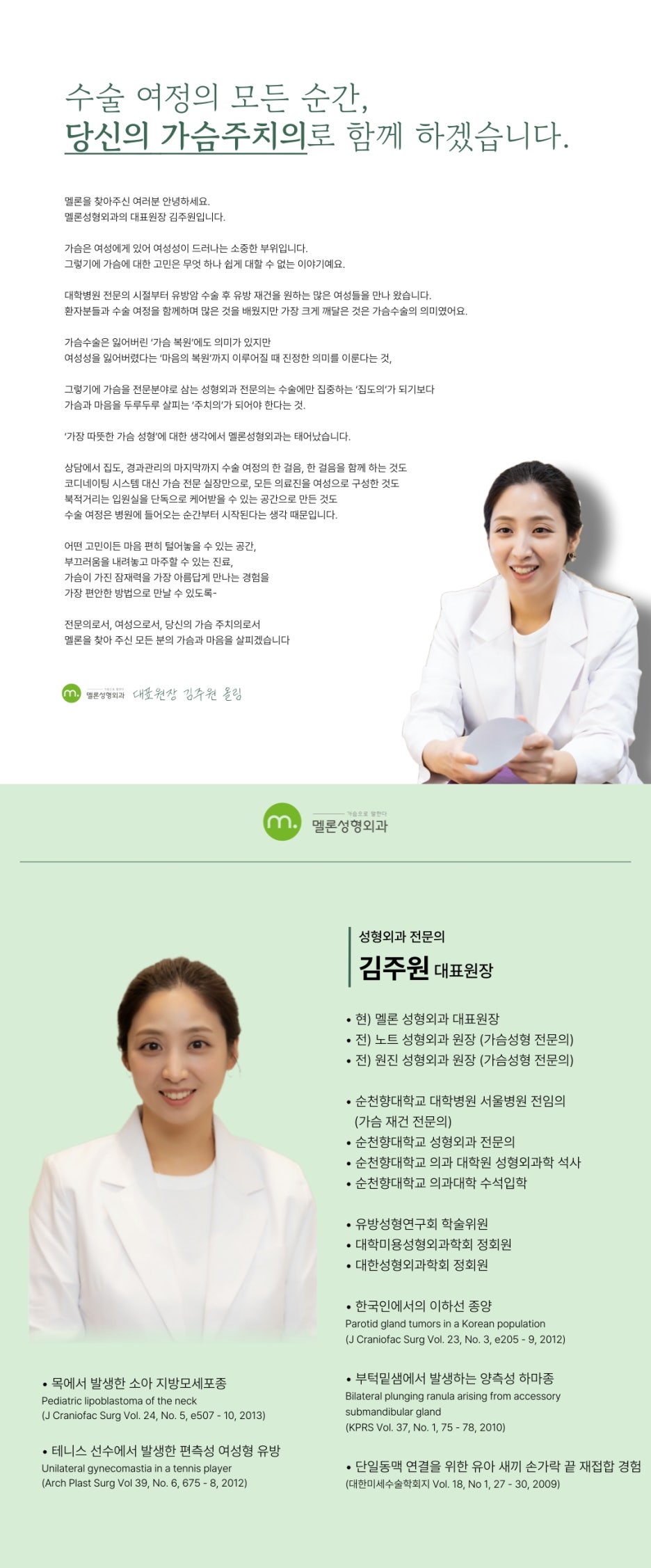
Hello. I’m Dr. Kim Joo-won, the chief director of Melon Plastic Surgery, your breast specialist for all breast concerns.
After the Suneung (college entrance exam) ends and the long winter break begins, we see an increase in inquiries about breast augmentation from students. This is a time when they are preparing for a new start before university admission, but winter break also offers favorable conditions for surgery and recovery.
It’s not just about having a lot of time; it’s the combination of a young body's regenerative power and the structure of winter break that creates an ideal environment.
‘Is it safe to have surgery in the late teens?’‘Can I fully recover during winter break?’
Today, I’ll explain why winter break is the ideal recovery period for students undergoing breast augmentation.
Breast Augmentation for Students | Completion of Growth
The late teens to early twenties is a period of excellent tissue regeneration.
Cell division is rapid, and protein synthesis like collagen and elastin is active. Wound healing after surgery is faster, and tissues adapt to implants more quickly. Swelling subsides more easily, and beautiful breasts are achieved more smoothly than in other age groups.
Metabolism is also high during this period, ensuring good blood circulation. This means that the surgical site receives sufficient nutrients and oxygen. The body quickly generates the energy needed for recovery, and waste elimination is efficient. Immune responses also function appropriately, reducing the risk of infection and controlling inflammation effectively.
The completion of growth is also an important factor.
On average, breast tissue growth is complete after the age of 18. Surgery at this stage eliminates concerns about deformation due to additional growth later. Body proportions are also largely finalized, making design prediction easier and allowing for stable long-term results.
However, growth rates can vary even at the same age, so it’s important to comprehensively consider factors like the age of menarche, recent weight changes, and family history to determine if growth is complete. Therefore, it’s crucial to confirm through sufficient pre-operative examinations that the body is ready for surgery.
Breast Augmentation for Students | 3 Months of Winter Break, The Perfect Time for Complete Adhesion

‘Can it look natural before the semester starts?’‘Can I participate in MTs or freshman welcoming parties?’
Winter break lasts approximately three months, from December to February. This period aligns perfectly with the time it takes for implants to adhere to tissues and stabilize.
Tissue adhesion after breast augmentation proceeds in stages, and the winter break period allows these stages to be naturally accommodated.
The first two weeks are the acute phase. Swelling is severe, and pain is also felt during this time. Since there are no special plans in December, you can focus on recovery by resting at home. Successfully navigating this period determines the subsequent breast recovery.
From the third week, tissue regeneration becomes active, and daily life becomes possible. You’ll be in good enough condition to attend Christmas or year-end gatherings.
After one month, initial adhesion is complete. A thin membrane begins to form around the implant, and tissue strength recovers to some extent. By the new year, light outings or meeting friends are possible without difficulty.
In the second to third months, collagen rearrangement occurs, and the breast shape stabilizes. By the time the new semester begins, it will be in a natural state, allowing you to participate in MTs or freshman welcoming parties.
Breast augmentation is a surgery that allows for a quick return to daily life, but it is also a major surgery that requires sufficient recovery and rest.
The three-month winter break provides an ideal structure for gradual recovery without rushing. During the semester, recovery management can be difficult due to classes, assignments, and gatherings, but during the break, you can focus entirely on your body.
Breast Augmentation for Students | Systematic Follow-up Care During Break
Regular follow-up checks are important after surgery.
You need to visit at 1 week, 2 weeks, 1 month, 3 months, and so on, to check your recovery status with your doctor. However, during the semester, visits can be difficult due to class schedules. It's even harder if it overlaps with assignments or exam periods. Winter break, however, has no time constraints, making it an ideal time for systematic follow-up care.
The flexibility to schedule check-up dates is also an advantage. If you have questions or feel discomfort during the recovery process, you can visit immediately. During the semester, you might wonder if you should wait until next week, but during the break, you can get immediate confirmation. Early intervention ensures smooth recovery.
Our safe and secure Melon Care program at Melon provides step-by-step recovery management. During the break, you can fully utilize this program. You can receive meticulous care for swelling management, scar care, and guidance on wearing compression bras. These are aspects that might be easily overlooked due to time constraints during the semester.
The 9.9 emergency call system also operates 365 days a year, allowing for immediate response to unexpected situations during winter break. Even if pain worsens at night or unusual symptoms are felt on weekends, you can communicate with the medical staff.
Being able to receive advice from medical staff without feeling anxious alone is also a great psychological help during the recovery process.
Breast Augmentation for Students | Pre-Surgery Checklist to Confirm

Most students are healthy, but there are still things that need to be checked before surgery.
First, it’s important to confirm that growth is complete. You need to check for changes in weight and breast size over the past year, and ensure that sufficient time has passed since menarche. Typically, growth stabilizes 3-4 years after menarche.
Underlying medical conditions are also important. Anemia, thyroid disease, and blood clotting disorders should be identified in advance before surgery. At this time, allergy and specific drug reaction tests are also conducted.
Family history is also checked, and if there is a history of capsular contracture or keloid predisposition, it is reflected in the surgical plan.
Smoking status must be confirmed. Smoking is one of the only known causes linked to capsular contracture, a common side effect of breast augmentation. If a student smokes, they must quit at least 4 weeks before surgery and continue to abstain afterward. It’s also best to avoid secondhand smoke environments as much as possible.
And psychological readiness is also important. We confirm if the individual truly desires the surgery, has discussed it sufficiently with their parents, and has the willingness to consistently manage post-operative care. For minors, parental consent is essential, and parents must participate in the process.
Winter break is an ideal time both chronologically and physically.
Melon is currently running an event for students, so if you are considering breast augmentation, please feel free to consult us anytime. We will be with you for each of your breast concerns.
Thank you.
Frequently Asked Questions
Why is winter break a good time for students to recover from breast surgery?
Winter break is advantageous for students recovering from breast surgery in several ways. The young bodies of late teens and early twenties have excellent regenerative capabilities, leading to faster wound healing and quicker adaptation to implants. Additionally, the three-month break provides ample time for the implants to adhere to tissues and stabilize, and allows for focused, systematic post-operative care that would be difficult during the school semester.
Is it safe for teenagers in their late teens to undergo breast surgery?
Yes, breast surgery is generally safe after the breast tissue growth is complete, typically around 18 years of age. Undergoing surgery at this time can reduce concerns about deformation due to additional growth later. However, individual growth rates can vary, so it's important to confirm that growth is complete through thorough pre-operative examinations, considering factors such as the age of menarche, recent weight changes, and family history.
Can my breasts look natural before the new semester starts after surgery?
Yes, the three-month winter break is sufficient time for the breasts to look natural before the new semester begins. The first two weeks after surgery are an acute phase focused on recovery, and after one month, initial adhesion is complete, allowing for light outings. In the second to third month, collagen rearrangement stabilizes the breast shape, making it natural enough to participate in MTs or freshman welcoming parties by the time the semester starts.
What essential things should I check before breast surgery?
Before breast surgery, you should check several important things. First, confirm that growth is complete (e.g., 3-4 years after menarche, no changes in weight/breast size in the past year), check for underlying conditions like anemia or thyroid disease, and assess family history of conditions like capsular contracture or keloids. Smoking, in particular, is strongly linked to capsular contracture, so you must quit at least 4 weeks before surgery and continue to abstain afterward.
How is post-operative care managed after surgery?
Regular follow-up checks are important after surgery, typically involving visits at 1 week, 2 weeks, 1 month, and 3 months to review the recovery status with the surgeon. During winter break, you can freely schedule examination dates without time constraints, allowing for systematic management. Melon Plastic Surgery provides staged recovery care, including swelling management, scar care, and guidance on wearing compression bras, and also operates a 9.9 emergency call system to prepare for unexpected situations.
How does smoking affect recovery from breast surgery?
Smoking is one of the only identified causes strongly linked to capsular contracture, a common complication of breast augmentation. Smoking can hinder blood circulation and worsen inflammatory responses, slowing down recovery and increasing the risk of complications. Therefore, it is essential to quit smoking at least 4 weeks before surgery, continue to abstain afterward, and avoid environments with secondhand smoke.