2026-07-21
Breast Augmentation: Pre- and Post-Surgery Precautions and Care
Successful breast augmentation requires meticulous pre- and post-operative care for optimal results and recovery. This guide covers essential precautions, from health checks and lifestyle adjustments to post-surgery management, including pain relief, bra use, and activity restrictions.
Breast Augmentation: Pre- and Post-Surgery Precautions and Care<
Breast augmentation is a significant choice that enhances not only appearance but also self-confidence and quality of life. However, thorough pre- and post-operative care is essential for successful results and a swift recovery. Below, we will explore the precautions to take before and after breast augmentation.
Pre-Breast Augmentation Precautions
A thorough health check-up before surgery is crucial for the safe progression of breast augmentation. It is important to clearly understand your health status before planning the surgery. The hospital will comprehensively assess the patient's physical condition through various tests, including blood tests, chest X-rays, and electrocardiograms, to confirm if they are suitable for surgery. Especially if you have chronic conditions such as high blood pressure, diabetes, or thyroid disease, it is necessary to inform the medical staff accurately and receive thorough management before and after the surgery.
Restrict Smoking and Alcohol
You should restrict smoking and alcohol consumption starting two weeks before the surgery. Smoking constricts blood vessels, increasing the risk of bleeding during and after surgery, and can slow down wound healing. Additionally, alcohol increases risks associated with anesthesia, so it is best to avoid it. You should maintain abstinence from alcohol and smoking for at least two weeks after the surgery as well.
Discontinue and Adjust Medications
If you regularly take medications such as aspirin, ibuprofen, or vitamin E, you should consult with your medical team to adjust your dosage. These medications can increase the likelihood of bleeding, so it is necessary to temporarily stop taking them before surgery. In addition to these, it is safe to inform the hospital about all medications you are taking, including nutritional supplements, herbal medicines, and health functional foods like red ginseng, and follow the medical staff's instructions before surgery.
Preparation the Day Before Surgery
The day before surgery, you should prepare comfortable clothes and other necessities in advance. Specifically, prepare front-opening or zippered clothing to wear after surgery, making it easy to put on and take off comfortably. Also, since hand movements may be uncomfortable after surgery, it is advisable to tidy up your home environment and place necessary items within easy reach.
Fasting on the Day of Surgery
For anesthesia safety, you must fast from a designated time on the day of surgery. It is generally recommended not to drink water starting 8 hours before. Failure to fast can lead to risks during the anesthesia process, so it must be strictly adhered to.
Post-Breast Augmentation Precautions
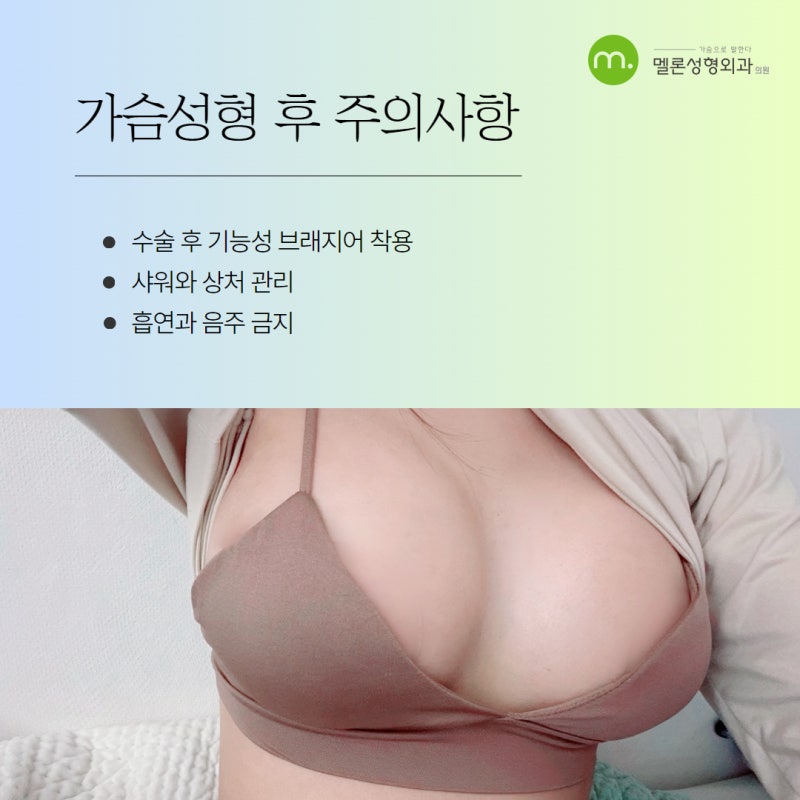
Immediate Post-Surgery Stability and Pain Management: Immediately after surgery, you may experience swelling and pain in the breast area. Take the painkillers prescribed by your medical team and use ice packs to alleviate swelling. However, be careful not to apply ice directly to the wound site. It is important to avoid strenuous movements and rest during the first few days.
Wearing a Post-Surgical Bra
After surgery, wear a post-surgical bra to maintain the position and shape of your breasts and aid in recovery. A post-surgical bra helps reduce swelling and allows the implants to settle, so it should be worn consistently for the recommended period. The duration of wear may vary depending on your individual condition and should follow the medical staff's instructions.
Showering and Wound Care
For a certain period after surgery, the wound site should not come into contact with water. Generally, it is best to avoid showering for about a week after surgery, and it is important to protect the wound site until permitted by the medical staff. When showering, be careful not to let water touch the wound and keep the wound site clean to prevent infection.
No Smoking and Alcohol
After surgery, you must avoid smoking and alcohol. Smoking slows wound healing, increases the risk of inflammation, and can increase the possibility of capsular contracture, so you should quit smoking if possible. Additionally, alcohol can affect blood circulation, increasing the risk of inflammation and bleeding, so it is best to avoid it until permitted by your medical team.
Maintain Sleeping Position
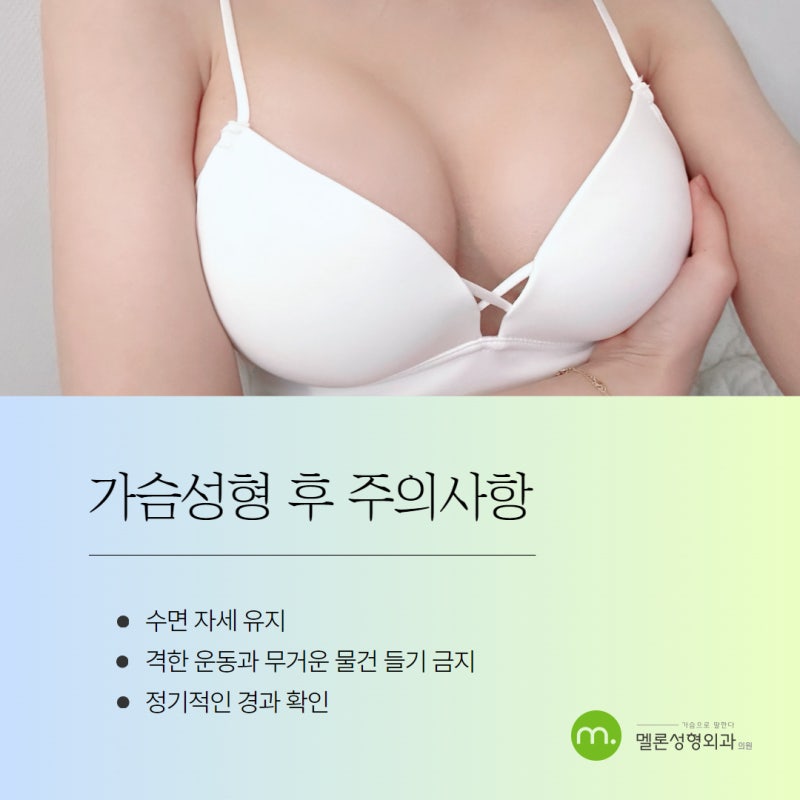
In the initial period after surgery, it is best to sleep on your back to protect your breasts. Lying on your side or stomach should be avoided as it can affect the implant's position. In particular, sleeping with your upper body slightly elevated helps reduce swelling, so it is advisable to use cushions or pillows to support your upper body.
Avoid Strenuous Exercise and Lifting Heavy Objects
After breast augmentation, you should avoid strenuous exercise or lifting heavy objects for at least 4 weeks. Excessive movement can affect the implant's position and negatively impact recovery. Activities like light walking can be done early in recovery, but resuming exercise should be done after consulting with your medical team for safety.
Regular Follow-ups
After surgery, you should visit the hospital for regular follow-up appointments. This allows for early treatment if problems arise during the initial recovery process, and it is also important for long-term monitoring of breast health. Melon Plastic Surgery continuously checks on patients' conditions after surgery and provides support to maintain an optimal state.
The Importance of Consistent Post-Breast Augmentation Care
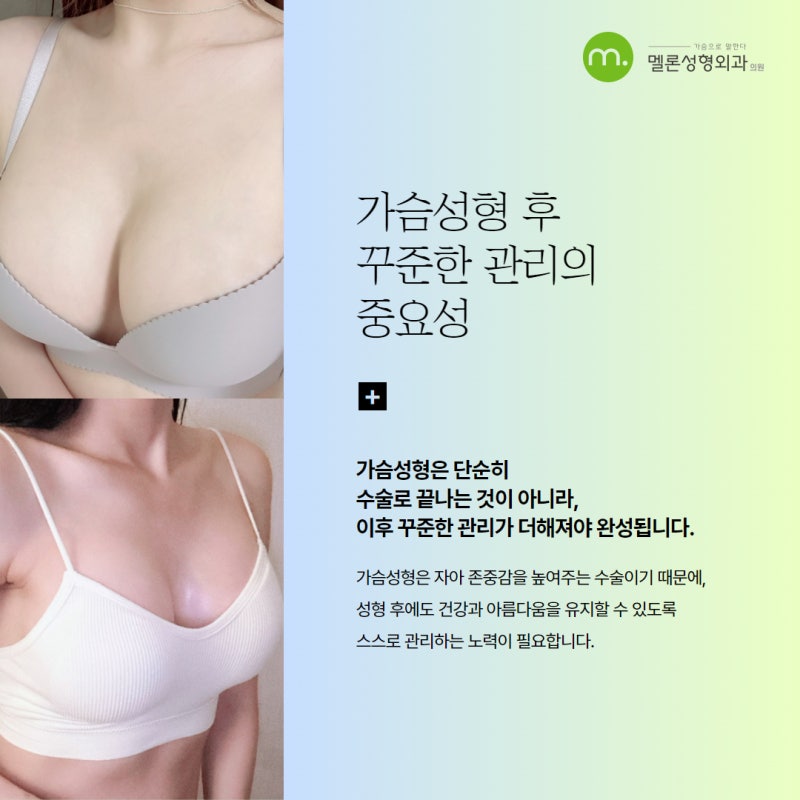
Breast augmentation is not merely completed with the surgery; it requires consistent post-operative care. Even after returning to daily life, maintaining beautiful breasts for a long time is possible through proper posture and appropriate care. Since breast augmentation is a surgery that boosts self-esteem, efforts to manage one's health and beauty are necessary even after the procedure.

Frequently Asked Questions
Why is a pre-operative health check-up necessary?
Yes, a thorough pre-operative health check-up is essential for the safe progression of breast augmentation. The hospital comprehensively checks the patient's physical condition through blood tests, chest X-rays, and electrocardiograms to determine the feasibility of the surgery. It is especially important to inform the medical staff if you have any chronic diseases.
How long should I abstain from smoking and drinking before breast augmentation?
You should refrain from smoking and drinking starting two weeks before the surgery. Smoking increases the risk of bleeding and slows wound healing, while alcohol can increase anesthesia-related risks. It is advisable to continue abstaining from alcohol and smoking for at least two weeks after the surgery as well.
Is it necessary to wear a functional bra after surgery?
Yes, it is recommended to wear a functional bra after surgery to maintain the position and shape of the breasts and aid recovery. It helps reduce swelling and allows the implants to settle, so it should be worn consistently for the recommended period, which will be determined by the medical staff.
When can I shower after breast augmentation?
After surgery, the wound area should not come into contact with water for a certain period. Generally, it is best to avoid showering for about a week after surgery, and you should protect the wound area and keep it clean to prevent infection until the medical staff permits.
What is the recommended sleeping position after surgery?
In the early period after surgery, sleeping on your back is recommended to protect your breasts. Lying on your side or stomach should be avoided as it can affect the position of the implants. Sleeping with your upper body slightly elevated can help reduce swelling.
When can I exercise after breast augmentation?
After breast augmentation, you should avoid strenuous exercise or lifting heavy objects for at least four weeks. Excessive movement can affect the position of the implants and negatively impact recovery. Light walking is possible, but it is safest to resume exercise after consulting with your medical team.