2026-07-21
Breast Augmentation Pros and Cons by Age Group - Teens, 20s, 30s, 40s, 50s and Above
This article explores the pros and cons of breast augmentation across different age groups, from teens to those over 50, highlighting age-specific considerations for optimal results.
Breast Augmentation Pros and Cons by Age Group: Teens, 20s, 30s, 40s, 50s and Above
Breast augmentation is considered for various reasons and purposes across different age groups. Since physical characteristics, recovery speed, and post-surgical maintenance can vary with age, it's crucial to understand the appropriate methods and considerations for your specific age group. This article will examine the pros and cons of breast augmentation and necessary considerations for each age group, from teens to those over 50.
Breast Augmentation for Teens (A Time for Prudence)
Teens are still in the process of physical development, so breast augmentation should be considered with caution. Female breasts typically continue to grow until around 18-20 years of age, undergoing natural changes during this period.
Pros
Correction is possible in cases of abnormal breast development due to specific diseases or deformities (e.g., congenital breast hypoplasia).
Excellent physical recovery capabilities lead to faster post-surgical recovery.
Cons and Considerations
Since the body is still growing, there's a possibility of continued physical changes even after surgery.
Surgery at too early an age may lead to unnecessary revision surgeries.
Legally, parental consent is required, and the completion of growth must be considered.
Breast Augmentation for Those in Their 20s (A Time for Enhancing Aesthetic Perfection)
By their 20s, physical development is largely complete, and concerns about breast shape and size may become more prominent. Many consider breast augmentation for aesthetic reasons, and post-surgical physical changes are relatively minimal, making maintenance easier.
Pros
Good skin elasticity and excellent recovery capabilities reduce the likelihood of post-surgical complications.
A wide range of implants is available, allowing for customized designs tailored to individual preferences.
Can enhance social life and personal satisfaction.
Cons and Considerations
Choosing excessively large implants may lead to skin sagging over time.
Selecting a size that considers overall body balance is crucial.
Coordination with work or social activities may be necessary.
Breast Augmentation for Those in Their 30s (A Time for Pursuing Naturalness)
In their 30s, breast shape can change significantly depending on whether one has experienced childbirth and breastfeeding. Many consider augmentation to improve sagging breasts after childbirth. There's also a tendency to prefer natural lines over excessively large sizes.
Pros
Can improve breasts deformed by childbirth and breastfeeding.
Possible to choose an appropriate size that considers overall body balance.
Stable post-surgical results due to a mature body structure.
Cons and Considerations
If there are plans for future childbirth and breastfeeding, surgical methods must be chosen accordingly.
Breast changes are expected after breastfeeding, so the possibility of revision surgery should be kept in mind.
It is recommended to avoid pregnancy and breastfeeding for a certain period after surgery.
Breast Augmentation for Those in Their 40s (A Time for Restoring and Improving Elasticity)
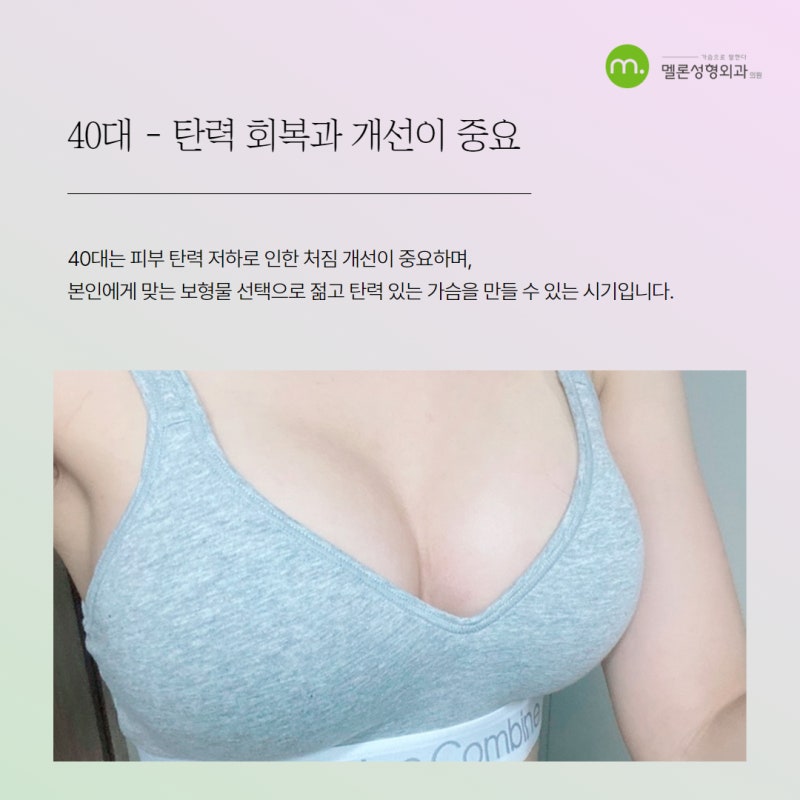
In their 40s, individuals may experience changes such as breast sagging or reduced volume due to decreased skin elasticity. Consequently, many consider breast augmentation combined with a lift, and implants that can compensate for skin sagging are preferred.
Pros
Can improve sagging breasts, restoring a youthful and firm appearance.
Can adjust breast shape and volume simultaneously.
Possible to combine implant insertion with a lift depending on the degree of skin sagging.
Cons and Considerations
Skin elasticity is lower compared to those in their 20s and 30s, so recovery time may be relatively longer.
Tissue changes due to aging make implant selection and surgical methods even more critical.
Individual health status (hormonal changes, skin regeneration ability, etc.) must be thoroughly considered.
Breast Augmentation for Those 50 and Above (A Choice for Functional Improvement and Balance)
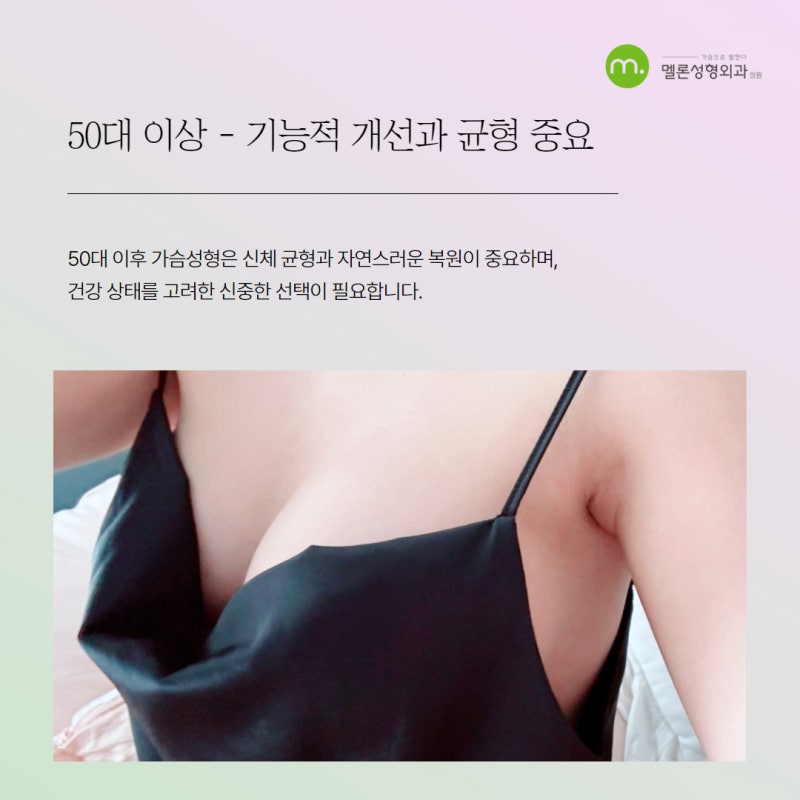
For breast augmentation after 50, the primary goal shifts from purely aesthetic purposes to improvements that consider overall body balance. Skin elasticity significantly decreases, and general health status also plays a crucial role in the surgical decision.
Pros
Can maintain a more natural and healthy appearance by balancing the body.
Effectively restores breasts deformed by childbirth and aging.
Modern surgical techniques allow for safer and less burdensome augmentation.
Cons and Considerations
Skin recovery may be slower than in younger age groups, requiring a sufficient recovery period.
Overall health status (blood pressure, diabetes, etc.) must be considered to determine surgical suitability.
Excessively large increases in size may become a burden.
Age-Specific Breast Augmentation Trends
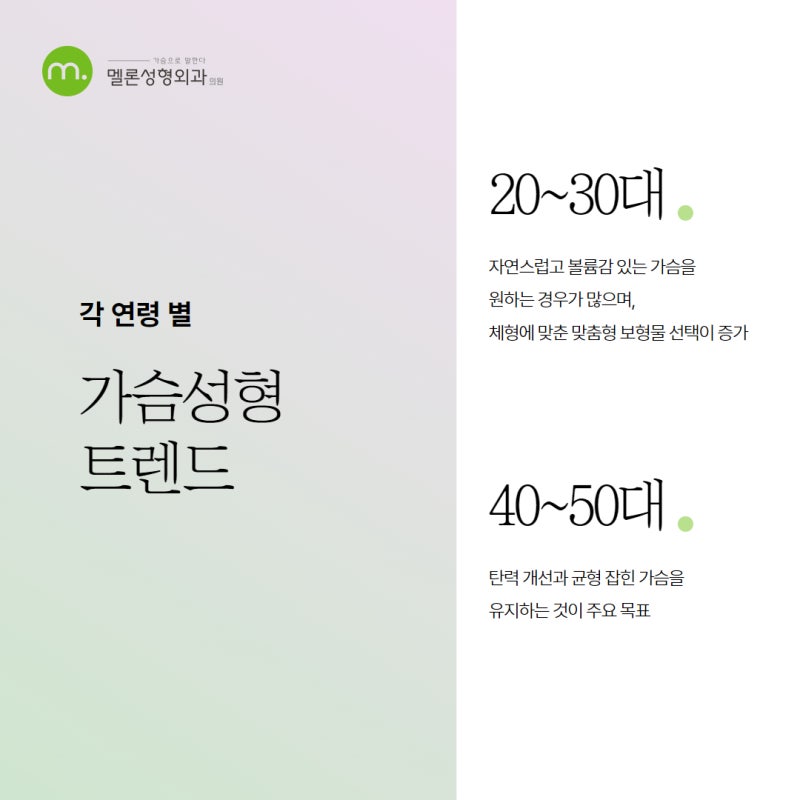
Recent breast augmentation trends are evolving by age group, with a stronger preference for natural shapes and sizes.
20s-30s: Many desire natural and voluminous breasts, with an increasing selection of customized implants tailored to body type.
40s-50s and above: The main goals are improving elasticity and maintaining balanced breasts.
It is most important to choose an appropriate method considering your age group and physical condition. When considering breast augmentation, careful decision-making through thorough consultation and professional advice is necessary.
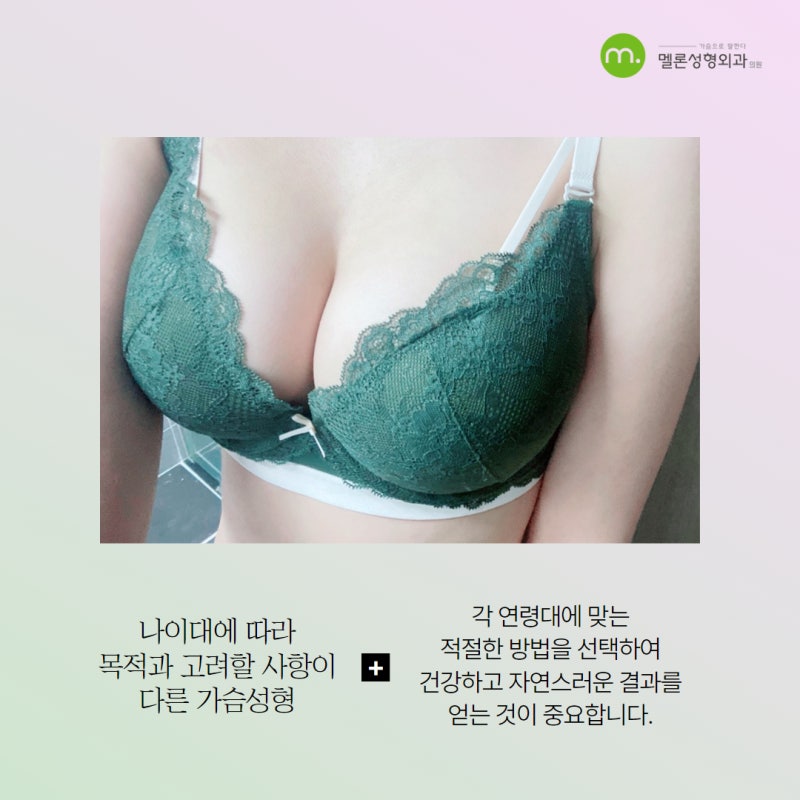
Breast augmentation has different purposes and considerations depending on the age group. A cautious approach is needed for teens, while aesthetic perfection is crucial for those in their 20s and 30s. For those in their 40s and 50s, the goal is to address age-related breast changes and restore elasticity. Choosing the appropriate method for each age group is important to achieve healthy and natural results. We hope you achieve satisfactory results through careful selection.
Frequently Asked Questions
Can teenagers get breast augmentation?
Yes, correction is possible in cases of abnormal breast development due to specific diseases or deformities. However, a cautious approach is required for teenagers as they are still in the process of physical development, and legal guardian consent is required.
What are the advantages of breast augmentation in your 20s?
In your 20s, physical development is complete, and skin elasticity and recovery capabilities are excellent, leading to a lower possibility of side effects. Various implant choices and customized designs are possible, which can increase satisfaction in social life.
What should be considered for breast augmentation in your 30s?
In your 30s, breast shape changes significantly due to childbirth and breastfeeding experiences, so the focus is on improving deformed breasts. If there are plans for breastfeeding, it is important to choose a surgical method that considers this, and the possibility of revision surgery should also be kept in mind.
What is important for breast augmentation in your 40s?
In your 40s, decreased skin elasticity often leads to breast sagging or volume loss, so many consider augmentation combined with a lift. Choosing implants that can compensate for skin sagging and considering individual health status are important.
What is the main purpose of breast augmentation for those 50 and older?
For those 50 and older, the main purpose of breast augmentation is functional improvement considering body balance rather than simple cosmetic purposes. It aims to restore breasts deformed by childbirth and aging, and to maintain a more natural and healthy appearance.
What are the trends in breast augmentation by age group?
Recent breast augmentation trends show a strong preference for natural shapes and sizes across all age groups. Those in their 20s and 30s aim for voluminous, customized implants, while those in their 40s and 50s and older aim for improved elasticity and balanced breast maintenance.