2026-07-21
Capsular Contracture After Breast Augmentation? Causes, Symptoms, and Treatments
Learn about capsular contracture (구형구축) after breast augmentation: its causes, symptoms like hardened breasts and pain, and effective treatment options, including surgical and non-surgical approaches.

Capsular Contracture After Breast Augmentation? Causes, Symptoms, and Treatments
Breast augmentation is a surgery chosen for a beautiful breast line. However, rarely, a condition called ‘capsular contracture’ can appear after the surgery. This is also known as ‘구형구축’ (goohyeong-guchuk) and refers to the symptom where the tissue around the implant excessively contracts, causing the breast to harden.
Today, we will clearly explain the causes, symptoms, and effective treatment methods for capsular contracture.
What exactly is capsular contracture?
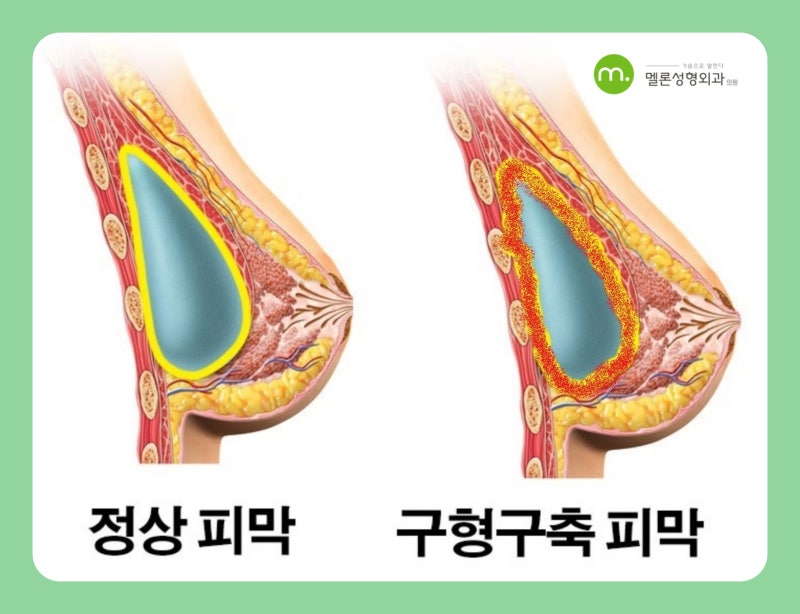
When an implant is placed inside the breast, our body recognizes it as a foreign object and forms a thin, soft membrane (capsule) around the implant as a defense mechanism. This capsule also helps the body and the implant to harmonize.
However, for various reasons, this capsule can abnormally thicken and contract, compressing the implant. This is the phenomenon of capsular contracture, and if severe, it can lead to breast shape deformation and pain, requiring attention.
What are the main causes of capsular contracture?

While there are several suspected causes of capsular contracture, smoking is the only clearly identified cause.
Smoking hinders blood circulation in the skin and tissues of the operated body, increases inflammatory responses, and the nicotine constricts blood vessels and reduces blood flow, delaying healing at the surgical site.
Consequently, the risk of the capsule forming thicker and harder than normal increases. In fact, smokers have a significantly higher risk of developing capsular contracture compared to non-smokers, so strict smoking cessation before and after surgery is a crucial matter to adhere to for breast augmentation.
How do the symptoms of capsular contracture appear?

In the early stages of capsular contracture, you may not feel any particular symptoms, but as it progresses, several clear symptoms appear.
The first is ‘breast hardness’. As the capsule around the implant thickens, you may feel that the touch is not soft and becomes increasingly firm.
The second is ‘breast shape deformation’. There may be changes such as the breast appearing unnaturally high or asymmetry, and in severe cases, it may appear as a round, deformed shape.
The third is ‘discomfort and pain’. If the thickened capsule compresses the implant, pain may occur, or the breast area may feel intermittently uncomfortable. If any of these symptoms are suspected, it is important to visit a hospital early.
Is there a way to prevent capsular contracture?
Thorough management before and after surgery and precise surgical techniques are key to preventing capsular contracture. Hygiene during the surgical process is also important. Therefore, when choosing a hospital, it is best to select a clean hospital with strict hygiene management. Consistently taking prescribed antibiotics after surgery and observing and detecting early abnormal symptoms through regular follow-ups are also very important.
Post-operative care methods such as appropriate massage or stretching can also help prevent capsular contracture. However, applying strong pressure unconditionally can be counterproductive, so consultation with a specialist is absolutely necessary for such management.
And most importantly, I hope you quit smoking before and after the surgery. I recommend quitting smoking permanently for your health if possible.
What are the treatment methods for already developed capsular contracture?
If it occurs in the early stages, improvement can be expected with medication or non-surgical treatments. However, if the symptoms are severe or have progressed to some extent, surgical treatment may be necessary.
Surgical treatment is usually divided into two methods.
The first is a surgery called ‘capsulotomy’, which involves incising a part of the thickened capsule to secure enough space for the implant to move freely.
Another method is ‘capsulectomy and implant replacement’, which involves removing the existing thickened capsule and implant and inserting a new implant. At this time, changing the position of the implant or changing the type of implant can also enhance the treatment effect.
Various research and technological advancements are continuously being made for the prevention and treatment of capsular contracture. If capsular contracture occurs, it is important to choose a suitable treatment method tailored to your current condition, so it is advisable to have a thorough consultation with an experienced specialist.


Frequently Asked Questions
What exactly is capsular contracture?
Capsular contracture refers to the condition where the breast becomes hard due to excessive contraction of the tissue around the implant after breast augmentation. It occurs when the body recognizes the implant as a foreign object, causing the capsule formed around it to abnormally thicken and contract. In severe cases, it can lead to breast shape deformation and pain.
What are the main causes of capsular contracture?
The only clearly identified cause of capsular contracture is smoking. Smoking interferes with blood circulation in the surgical area, increases inflammatory responses, and reduces blood flow, thereby increasing the risk of the capsule forming thicker and harder than normal.
What are the symptoms of capsular contracture?
The main symptoms of capsular contracture include breast hardness, breast shape deformation, and discomfort and pain. In the early stages, no particular symptoms may be felt, but as it progresses, the capsule around the implant thickens, making it feel hard, and the breast may unnaturally deform or pain may occur.
How can I prevent capsular contracture after breast augmentation?
To prevent capsular contracture, strict smoking cessation before and after surgery is most important. Additionally, choosing a hospital with thorough hygiene management, consistently taking prescribed antibiotics, regular follow-up observations, and appropriate massage or stretching discussed with a specialist can also be helpful.
How is capsular contracture that has already occurred treated?
In the early stages, improvement can be expected with medication or non-surgical treatments. However, if symptoms are severe or have progressed, surgical treatments such as capsulectomy or capsulotomy and implant replacement may be necessary. It is important to consult with a specialist for a treatment plan appropriate for your current condition.