2026-07-21
What are the criteria for a good breast revision surgery clinic in Gangnam? 3 things more important than cost
Considering breast revision surgery? Learn about the 3 crucial factors more important than cost, including timing, scar management, and precise diagnosis, to ensure a successful outcome.
What are the criteria for a good breast revision surgery clinic in Gangnam? 3 things more important than cost

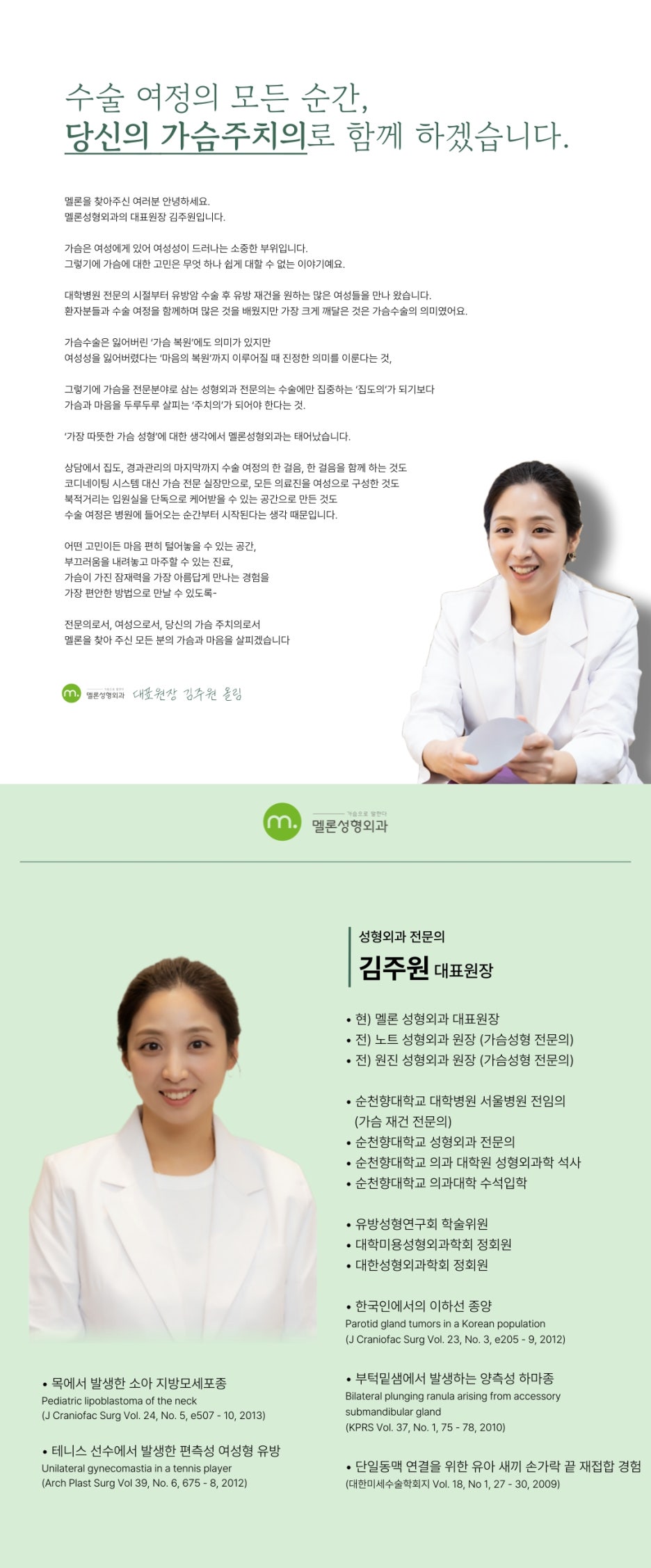
Hello. I'm Dr. Kim Joo-won, the head director of Melon Plastic Surgery, your breast specialist with solutions for beauty.
Today, we're talking about breast revision surgery.
Breast revision surgery is a second surgery performed after the initial operation, usually considered when detailed adjustments are needed. This includes situations where the shape, feel, or position of the operated breast has changed, when complications requiring surgery occur, when you want to change the size or shape, or when there's an issue with the implant.
Because the reasons and justifications for wanting the surgery are clear, the perspective for choosing a medical institution or medical team also changes. Patients often become more meticulous than they were for their first surgery.
‘Does the surgical method for breast revision vary depending on the condition?’‘What are the criteria for a good hospital?’
If you're considering breast revision surgery, you'll likely search for keywords like reviews, cost, and implants. However, there are points to consider beforehand that can help with your decision. I'll now tell you about the three criteria for breast revision surgery that you should look at before cost.
Breast Revision | Causes for Consideration and Appropriate Timing for Surgery
What are the reasons for considering revision surgery?
The causes are diverse. Sometimes it's due to a change in the position of the implant established in the first surgery, or complications like capsular contracture. However, in many cases, dissatisfaction with the shape and size is the reason for the surgery.
So, why does the implant's position change, and why does capsular contracture occur?
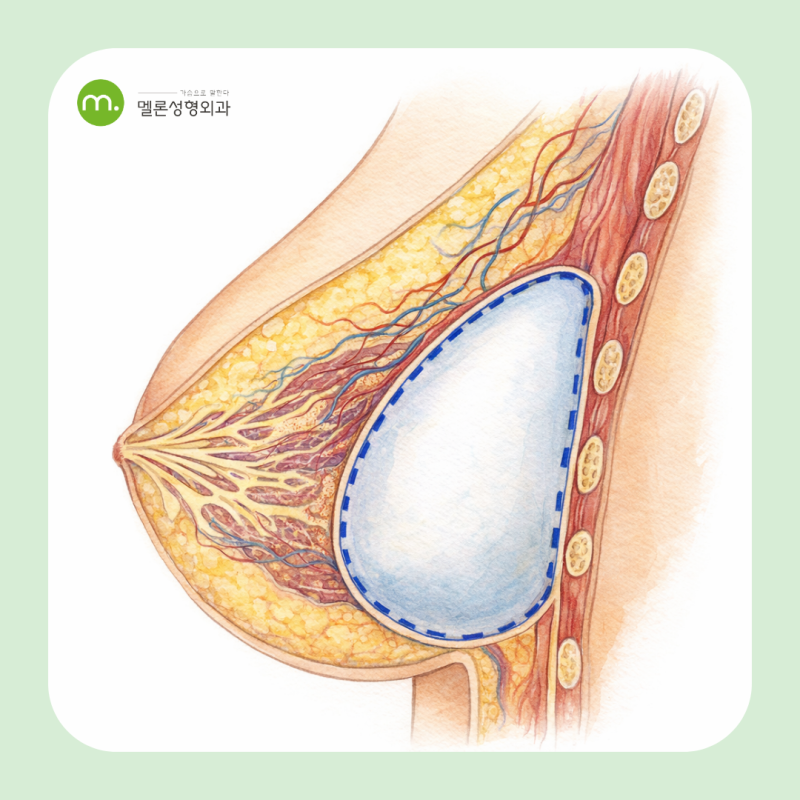
Issues with the space play a significant role in the causes of revision surgery. During breast augmentation, an implant is inserted into a space inside the breast, which is called the breast pocket. The size and shape of this pocket vary depending on one's natural physique.
The process of enlarging or refining this space precedes implant insertion. Occasionally, after the first surgery, the breast pocket may become too wide or too tight. In such cases, the implant's position might shift. The breast might appear to sag as if it has dropped, or rotate as if it has moved sideways. Consequently, revision surgery is considered.
Capsular contracture is a common complication of breast augmentation. Simply put, it's a phenomenon where the membrane surrounding the implant hardens. When an implant is placed inside the breast, our body, which is highly capable of detecting danger signals, recognizes the implant as a foreign object and tries to isolate it from the body.
It forms a thin membrane to encapsulate the implant. This membrane is called the ‘capsule’. Capsule formation is a natural phenomenon that occurs in everyone. The problem arises when this capsule becomes abnormally thick, a condition known as capsular contracture. Because the capsule becomes thick and hard, the feel of the operated breast also becomes hard, and in severe cases, the shape can be deformed.
To prevent its occurrence as much as possible, medication for capsular contracture is taken for a certain period after surgery. While constitutional factors may also play a role and much research is ongoing, smoking is currently the only known cause of capsular contracture. (I often tell patients to try quitting smoking while they're getting surgery.)
Although I've discussed implant displacement and capsular contracture, there are various other reasons for undergoing breast revision surgery. Implant rupture, replacement of older generation implants, and changes in shape or size are also significant causes.
‘The first point more important than cost in breast revision surgery is the timing of the surgery.’
This is because even if you want to have it immediately, there's a specific period when it can be performed. Revision surgery can only be considered at least 6 months to 1 year after the first surgery. Breast surgery fundamentally requires the process of refining and manipulating breast tissue. Since implants are inserted in most cases, it's a significant change for the body.
The 6-month to 1-year period is when the breast tissue achieves a certain degree of stabilization. If surgery is rushed instead of waiting for the body to recover, post-operative scar reactions or capsular adhesion can worsen.
Sometimes I meet people who feel frustrated by this waiting period, and I tell them this: ‘Your body needs enough time to recover.’ Please remember that stable breast tissue leads to stable results in revision surgery, especially if you're feeling impatient.
Breast Revision | Will I have two scars if I undergo surgery twice?
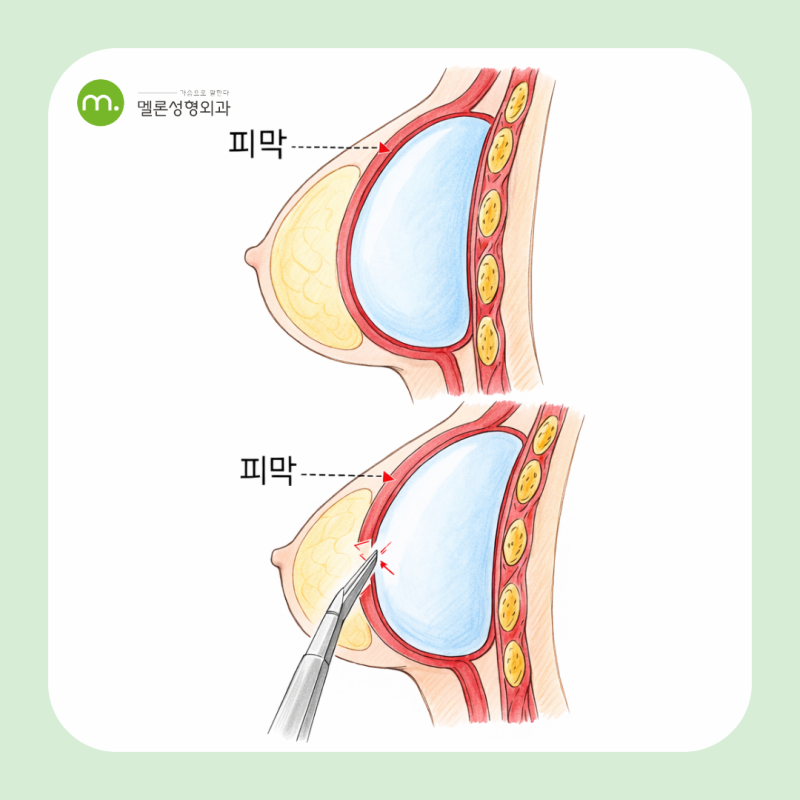
‘Can't the incision site from the first surgery be reused?’‘Doesn't a larger capsule removal area increase the risk?’
A common question about breast revision surgery concerns scars. From whether an additional scar will form to whether the incision site from the first surgery can be reused, everyone naturally wants to minimize scarring.
Undergoing revision surgery doesn't necessarily mean you'll get an additional scar. It's possible to reuse the incision site from the first surgery where the implant was inserted. In fact, most revision surgery cases proceed by utilizing existing scars rather than creating new ones, whenever possible. However, this isn't applicable to all cases.
The incision site can vary depending on the reason for revision surgery, the condition of the breast, and the overall physical condition.
One of the key aspects in performing breast revision surgery is capsule removal. Depending on the condition, partial or complete removal may be performed. As mentioned earlier, the capsule is a membrane surrounding the implant, and sometimes it forms thickly when it should be thin.
Depending on the surgical method of the first surgery, severe adhesion between breast tissue and the implant can occur. (For example, even breast filler procedures, which might seem simple, can potentially lead to adhesion.) If capsular adhesion is severe, complex intertwined tissues must be separated and the capsule removed, which can necessitate a different incision site.
This can apply to cases where the first surgery was performed with an axillary incision, due to the need for clear visibility. The armpit is distant from the breast, making it difficult to clearly assess the extent and scope of adhesion through an axillary incision in some cases.
Breast Revision | Why Precision in Diagnosis is Required and Equipment that Aids Surgery
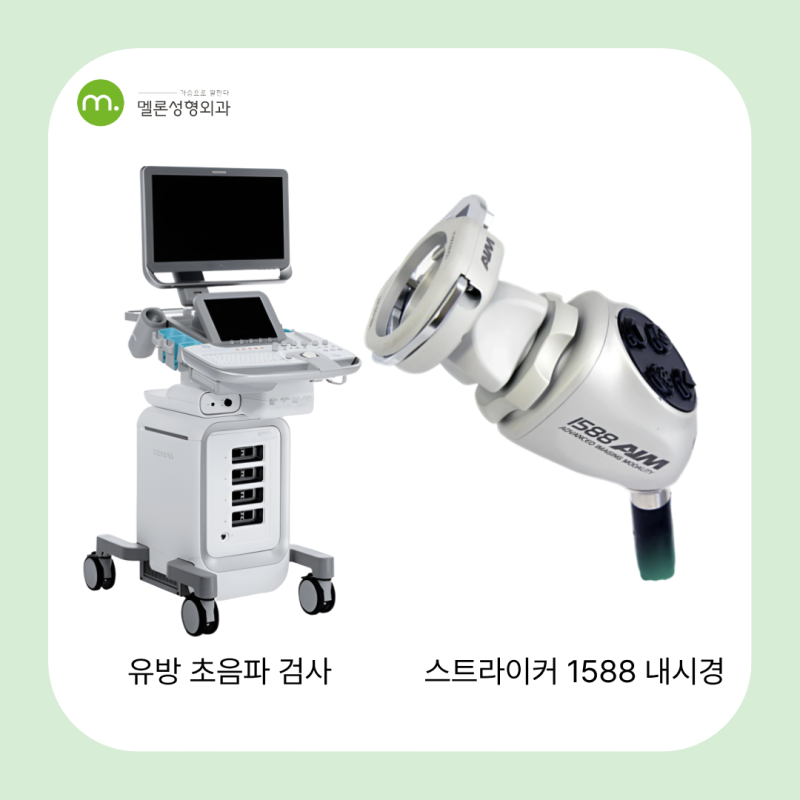
In revision surgery, the endoscope is a capable device that plays a crucial role. An endoscope is a surgical instrument that magnifies the inside of the breast through a small camera. It helps reduce unnecessary damage by allowing the surgeon to identify adhesion sites or potential bleeding points with the endoscope during dissection.
Ultrasound also plays an equally important role. As mentioned earlier, tissue that has undergone surgery once can have more complex adhesions than expected. While some aspects can be understood through visible form and palpation, there are limitations in discerning detailed internal structures. Therefore, ultrasound is used to assess the condition of the implant and capsule.
Even with the same surgical name, ‘breast revision surgery’, the actual surgical content varies for each patient. This is because the conditions to consider, such as chest wall structure, skin type and thickness, breast pocket condition, form and shape, and the incision site of the first surgery, differ for each case, and thus the approach and surgical technique may also vary. Therefore, all processes of revision surgery, from consultation to operation and post-operative care, must be viewed and examined with a different perspective than for the first surgery.
‘The second point more important than cost in surgery equipment is a detailed and three-dimensional assessment of my condition and a system tailored to me.’
If you're considering revision surgery, start by thoroughly checking your current condition.
Breast Revision | What to Look for Importantly in Revision Surgery?
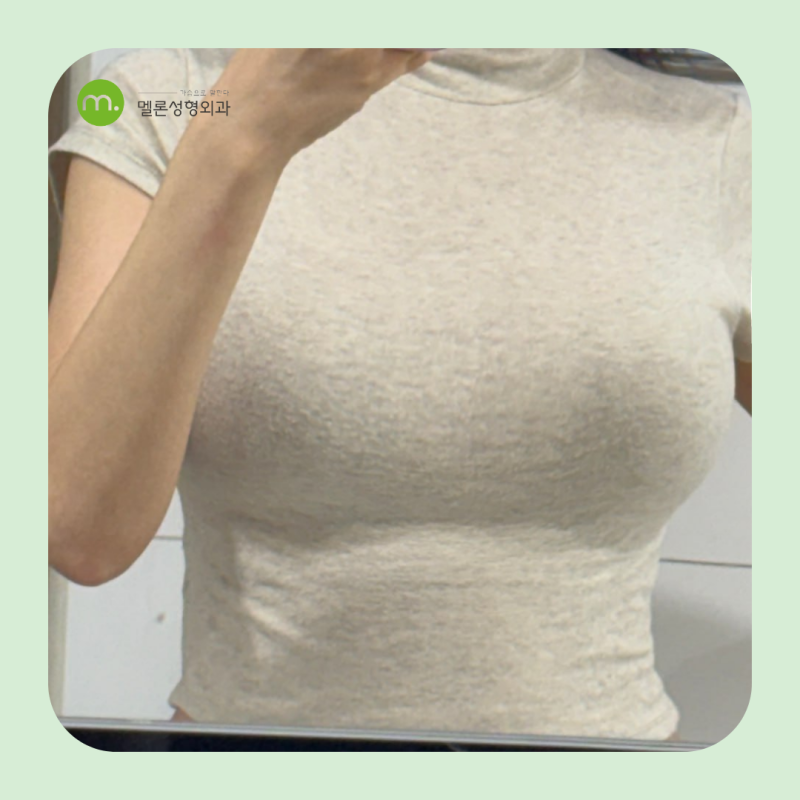
If the first surgery led to the need for revision, or if a highly difficult revision surgery is required, there are things to consider before cost.
These include a clear analysis of whether another surgery is needed and why, a diagnosis of the current tissue condition, a clear solution for the difficulty level of the operation, and finally, recovery management tailored to your specific condition.
Therefore, for revision surgery, ‘why it is needed’ is more important than ‘how much it costs’.
‘The third point more important than cost in breast revision surgery is a clear solution and delicate care.’
If you're wondering how to achieve more satisfactory results, please consult with your doctor. We will accompany you on your breast journey with solutions for beauty.
Thank you.
Frequently Asked Questions
When should I consider breast revision surgery?
You can consider breast revision surgery when the shape, feel, or position of your breasts has changed after the first surgery, when side effects occur, when you want to change the size or shape, or when there is an issue with the implant. It is usually performed when detailed adjustments are needed.
When can I get breast revision surgery?
Breast revision surgery can be considered at least 6 months to 1 year after the first surgery. This period is necessary for breast tissue to stabilize and for the body to recover. Rushing the surgery too early can worsen scar reactions or capsular contracture.
Will new scars form during breast revision surgery?
No, undergoing revision surgery does not necessarily mean you will get an additional scar. In most cases, the surgery is performed using the same incision site where the implant was inserted during the first surgery. However, the incision site may vary depending on the reason for the revision or the condition of the breast.
Why does capsular contracture occur, and how can it be prevented?
Capsular contracture is a phenomenon where the capsule surrounding the implant becomes abnormally thick and hard. It occurs as a natural process where our body recognizes the implant as a foreign object and forms a capsule, and smoking is the only known cause. To prevent its occurrence, it is important to take capsular contracture medication for a certain period after surgery and to quit smoking.
Why are endoscopy and ultrasound important in breast revision surgery?
Endoscopy helps to visualize the inside of the breast on a larger scale, allowing for the identification of adhesion sites or potential bleeding points, thereby reducing unnecessary damage. Ultrasound plays a crucial role in assessing detailed internal structures, as well as the condition of the implant and capsule, which are difficult to ascertain with the naked eye. These devices aid in precise diagnosis and safe surgery.
What is more important than cost in breast revision surgery?
More important than cost in breast revision surgery are a detailed and three-dimensional assessment of the individual's condition and a customized system. A clear analysis of the reason for surgery, diagnosis of the current tissue state, solutions for the difficulty level, and personalized recovery management are key to satisfactory results.