2026-07-21
Why Regular Implant Check-ups are Important After Breast Augmentation
Regular implant check-ups are crucial after breast augmentation to monitor for changes, prevent complications like capsular contracture or rupture, and maintain breast health.
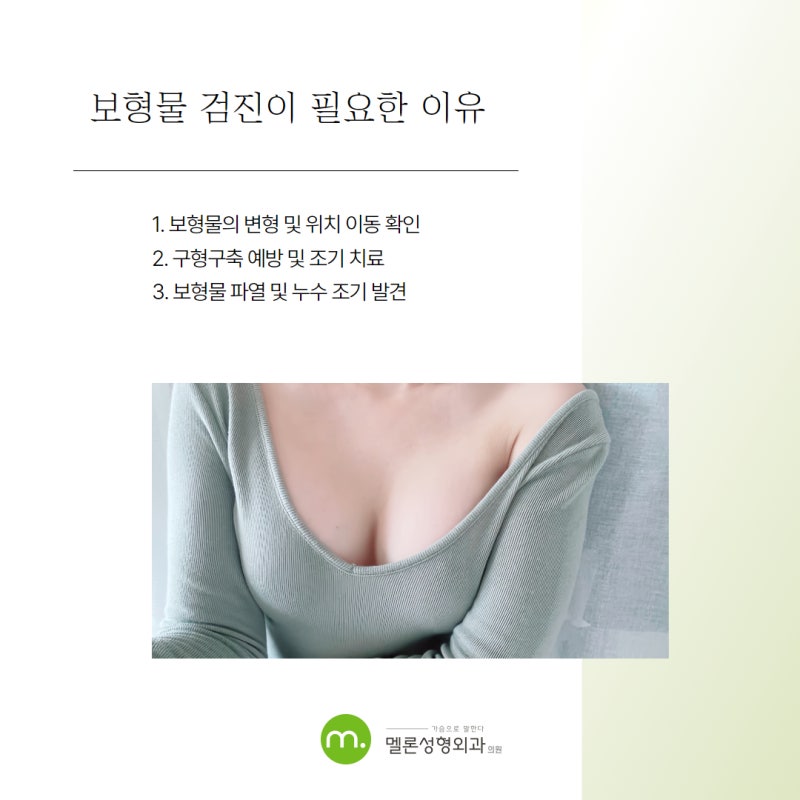
Why Regular Implant Check-ups are Important After Breast Augmentation

Many individuals who have undergone breast augmentation tend to lose interest in the condition of their implants after a certain period post-surgery. However, implants can undergo various changes inside the body, and neglecting these changes can lead to unexpected problems. Regular implant check-ups are more than just simple inspections; they are an essential process for maintaining healthy and beautiful breasts.
Reasons Why Implant Check-ups Are Necessary
1. Checking for Implant Deformation and Displacement
Implants can naturally deform over time. Especially in cases of high activity levels or thin tissue, implants may sag downwards or shift sideways. Regular check-ups help confirm if the implants are in the correct position and allow for correction if necessary.
2. Preventing and Early Treatment of Capsular Contracture
Capsular contracture is a phenomenon where the tissue surrounding the implant abnormally hardens, which can make the breast feel firm and cause pain. Severe capsular contracture may even require revision surgery. It is crucial to detect early changes through periodic check-ups and take appropriate measures.
3. Early Detection of Implant Rupture and Leakage
Implants can develop microscopic ruptures due to external impact or aging. In the case of silicone implants, a rupture may not cause significant external changes, making it difficult to detect on one's own. However, since there is a possibility of implant rupture/damage, it is necessary to detect and resolve problems early through regular ultrasound examinations.
Implant check-ups are not just about confirming the condition of the implants; they are also a process of checking overall breast health. They can help identify lumps or other abnormal signs within the breast tissue, greatly aiding in early disease prevention.
Recommended Frequency for Implant Check-ups

6 months to 1 year after surgery – During the first year after surgery, it is necessary to confirm that the implants have settled well.
Check-ups every 2-3 years – Even if there are no particular abnormalities, it is recommended to check the condition of the implants with an ultrasound examination once every 2-3 years.
Regular check-ups after 10 years – Most implants can be used for over 10 years, but as more time passes, the likelihood of internal wear increases, requiring more careful management.
Methods of Implant Check-ups
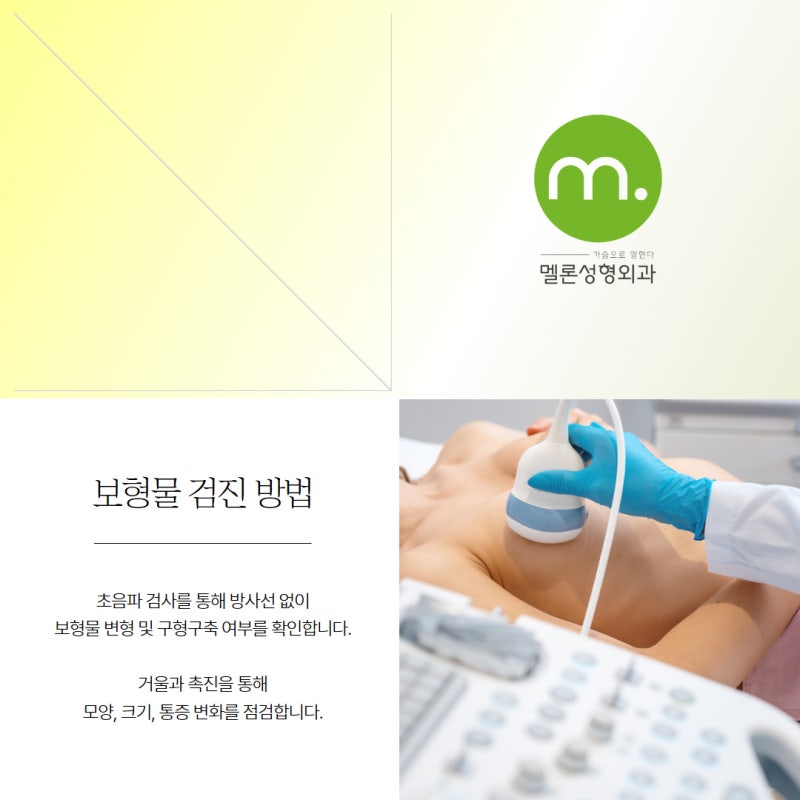
1. Ultrasound Examination
Ultrasound examination is a method that can relatively accurately confirm the position and internal condition of the implant without radiation exposure. It can evaluate implant deformation and the progression of capsular contracture.
2. Physical Self-Examination
In conjunction with regular hospital check-ups, performing self-examinations is even more effective. It is important to check the shape and size of the breasts in front of a mirror and feel for any unusual firmness or pain.
Reasons Not to Postpone Implant Check-ups

Possibility of Capsular Contracture – If capsular contracture is not detected, its symptoms can worsen, causing breast deformation and pain. Therefore, it is advisable to confirm this through regular check-ups.
Possibility of Implant Rupture – Implant damage is rare, but often not felt by oneself when it occurs. Thus, it is important to check for abnormalities through regular check-ups. If a rupture is confirmed, it is better to replace the implant to maintain health and beauty rather than postponing it.
Unnecessary Additional Surgery – Problems that could be resolved with early detection may eventually require revision surgery if check-ups are postponed.
Habits for Maintaining Healthy Breasts

To maintain breast implants healthily for a long time, in addition to regular check-ups, daily management is important.
Avoid violent impacts – Be careful not to receive strong pressure or external impacts.
Manage weight changes – Rapid weight changes can affect the shape of the breasts, so consistent health management is recommended.
Wear functional underwear – For a while after surgery, wear functional underwear that supports the breasts to ensure the implants remain stable in the correct position.
Correct sleeping posture – After surgery, sleeping on your stomach can put pressure on the breasts and affect implant position. Therefore, it is important to maintain a correct sleeping posture, such as leaning on a cushion or sleeping on your back.

Implant check-ups after breast augmentation are not merely an option but an essential process for maintaining healthy and beautiful breasts. Regular check-ups allow for early detection of unexpected problems and appropriate action when necessary. Interest and care are needed for healthy breasts, which can lead to satisfactory results for a longer period. Don't forget your regular check-ups and protect your precious health!


Frequently Asked Questions
Why is breast implant examination important after breast augmentation?
Yes, it is important. Implants can deform or shift over time, and problems such as capsular contracture or rupture can occur. Regular check-ups can help detect these problems early and address them appropriately to maintain healthy and beautiful breasts.
What problems can occur with breast implants?
Implants can deform or shift, and capsular contracture, where the tissue surrounding the implant hardens, can occur. There is also a possibility of microscopic ruptures or leaks due to external impact or aging.
What is the recommended frequency for breast implant examinations?
The first examination is recommended 6 months to 1 year after surgery. If there are no particular abnormalities, it is advisable to have an ultrasound examination every 2-3 years, and more careful regular check-ups are needed after 10 years.
How is an implant examination performed?
Mainly, an ultrasound examination is used to check the position and internal condition of the implant, whether it is deformed, and whether capsular contracture is progressing. It is effective to combine self-examination, where you check the shape and size of your breasts in a mirror and feel them, with hospital examinations.
What problems can arise if implant examinations are delayed?
Delaying examinations can lead to severe capsular contracture, causing breast deformation and pain, or failure to detect implant rupture early. This often leads to unnecessary additional surgeries or reoperations.
Are there any lifestyle habits for implant management?
Yes, there are. It is advisable to avoid violent impacts, manage rapid weight changes, and wear functional underwear for some time after surgery. It is also important to avoid sleeping on your stomach and maintain a correct sleeping posture.