2026-07-21
Gangnam Station Breast Reconstruction: Pros, Cons, Timing, and Post-Care – A Comprehensive Guide!
A comprehensive guide to breast reconstruction surgery at Gangnam Station, covering its advantages, disadvantages, optimal timing, and essential post-operative care.

Gangnam Station Breast Reconstruction: Pros, Cons, Timing, and Post-Care – A Comprehensive Guide!

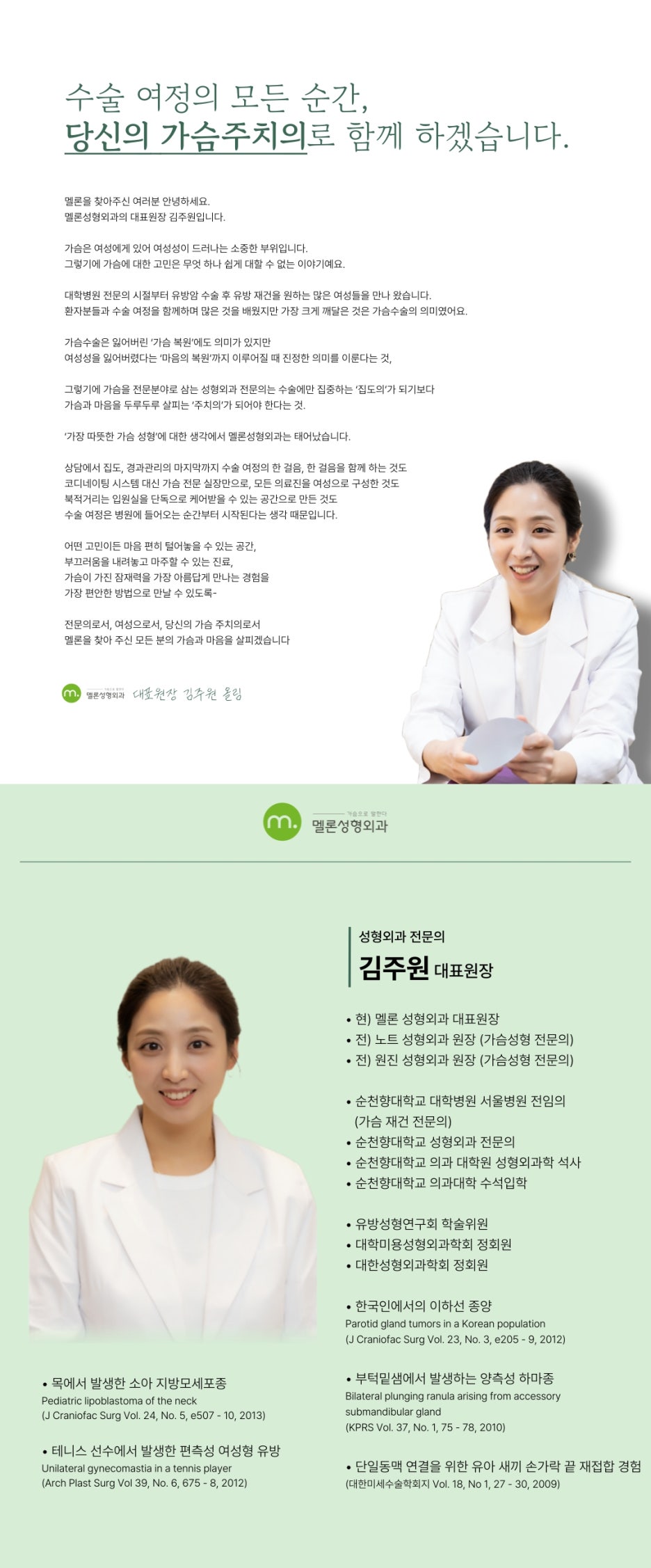
Hello. I am Dr. Kim Joo-won, the chief director of Melon Plastic Surgery, your breast specialist offering solutions for beautiful breasts.
Today, we'll be discussing a topic that might be a bit challenging: breast reconstruction surgery. This procedure is primarily performed for patients who have undergone mastectomy due to breast cancer. It's a surgery to restore the lost breast line.
Illnesses can strike anyone unexpectedly, and those affected often feel a great sense of injustice. Through my work at medical institutions and meeting women who have undergone breast reconstruction, I've come to realize something important:
‘For those who have lost a breast to breast cancer, a clean removal of the cancer alone cannot be considered a complete cure. True healing includes the restoration of the lost breast.’ Thus, breast reconstruction is a process that rebuilds not only the breast but also the psychological well-being.
‘Will my breast be restored to its former state after reconstruction surgery?’
Since the extent of cancer, treatment scope, and breast condition vary for each individual, questions about breast reconstruction surgery are also diverse. Today, I will briefly summarize the concept of breast reconstruction, its timing, and management methods. I hope this information will be of some help to those considering breast restoration.
Breast Reconstruction | What does breast reconstruction do?
The purpose of breast reconstruction is ‘restoration’. In Chinese characters, it is ‘復元’.
復 (bok): recovery, again
元 (won): origin, beginning
In Chinese characters, it means ‘back to the beginning’.
As such, breast reconstruction surgery is a procedure to ‘restore’ the tissue lost due to mastectomy ‘back to its original state’. After thoroughly examining the past medical history, treatment history, and current condition, the decision regarding surgery and its timing is made.
In a way, it's like rebuilding a collapsed house, so every aspect must be carefully considered and visualized three-dimensionally, including not only the structure of the house but also the extent to which it can be restored and its aesthetic completeness. This surgery differs from cosmetic breast augmentation in its approach, as it requires consideration and checking of the medical condition and situation, as well as the timing of the surgery and recovery.
The surgical method also varies greatly from person to person. The surgical approach and method of reconstruction are determined by considering many factors, from the extent of resection and whether radiation therapy was performed, to the degree of skin changes due to treatment, and the patient's medical history. Therefore, the surgical method differs for each patient.
Sometimes, I encounter patients who are eager to proceed with surgery quickly due to painful and distressing memories. I understand this feeling. However, there's one thing I hope you'll consider. While breast reconstruction surgery is undoubtedly a procedure that looks towards tomorrow, restoring the breast, mind, and daily life, its beginning lies in a detailed examination of the past and present condition. Please keep this in mind if you are considering breast reconstruction.
Breast Reconstruction | How are the reconstruction timing and surgical method determined?
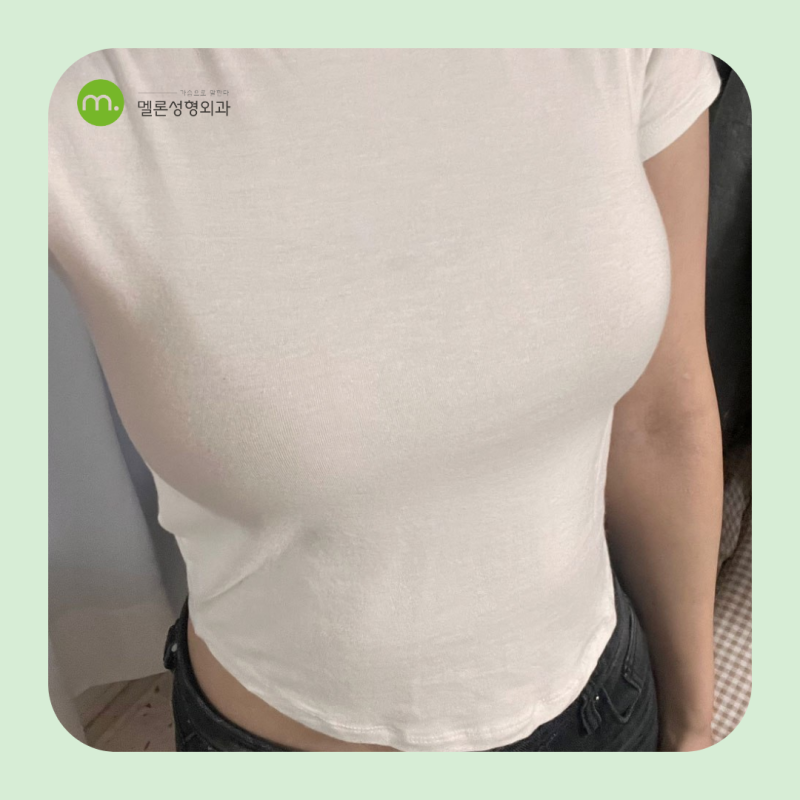
‘When is the best time to undergo reconstruction surgery?’‘Is it possible after radiation therapy or chemotherapy?’
Breast reconstruction surgery can be broadly divided into two types, based on the timing of the surgery. They are called ‘immediate reconstruction’ and ‘delayed reconstruction’.
‘Immediate reconstruction’ is a method where an expander or implant is inserted during the mastectomy. It's called ‘immediate reconstruction’ because it's performed immediately after resection. This surgery can also be performed in two stages.
In the first stage, a tissue expander is inserted to expand the breast tissue, and once the tissue has stretched sufficiently, the expander can be replaced with an implant in the second stage. While it has the advantage of fewer surgeries, it's important to remember that its applicability may vary depending on the extent of cancer progression or the treatment plan.
‘Delayed reconstruction’ is performed after chemotherapy or radiation therapy has concluded, when the treated breast has stabilized to some extent. It's called ‘delayed reconstruction’ because the surgery is delayed until after the completion of treatment. Although there's the inconvenience of seeing the resected breast and living with it daily due to the delayed restoration, it offers the significant advantage of stability, as it's performed after all treatments are completed and the recovery status is confirmed.
As with all breast augmentation surgeries, breast reconstruction requires a particularly meticulous examination of every aspect of the patient's condition. This is because, based on the individual's situation and condition, we can not only design the surgical approach, method, and timing but also anticipate the recovery process after surgery.
Breast Reconstruction | How are implants selected for reconstruction surgery?

The criteria for implant selection in breast reconstruction surgery differ from those for general breast augmentation.
The muscles and skin surrounding the implant are not normal tissues but tissues that have undergone treatment. The shape, texture, height, and surface of the implant will interact with and affect these tissues. Therefore, the tissue condition of the resected area, the extent of pectoralis major preservation, medical history, and treatment history must all be meticulously considered, and an appropriate implant must be selected.
For example, in cases where radiation therapy has been received, the tissue may be thin and damaged, so an implant with less friction against the skin might be more suitable. If a natural feel and line are desired, an ergonomic implant that moves naturally with changes in posture can be considered.
At Melon Plastic Surgery, we carefully examine the patient's medical history, treatment history, resection area, skin condition, and symmetry with the other breast, and then recommend appropriate implants. Implants for reconstruction surgery are not chosen based on size or brand. We must select an implant that can yield satisfactory results, considering each individual's unique condition, body structure, and recovery speed.
Especially in reconstruction cases, where the condition of both breasts often differs, selecting an implant that can balance the size, shape, and line, and allows for detailed design, becomes crucial.
Breast Reconstruction | Melon's unique post-care for recovery: The Melon Care System

Breast reconstruction surgery requires meticulous attention to skin and tissue reactions, the possibility of infection, and scarring. Therefore, medical staff must directly monitor and manage the patient. This is because the necessary care at any given time may differ from typical cases.
At Melon, we manage patients in the following ways:
- Pre-operative Safety Care
Before surgery, through communication with the chief surgeon, we review past surgical and medical history and thoroughly check the current breast condition. This naturally includes examining the feasibility and timing of the surgery.
Pre-operative tests are conducted to re-check the physical condition. This is to design a surgery appropriate for the body's condition, according to the standards of the anesthesia and pain medicine specialists residing at Melon.
- Intensive Care During Surgery
All surgeries at Melon are personally performed by me, the chief surgeon. This includes suturing the surgical site. The entire surgical process is conducted in collaboration with the anesthesia and pain medicine specialists.
We monitor together and adjust anesthesia appropriately to the condition. This also includes pain control, such as intercostal nerve block, to reduce post-operative pain. Regular disinfection and aseptic care prevent infection, and the operating room is kept clean.
- Post-operative Recovery Care
In addition to 1:1 care from the chief surgeon and anesthesia and pain medicine specialists, we meticulously manage the recovery period with prescriptions for capsular contracture prevention medication, Capsulitis treatment, and laser treatments as part of a step-by-step progress care system. All progress is personally reviewed and monitored by me, the chief surgeon.
A Melon Box is also provided, which contains care products to allow for continued management at home. For scars, I personally determine the appropriate timing for treatment and perform laser therapy to control the reaction.
- Recovery Package Provided
While breast reconstruction surgery restores a body part lost due to treatment, it also helps restore the lost part of the mind. That's why the recovery period is crucial, as it's a time to restore both body and mind.
Therefore, in reconstruction surgery, stability is more important than speed, and understanding may come before management. As your breast specialist, I will be with you until you feel that your breast, mind, and daily life have been restored.
Thank you.
Frequently Asked Questions
In what cases is breast reconstruction necessary?
It is mainly performed when the breast has been removed due to breast cancer surgery. It is an important process that restores the lost breast line and helps not only physical restoration but also psychological recovery.
When is the best time to get breast reconstruction?
Breast reconstruction is largely divided into 'immediate reconstruction' and 'delayed reconstruction'. Immediate reconstruction is performed simultaneously with mastectomy, while delayed reconstruction is performed when the breast has stabilized after chemotherapy or radiation therapy. The appropriate timing is determined according to the patient's condition and treatment plan.
How are implants selected for breast reconstruction?
The selection of implants for breast reconstruction differs from general breast augmentation. The condition of the resected tissue, the extent of pectoralis major preservation, medical history, and treatment history are carefully considered to select an implant with an appropriate shape, texture, height, and surface. Especially in cases where radiation therapy has been received, an implant with less skin friction may be suitable.
How is post-breast reconstruction care managed?
At Melon Plastic Surgery, care is provided through a system of pre-operative safety care, intra-operative intensive care, and post-operative recovery care. Systematic recovery is supported through 1:1 care by the surgeon and anesthesiology medical staff, prescription of capsular contracture prevention medication, laser treatment, and the provision of a Melon Box for home care.
Is reconstruction possible after radiation therapy or chemotherapy?
Yes, it is possible. After chemotherapy or radiation therapy, 'delayed reconstruction' can be performed when the treated breast has stabilized to some extent. The advantage is that it is stable because it is performed after confirming the recovery status after all treatments have been completed.
Is breast reconstruction different from cosmetic breast augmentation?
Yes, the approach is different. Breast reconstruction, like rebuilding a collapsed house, requires careful consideration of all aspects, including medical condition and situation, timing of surgery, and recovery period. Unlike cosmetic breast augmentation, it considers both the possibility of restoration and aesthetic completeness based on past medical history and treatment history.