2026-07-21
Breast Augmentation Post-Operative Care & Essential Precautions
Proper post-operative care is crucial for successful breast augmentation. Learn essential tips for recovery, including immediate care, lifestyle habits, long-term health, and problem-solving.
Breast Augmentation Post-Operative Care & Essential Precautions
Breast augmentation is not merely about the surgery itself; post-operative care significantly impacts the outcome. Without proper care during recovery, side effects such as inflammation, implant displacement, or capsular contracture can occur. To achieve healthy and satisfying results, we have compiled essential post-operative care methods and precautions you must know after breast augmentation.
- Table of Contents - 1. Essential Immediate Post-Operative Care2. Lifestyle Habits to Aid Recovery3. Long-Term Breast Health Management4. Common Problems and Solutions After Breast Augmentation
1. Essential Immediate Post-Operative Care
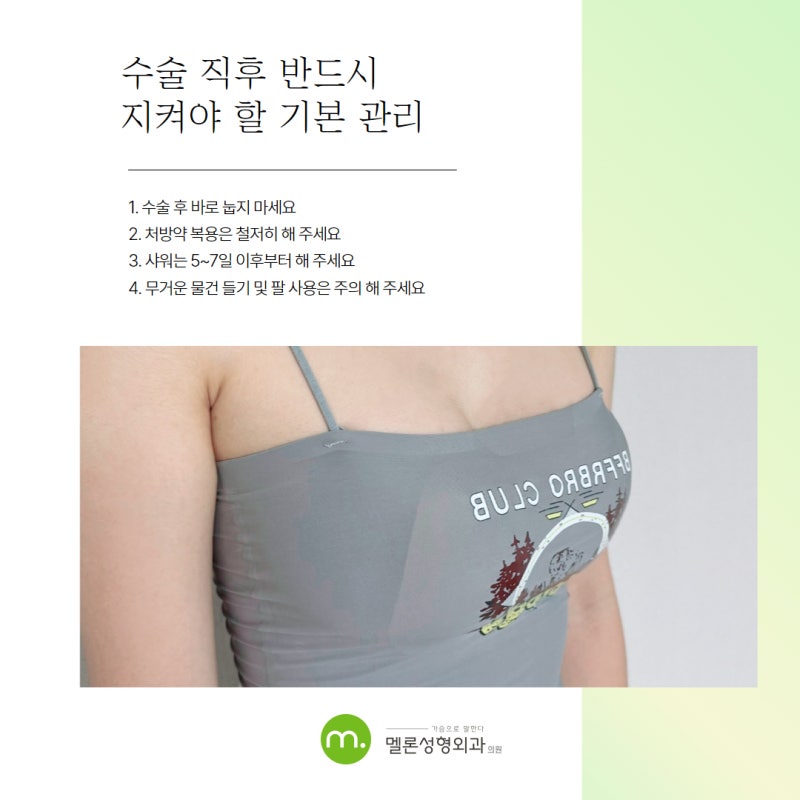
1) Do not lie flat immediately after surgery
Immediately after surgery, it is crucial to avoid excessive pressure on the breasts. It is best to sleep with your upper body elevated at about a 45-degree angle, and you should avoid lying on your side or stomach.
2) Strictly adhere to prescribed medication
To prevent infection and reduce pain after surgery, you must take the prescribed antibiotics and painkillers at the correct times. Arbitrarily stopping medication increases the risk of inflammation.
3) When can I shower?
In most cases, light showering is possible 5-7 days after surgery, but you must be careful not to let water directly touch the surgical site. If stitches remain, it is best to consult your medical team before deciding whether to shower.
4) Be careful when lifting heavy objects and using your arms
For approximately 4 weeks after surgery, it is important not to overuse your arms. In particular, avoid lifting heavy objects or raising your arms above your head.
It is best to minimize movements that put pressure on the chest, such as lifting heavy objects, and also be careful with movements that involve large arm motions.
2. Lifestyle Habits to Aid Recovery
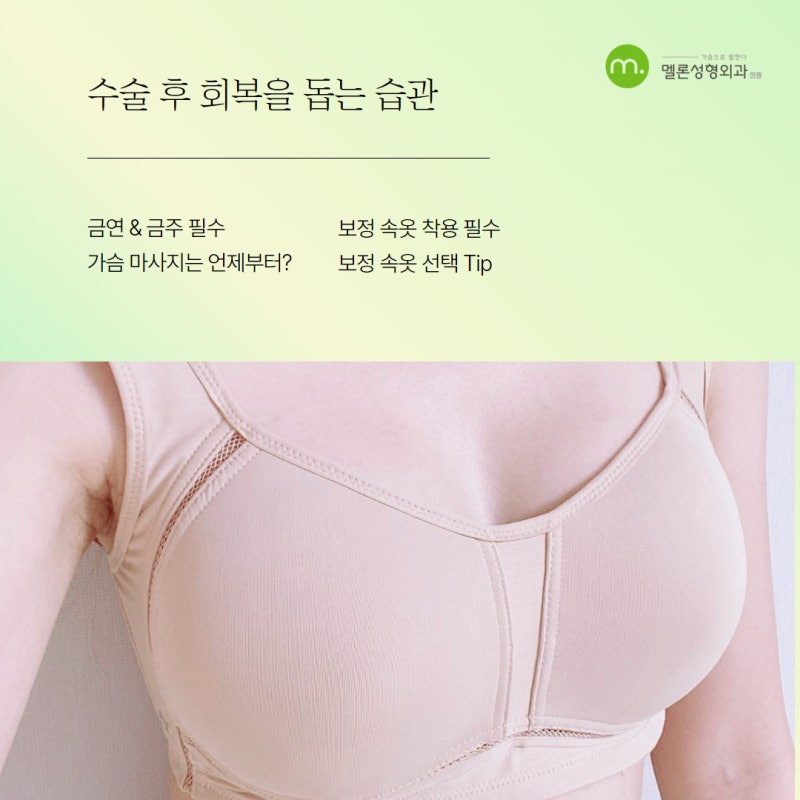
1) No smoking & no alcohol is essential
Smoking and alcohol consumption can impede blood circulation and delay recovery. Smoking, in particular, is known as one of the causes of capsular contracture, so you must refrain from smoking for at least 4 weeks. Alcohol can also slow down recovery and increase the risk of inflammation, so it is best to avoid it.
2) When can I start breast massage?
Breast massage helps the implants settle softly. However, it can cause inflammation immediately after surgery, so it is best to start at an appropriate time after consulting your medical team. Generally, it is safe to start lightly after 4-6 weeks.
We do not recommend breast massage as it may alter the position of the settled implants, and the blood vessels sutured during surgery may be affected by the pressure of the massage.
3) Wearing a functional bra (compression garment, sports bra) is essential
It is important to wear a compression garment during the period until the implants settle after surgery. The compression garment worn immediately after surgery helps to define the inframammary fold of the newly augmented breasts, and the sports bra worn subsequently helps to stabilize their shape.
This minimizes breast movement, aids recovery, and helps maintain the implants' stable position.
4) Choosing a functional bra, don't worry
After surgery, it is important to wear a compression garment and a sports bra to provide stable support for your breasts. The compression garment helps the implants settle, and the sports bra offers comfortable wear in daily life. The timing of wear may vary depending on individual recovery speed, and it is best to wear them at an appropriate time while monitoring the post-operative progress.
Choose a product that can adequately support your breasts.
Avoid overly tight underwear, as it can impede blood circulation.
Maintain wear for the period recommended by your medical team.
3. Long-Term Breast Health Management
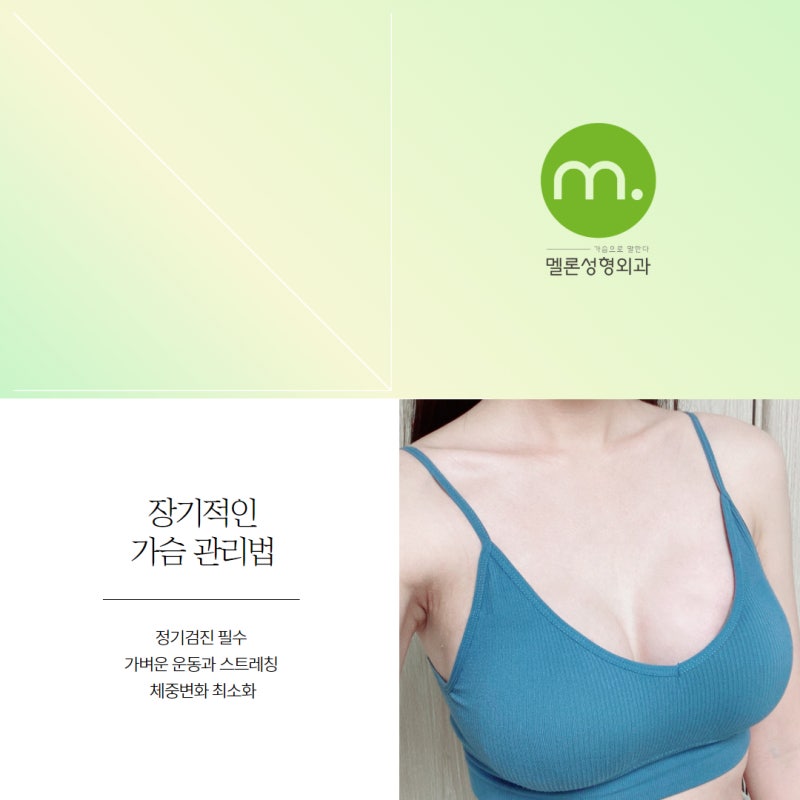
1) Regular check-ups are essential
It is important to regularly check the condition of your breast implants after augmentation. Generally, check-ups are recommended at 3 months, 6 months, and 1 year after surgery, followed by annual check-ups. Ultrasound examinations can be used to check the implant status and detect any abnormalities.
2) Maintain health with breast exercises and stretching
During the recovery period after surgery, appropriate exercise can help reduce swelling. It is better to start with light walks or simple stretches that can gently relax stiff chest muscles, rather than strenuous exercises that heavily use the chest muscles.
3) Minimize weight changes
Rapid changes in weight can also alter breast size and shape. Weight gain can cause changes in breast shape, while rapid weight loss can reduce skin elasticity, leading to sagging breasts. It is important to maintain a healthy weight through proper diet management and exercise.
4. Common Problems and Solutions After Breast Augmentation
1) Preventing capsular contracture
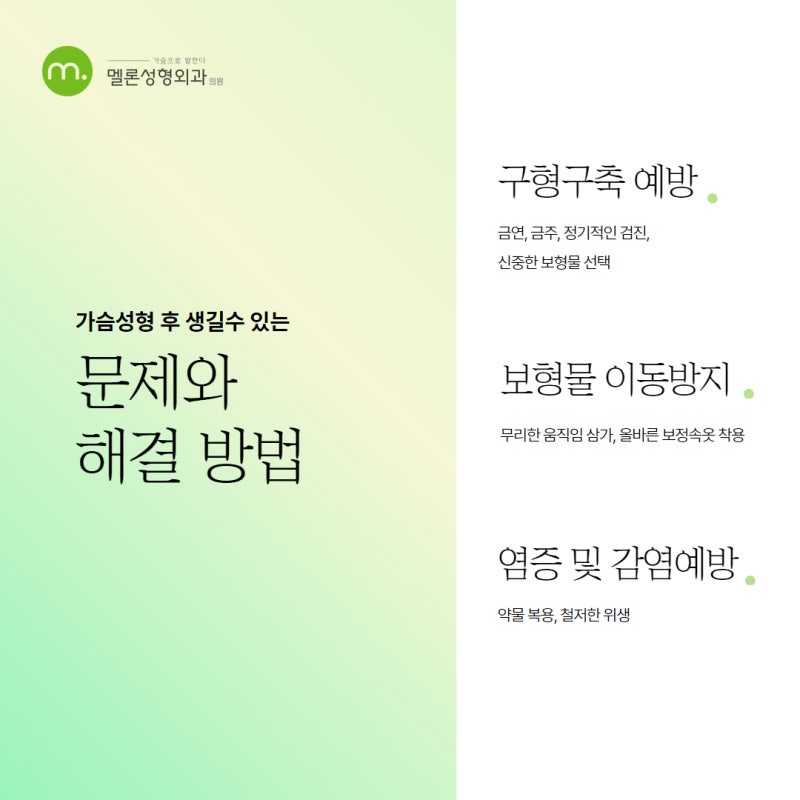
Capsular contracture refers to the phenomenon where the tissue around the implant hardens, making the breast feel firm. To prevent this, it is advisable to meticulously follow post-operative precautions such as quitting smoking, taking prescribed medication, and undergoing regular check-ups. Choosing implants known to have a lower risk of contracture can also be helpful.
2) Preventing implant displacement
To ensure implants do not shift from their correct position, it is important to avoid strenuous movements for a certain period after surgery and to wear functional underwear correctly.
3) Preventing inflammation and infection
To prevent infection after surgery, it is essential to take prescribed antibiotics accurately and maintain strict hygiene. If inflammation is suspected, you should consult your medical team immediately.
Healthy Post-Operative Care is Paramount After Breast Augmentation
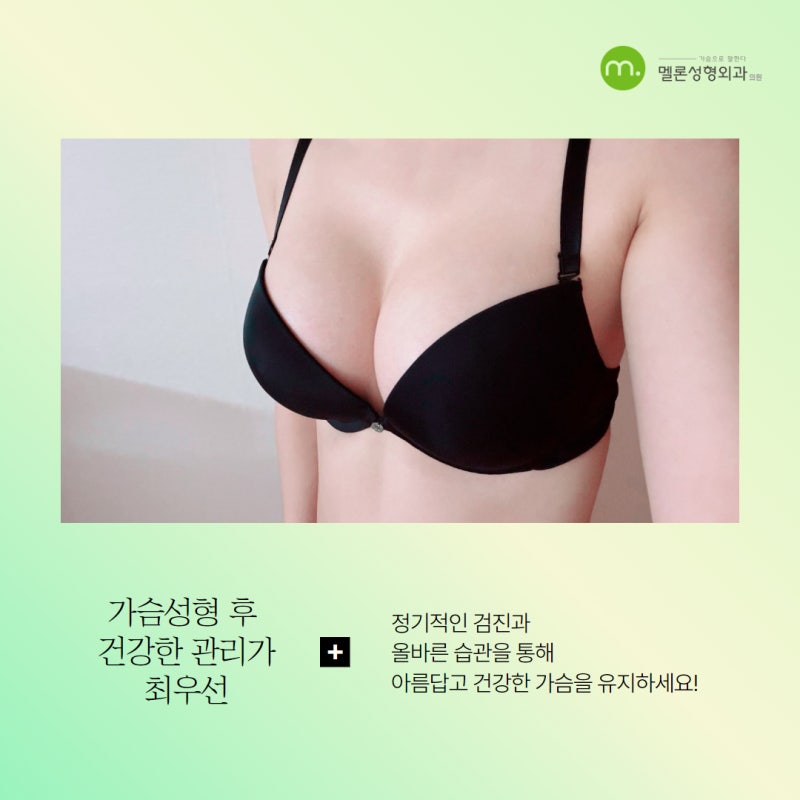
Breast augmentation should be a careful choice that considers health, not just aesthetic changes. If proper post-operative care is not followed, side effects can occur, and the results can be significantly affected.
To prevent these problems, it is most important to strictly follow your medical team's instructions and maintain healthy lifestyle habits after surgery. Maintain beautiful and healthy breasts through regular check-ups and proper habits!
Frequently Asked Questions
When can I shower after breast augmentation?
Light showering is usually possible 5-7 days after surgery. However, care should be taken to prevent water from directly touching the surgical site, and if stitches remain, it is best to decide whether to shower after consulting with medical staff.
When can I smoke and drink alcohol after breast augmentation?
You should refrain from smoking for at least 4 weeks, and it is also advisable to avoid alcohol. Smoking and drinking hinder blood circulation and delay recovery, and smoking, in particular, can cause capsular contracture, so caution is needed.
When should I start breast massage after breast augmentation?
It is best to start breast massage at an appropriate time after consulting with your medical team. Generally, it is safe to start lightly after 4-6 weeks, and it is not recommended immediately after surgery as it can cause inflammation.
Is it essential to wear compression garments after breast augmentation?
Yes, wearing compression garments is essential. It is important to wear compression garments and a sports bra after surgery to help the implants settle stably, minimize breast movement, and aid recovery.
How often should I have regular check-ups after breast augmentation?
Generally, check-ups are recommended 3 months, 6 months, and 1 year after surgery, and annually thereafter. It is important to check the condition of the implants and for any abnormalities through ultrasound examinations.
How can I prevent capsular contracture after breast augmentation?
To prevent capsular contracture, it is advisable to carefully follow post-operative precautions such as quitting smoking, taking prescribed medication, and having regular check-ups. Choosing implants with a lower risk of contracture can also be helpful.