2026-07-21
Breast Augmentation: Post-Surgery Sleeping Positions? Face Up vs. Face Down
Discover the crucial role of sleeping positions after breast augmentation. Learn why sleeping face up is recommended for recovery and when it's safe to sleep on your side or stomach.
Breast Augmentation: Post-Surgery Sleeping Positions? Face Up vs. Face Down
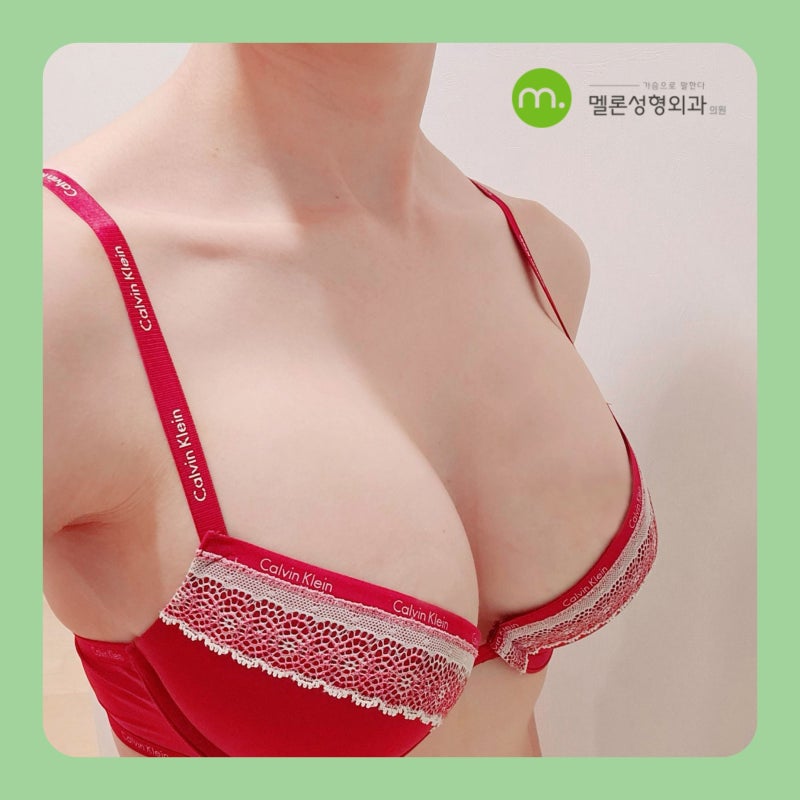
One of the many changes you'll encounter after breast augmentation is your ‘sleeping position’.
Sleep is a crucial time that affects your recovery, so it's important to sleep well in the correct posture. Many people probably sleep on their stomach or side. However, sleeping in these positions after breast augmentation can put pressure on the operated breasts, significantly impacting their shape and recovery. While some pain and discomfort are expected for a while after surgery, making an effort to maintain the correct sleeping position is vital for recovery.
This is also why I carefully explain when I receive questions like, ‘Doctor, how should I sleep safely after breast surgery?’
Why is sleeping position important?
After breast augmentation, you must give your operated breasts time to recover. The incision sites need to heal well, and the inserted implants and breast tissue also need to stabilize.
If you sleep in an incorrect position for an extended period immediately after surgery, unconscious pressure can cause the implant to shift or the incision to open. In severe cases, it can lead to pain or inflammation, and sometimes even affect the surgical outcome.
Especially since sleep involves maintaining the same posture for several hours each day, it requires more careful management than usual. In the early stages of recovery, it's better to adopt a sleeping position focused on stability and recovery rather than your usual comfortable posture.
Immediately after surgery, ‘lying on your back facing up’ is the basic position.
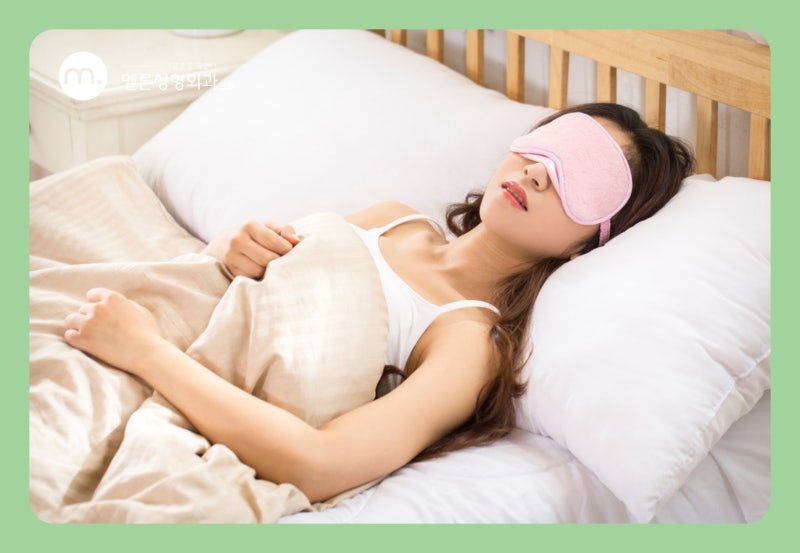
The recommended position is lying on your back, facing the ceiling.
It's best to let your arms rest naturally by your sides. This position avoids direct pressure on the breasts, distributing the weight and aiding stable recovery. Of course, if you're not used to this position, it might feel uncomfortable at first.
If you want to prepare thoroughly for surgery, it's a good idea to start practicing sleeping in the correct posture before the operation. Those who have accustomed their bodies to the correct sleeping position can adapt more easily during the actual recovery period. After surgery, a mattress with moderate firmness is better than one that is too soft, and using an inclined pillow, such as a wedge cushion that firmly supports the upper body, can help with posture and effectively reduce swelling.
When can I start sleeping on my side?
It's best to avoid sleeping on your side immediately after surgery.
Sleeping on your side is possible starting two months after surgery. When you lie on your side, your body weight shifts to one breast, which can alter the position of implants that haven't fully settled, and there's also a risk of the incision site stretching and the scar becoming larger. Once a certain degree of recovery has occurred, usually about two months after surgery, you can start sleeping on your side.
Even then, rather than just throwing yourself onto the bed to lie on your side, it helps to use a body pillow or cushion to support your body and prevent it from tilting. Since your arm often unconsciously presses against your chest, sleeping with small pillows tucked under both sides of your waist can help maintain a much more stable posture. It's also necessary to adjust the timing according to your recovery speed.
When is it okay to sleep on my stomach?
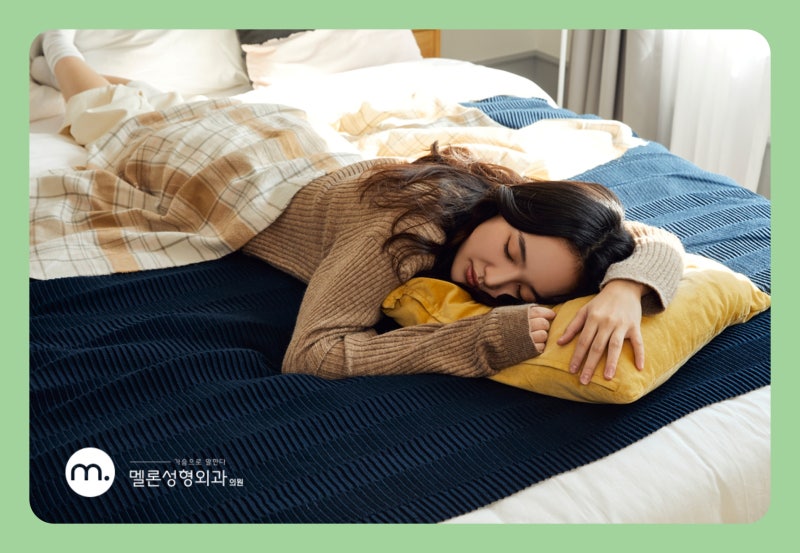
Sleeping on your stomach is strictly prohibited for a while after surgery.
Please consider it possible only after three months. When you sleep on your stomach, your entire chest is pressed down, putting significant pressure on the implants, which can lead to deformation or increased pain. This is not merely a matter of discomfort but a factor that can greatly affect the surgical outcome, so those who have a habit of sleeping on their stomach need to be especially careful.
After the period when the breasts are deemed to have settled, generally after about three months and consultation with the medical staff, it may be allowed. However, even then, it's safer to gradually adapt rather than immediately sleeping on your stomach for long periods. If it's difficult to correct your sleeping position, using a wedge cushion or body cushion to gently secure your body can help prevent tossing and turning during sleep.
Summary of tips for correcting sleeping posture
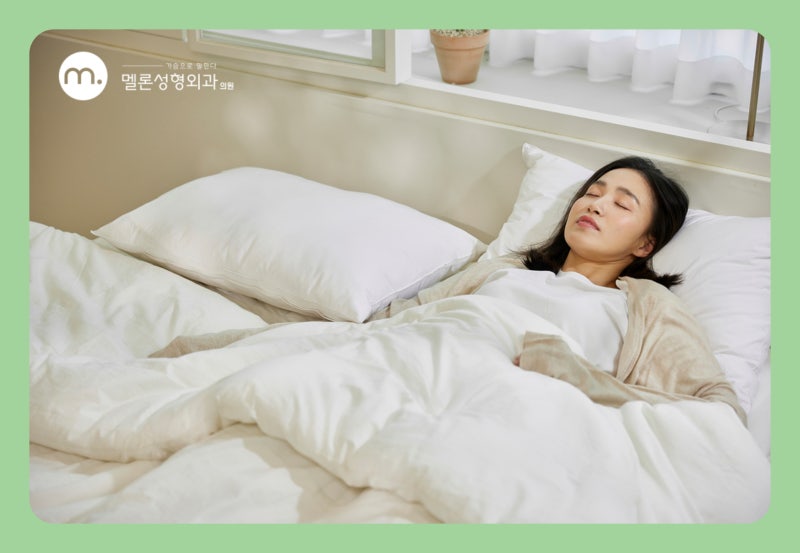
Maintain a face-up position for up to 2 months after surgery.
Arms should be naturally by your sides, not in an 'arms up' position.
A wedge cushion or inclined pillow that stably supports the upper body helps reduce swelling.
When you want to lie on your side, use a body pillow for support.
Sleeping on your stomach should be considered only after at least 3 months and consultation with medical staff.
For those who find posture correction difficult, a pre-sleep practice routine is effective.
Sleeping well is part of recovery.
Breast surgery is not just about what happens in the operating room; it's a surgical journey that includes recovery and care at home.
Among these, sleep occupies the longest recurring time of the day, so it's a part that requires delicate attention. Recovery is ultimately a process of understanding and caring for your body, and sleeping posture is part of that process.
Even if it feels awkward and uncomfortable at first, try to slowly get used to it, thinking that you are giving your breasts time to recover. When good posture and comfortable sleep come together, the surgical results can also lead to a natural and beautiful outcome.
Tonight, create a good posture and a comfortable sleeping environment so your body can rest peacefully.🌙


Frequently Asked Questions
What sleeping position should I maintain after breast augmentation?
Immediately after breast augmentation surgery, sleeping on your back, facing the ceiling, is the standard position. This position avoids direct pressure on the breasts, aiding in implant stabilization and incision site recovery. It's best to keep your arms naturally resting by your sides.
When can I start sleeping on my side after breast augmentation?
Sleeping on your side after breast augmentation is possible approximately 2 months after surgery. Before then, it should be avoided due to the risk of implant displacement or increased scarring. When sleeping on your side, it's advisable to use a body pillow or cushions to support your body.
Is it okay to sleep on my stomach after breast augmentation?
Sleeping on your stomach after breast augmentation should only be attempted cautiously after at least 3 months post-surgery and after consulting with your medical team. Sleeping on your stomach immediately after surgery is strictly prohibited as it can put significant pressure on the implants, causing deformation or pain.
Are there any tips for maintaining the correct sleeping position after surgery?
Yes, there are several tips for maintaining the correct sleeping position. Using a wedge pillow or an inclined pillow to firmly support your upper body can help maintain the position and reduce swelling. It's also beneficial to practice sleeping in the correct position even before the surgery.
Why is the sleeping position important after breast augmentation?
The sleeping position after breast augmentation is crucial for stabilizing the implant position and healing the incision site. Sleeping in an incorrect position for extended periods can lead to implant displacement or widening of scars, and in severe cases, it can cause pain, inflammation, or negatively affect the surgical outcome.