2026-09-09
Struggling to Choose Between Axillary and Inframammary Breast Augmentation? From Incision Choice to Keloid Scar Management
Compare axillary and inframammary breast augmentation incisions. Learn how each affects recovery, precision, and scar visibility, with tips for keloid care and prevention by Melon Plastic Surgery.


Struggling to Choose Between Axillary and Inframammary Breast Augmentation? From Incision Choice to Keloid Scar Management
One of the most common concerns regarding breast augmentation is surgical scarring.
This concern often significantly influences the choice of incision site. Patients who wish to completely avoid visible scarring frequently opt for the transaxillary (armpit) approach.
Anyone planning breast surgery faces the dilemma of choosing between an inframammary fold (IMF) incision for a natural breast contour and an axillary incision to keep scars entirely concealed.
For those prone to keloids, worries about incision placement are even greater due to the risk of scars becoming raised, irregular, and enlarged.
Today, we will examine the relationship between incision sites and scarring in breast augmentation, along with essential tips for managing keloid scars.
I am Dr. Joo-won Kim, Chief Director of Melon Plastic Surgery, dedicated to guiding you toward scar-free breast enhancement.
Breast Augmentation | How Is the Incision Site Chosen?
Simply put, the incision site serves as the entry point for the breast implant.
The two most common approaches used in breast surgery are the axillary (armpit) and the inframammary fold (underbust crease) incisions.
Even with the same surgical technique, varying the incision site changes recovery speed, surgical precision, and scar visibility.
Therefore, while factors such as your natural body frame, skin elasticity, and desired implant size are thoroughly evaluated during consultation, the patient's personal preferences remain the top priority.
Daily lifestyle habits are another critical consideration that must not be overlooked.
Incision choices often reflect lifestyle needs—such as professions that require extensive arm movement (e.g., chefs or athletes) or a preference for sleeveless and revealing clothing.
Breast Augmentation Incisions | Pros and Considerations of Axillary vs. Inframammary Approaches
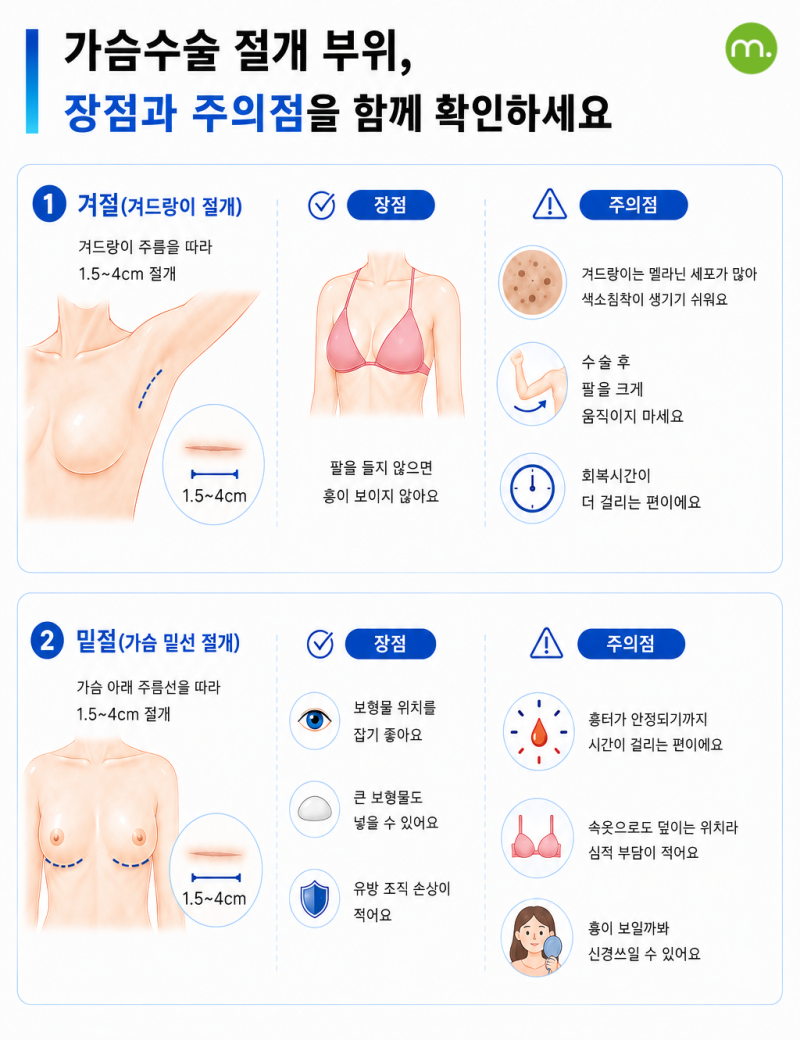
Both axillary and inframammary fold incisions have their own distinct advantages and precautions.
With the axillary incision, a 1.5–4 cm cut is made along the natural skin folds of the armpit to insert the implant.
Because the incision is placed in the axilla, the scar remains virtually invisible unless you lift your arms to show it. This makes it the preferred choice for patients whose primary concern is scar concealment.
However, because the armpit is situated further from the breast pocket, surgical visualization may be somewhat limited, potentially affecting the precision of implant placement.
Furthermore, because the axillary region contains intricate networks of nerves and lymphatic structures, the surgeon's experience and skill are vital considerations.
In contrast, the inframammary incision involves a 1.5–4 cm cut made directly along the lower natural crease beneath the breast.
This approach provides a direct, wide field of view, allowing clear visibility of anatomical structures, highly accurate implant positioning, and a lower risk of tissue trauma.
With an inframammary incision, the scar may be visible in the immediate postoperative period.
However, because the incision sits directly within the natural underbust crease, the overlying breast volume naturally conceals it. Over time, as the scar fades and matures, it often becomes barely noticeable.
Selecting an incision site is a collaborative process of aligning your aesthetic goals with your unique anatomical characteristics.
There is no universally "best" incision for creating a beautiful breast shape. A detailed consultation will help clarify your anatomical conditions and weigh the benefits and drawbacks of each approach for your body.
Breast Augmentation Scars | Understanding Keloid Skin Types
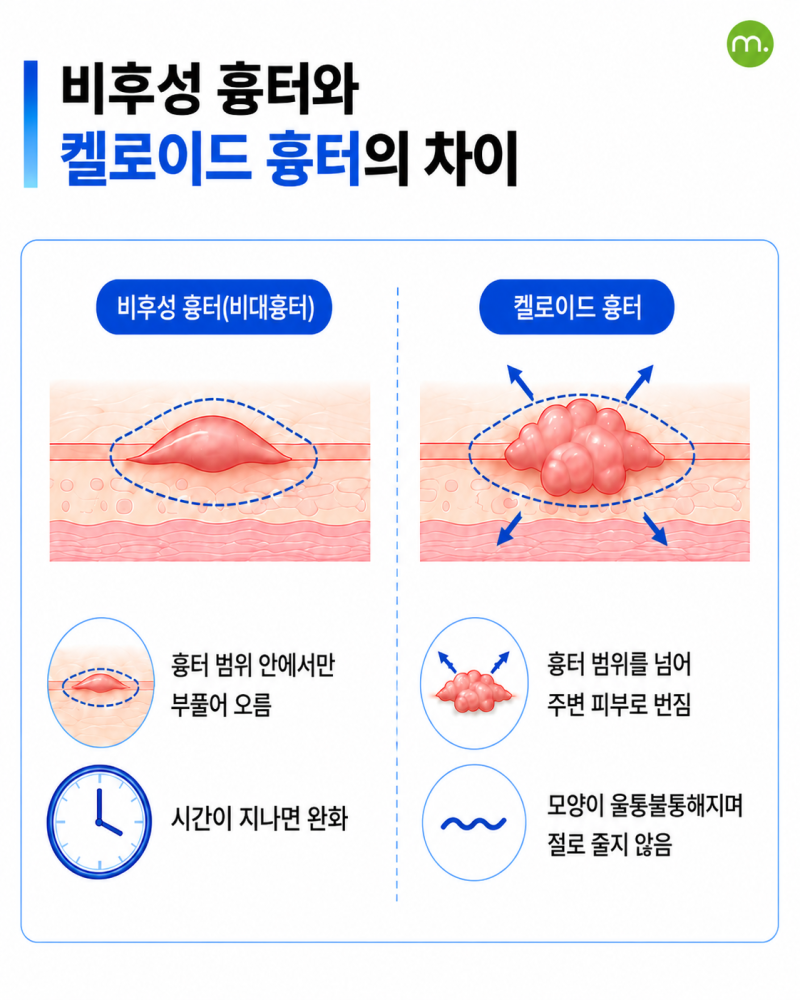
A keloid is a benign skin condition in which fibrous tissue proliferates excessively during wound healing, extending beyond the boundaries of the original injury.
While standard scars naturally soften and flatten over time, keloids do not spontaneously fade. Instead, they characteristically become raised, irregular, thickened, and reddish.
However, not all red, raised scars are keloids; hypertrophic scars are another possibility.
Hypertrophic scars remain confined within the boundaries of the original incision and gradually subside over time.
Many patients share that they never realized how frequently they engage their chest muscles until after breast surgery. From showering and eating to dressing and using the restroom, we constantly rely on arm movements.
Because the arms are connected to the pectoral muscles, arm motion directly engages the chest. The temporary soreness or discomfort experienced after surgery makes this connection much more apparent.
Postoperative care largely dictates how a scar matures. Consistent application of scar ointments, strict sun protection, and maintaining cleanliness are critical steps.
Patients prone to keloids should attend all follow-up visits, as untreated keloid tissue can continue to expand and become increasingly challenging to manage.
Breast Augmentation Scars | How to Prevent Scars After Surgery
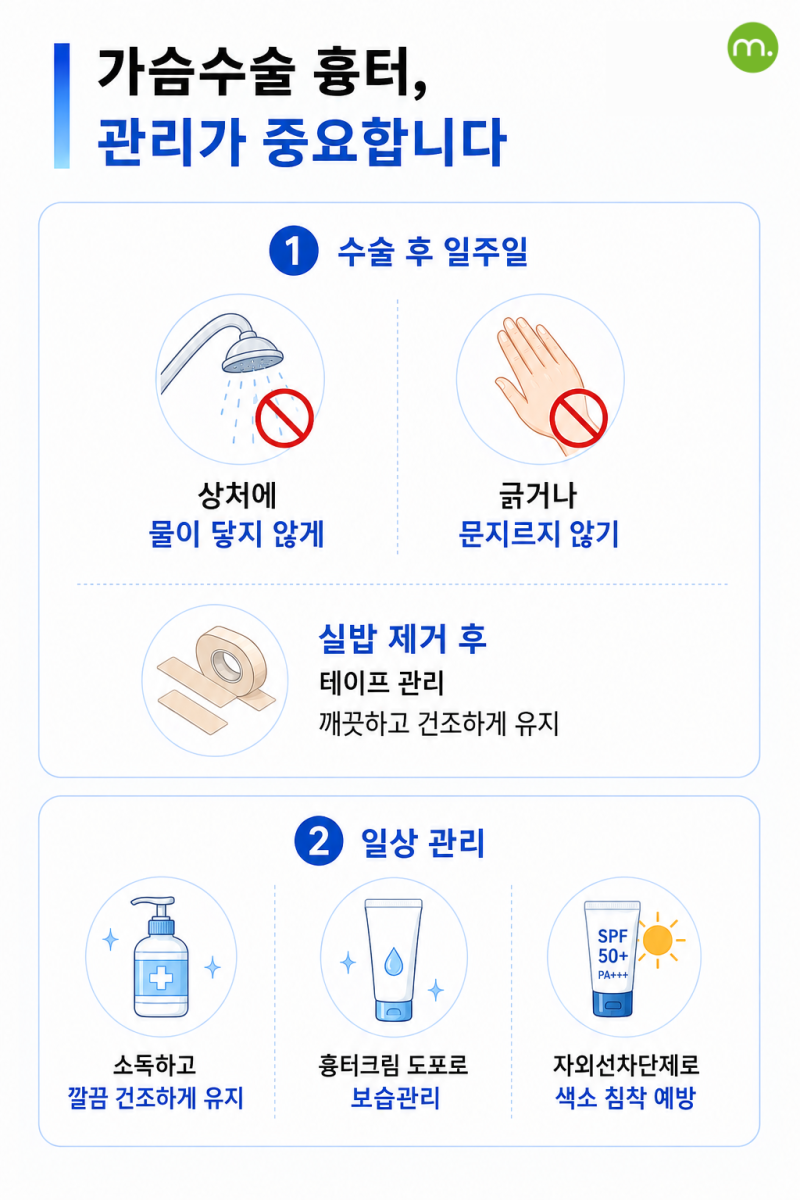
When it comes to minimizing post-surgical scars, dedicated aftercare is indispensable.
With diligent care, many surgical scars fade until they are barely perceptible.
To minimize scarring, carefully follow your medical team’s aftercare instructions. Keep the incision completely dry for the first week post-op, and subsequently keep the area clean, well-ventilated, and free from moisture retention.
Applying prescribed scar ointments consistently and using sunscreen when stepping outdoors will effectively prevent hyperpigmentation.
Breast Augmentation | What to Do If Scars Have Already Formed?

Breast augmentation scars generally fade and mature naturally with time. When properly managed, many diminish to the point of becoming inconspicuous.
If a scar remains red and raised beyond six months, laser treatments can be initiated once the tissue stabilizes.
Vascular lasers to reduce redness or fractional lasers to promote skin remodeling can be customized to the specific scar type. For keloid scars, targeted steroid injections can also be incorporated into the regimen.
Because keloids carry a risk of recurrence, consistent and continuous follow-up is essential.
Scar management represents the final milestone in Melon's breast surgery journey, playing a pivotal role in overall patient satisfaction.
Because scar characteristics and treatment protocols vary based on individual skin profiles, avoid self-treatment and consult with experienced medical professionals. Tailored care designed for your specific body provides the best clinical outcome.
We hope this overview of incision options (axillary vs. inframammary) and keloid scar management has provided helpful clarity.
No concern is too small to discuss. Feel free to share any worries you have regarding scarring.
We are here to support you with tailored breast surgery solutions designed to minimize scars and deliver beautiful results.
Frequently Asked Questions
What are the advantages of an axillary incision in breast augmentation?
The primary advantage is concealed scarring. By placing a 1.5–4 cm incision within the natural armpit creases, the scar remains hidden unless you intentionally raise your arm, making it ideal for patients sensitive to visible scars.
When is the inframammary fold (IMF) incision preferable?
An inframammary incision is ideal when precise implant positioning and direct visualization are prioritized. It offers a clear surgical field, reduces tissue trauma, and is naturally masked over time by the breast volume and natural underbust crease.
How do keloid scars differ from hypertrophic scars?
The primary difference lies in whether the scar tissue extends beyond the original wound boundary. Keloids spread beyond the incision margin into raised, red lesions that do not resolve on their own, whereas hypertrophic scars remain confined within the wound site and soften over time.
What aftercare is required to prevent post-surgical scarring?
Maintaining a clean, dry wound environment, applying scar gels, and practicing strict sun protection are essential. Keep the incision dry for the first week, apply prescribed scar ointments consistently, and protect the skin from UV exposure to prevent hyperpigmentation.
How are persistent red scars treated after breast augmentation?
Depending on the scar type, customized laser therapies or injection treatments may be performed. Scars remaining red and raised after six months can be treated with vascular or fractional lasers, while keloidal scars often benefit from intralesional steroid injections.