2026-07-21
Gangnam Station Breast Reconstruction Revision Surgery, Breast Reconstruction Reoperation, Third Surgery. Why the Concern?
Patients often worry about breast reconstruction revision surgery. This article discusses why revision and even third surgeries are considered, focusing on differences from the initial surgery, tissue changes from chemotherapy, and the importance of recovery.
Gangnam Station Breast Reconstruction Revision Surgery, Breast Reconstruction Reoperation, Third Surgery. Why the Concern?

Hello. I am Dr. Joowon Kim, the chief director of Melon Plastic Surgery, your breast specialist with solutions.
I often hear patients say that they thought they would feel more at ease once they were eligible for breast reconstruction surgery, but as the surgery approaches, new concerns arise.
‘Will I need another surgery even after reconstruction surgery?’
Everyone worries about the period after surgery, and breast reconstruction revision surgery is no different. These concerns revolve around how much of their previous breast can be restored, whether asymmetry due to mastectomy or shape distortion from radiation therapy can be improved, and to what extent restoration is possible with a single surgery.
Yes, there are quite a few cases where surgery is performed again after reconstruction. There are revisions even for reconstruction surgery.
Today, I will discuss breast reconstruction revision surgery and the reasons why a third surgery might be considered.
Breast Reconstruction Revision Surgery | What's different from the first surgery?

Breast reconstruction is a surgery to restore the shape of the breast that has been damaged due to cancer or an accident. People usually consider reconstruction surgery when their breast has been removed or its shape has been altered due to chemotherapy.
Reconstruction cases often differ significantly from typical breast tissue in terms of skin laxity, subcutaneous fat thickness, and the condition of residual tissue. This is because chemotherapy or radiation therapy can alter the elasticity and blood flow response of skin tissue, and the tissue itself can become hardened.
Will discomfort related to the breasts disappear after only one reconstruction surgery?
While some cases achieve beautiful restoration of shape and contour with the first reconstruction surgery, others experience dissatisfaction with the shape or balance. There are also cases where the skin tissue is very firm or there is not enough space in the tissue, requiring reconstruction surgery to be performed in two stages: the initial surgery and a revision surgery.
Therefore, revision breast reconstruction often takes on a more aesthetic character compared to the initial surgery, which is primarily medical. It can be seen as a process of restoring breasts altered during chemotherapy and then further enhancing the restored breasts aesthetically.
Breast Reconstruction Revision Surgery | Why consider a third surgery?
‘I had revision surgery, but I still feel like they're not symmetrical.’‘Am I being too sensitive if I consider a third surgery?’
Breast reconstruction cases that lead to revision and even a third surgery have their own reasons.
Firstly, tissue changes due to chemotherapy can be a reason. Radiation therapy for cancer eliminates cancer cells but also affects surrounding skin tissue and cells.
Skin exposed to radiation can lose elasticity and exhibit fibrosis, becoming hardened. Of course, even if fibrosis occurs, patients can still undergo reconstruction surgery and be satisfied with the results. However, there are exceptions where the shape of the reconstructed breast changes over time as the skin contracts and scar tissue hardens.
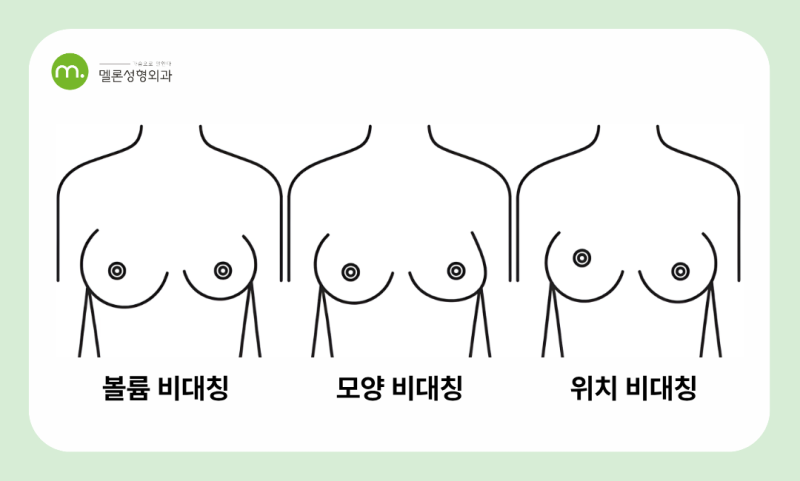
Secondly, asymmetry caused by unilateral breast removal and chemotherapy can be a reason.
This can apply to cases where only one breast undergoes shape changes due to treatment, leading to reconstruction of only that side. After surgery, the shape and load on both breasts can differ. While a certain degree of symmetry may be achieved at the time of reconstruction, differences can emerge over time, leading to consideration of additional surgery.
Usually, when we think of symmetry, we only consider shape. However, the concept of symmetry can also apply to the feel of the breast, skin elasticity, and movement. For example, some patients desire a third surgery because they feel uncomfortable with one breast feeling heavy or experience a sense of foreignness when moving.
The term ‘third surgery’ might sound intimidating. In reality, it is closer to a process of examining the tissue and shape achieved by the first reconstruction and making necessary corrections.
Breast Reconstruction Revision Surgery | What to check before revision and third surgeries?
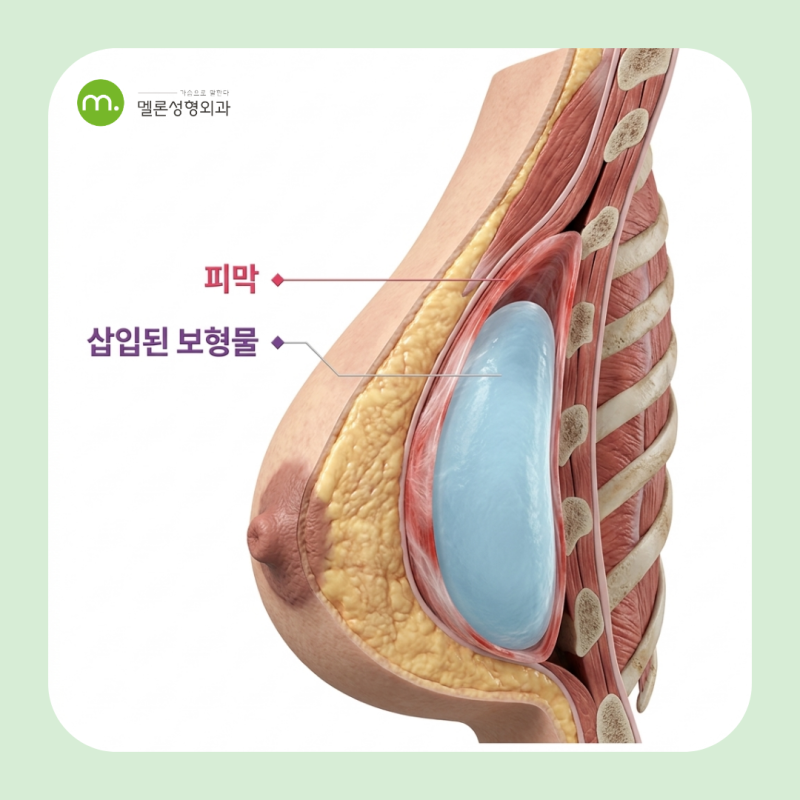
When discussing breast reconstruction revision and third surgeries, it is essential to first assess the current condition of the breast tissue that has undergone reconstruction and how well and in what manner it is settling.
During this process, the condition of the capsule and the inframammary fold must be checked. The capsule refers to the membrane surrounding the implant; if the capsule thickens, the breast can become firm or its shape can change. The inframammary fold refers to the lowest line of the rounded breast contour and is one of the criteria for assessing asymmetry, so it also needs to be checked. Thus, the matters to be examined during the consultation process differ between general revision surgery and breast reconstruction revision surgery.
The same applies to a second reconstruction surgery. We examine the entire history, from the cancer diagnosis or accident and subsequent treatment process, to the first reconstruction surgery and its post-operative course. This is because all factors, including surgical and treatment history, skin thickness, excision range, scar condition, and whether radiation therapy was performed, affect the outcome.
Although it is a post-operative process, the recovery process also varies individually and must be carefully observed. Post-operative reactions such as swelling and tightness can differ depending on how much the tissue has stabilized after the first reconstruction surgery and whether it is settling smoothly.
If you are considering breast reconstruction revision surgery, it is more helpful to first examine what specific aspects of your breast are causing discomfort, rather than focusing solely on the visible shape.
Breast Reconstruction Revision Surgery | Don't forget that recovery management is a crucial process for all surgeries.

The purpose and process of recovery management for breast reconstruction differ from those for recovery after chemotherapy. This is because while post-chemotherapy recovery management focuses on treatment, reconstruction recovery management places more importance on shape stability. Recovery management for breast reconstruction revision surgery is no different. Care must be taken in daily life to ensure that the breast implant settles and stabilizes.
Daily management includes maintaining a posture that prevents the operated breast from being pressed or shifted, refraining from exercises that use breast muscles until instructed by the medical institution, wearing medical compression garments provided by the medical institution, being mindful of weight changes, and avoiding strenuous activities such as massage or saunas.
Breast reconstruction is a process to regain balance in all aspects of breast condition and life. While it is certainly a reconstructive surgery, please remember that it does not restore the previous state.
If you are experiencing discomfort due to changes after your first breast reconstruction surgery, please discuss it with your doctor. Melon Plastic Surgery will accompany you on your breast journey with more detailed solutions.
Thank you.