2026-09-15
Reconstruction After Total Mastectomy | A Case of Delayed Reconstruction with Motiva Implants
Dr. Juwon Kim discusses delayed breast reconstruction after total mastectomy using Motiva implants, covering tissue conditions, single-stage vs. expander options, and recovery.
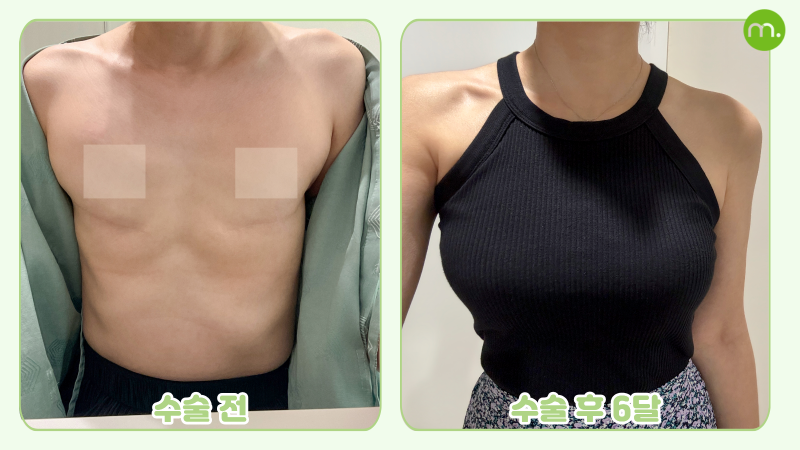
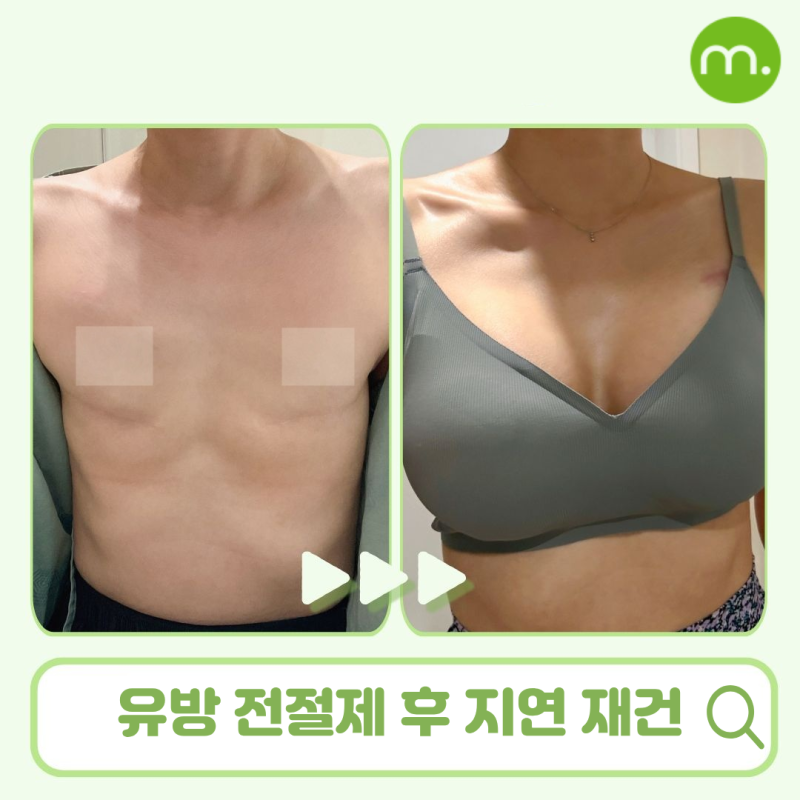
It's been about two years since my total mastectomy. Is reconstruction still possible now?
Of course. It is completely possible through 'delayed reconstruction.'
Breast reconstruction broadly falls into two categories: 'immediate reconstruction,' which is performed simultaneously with the mastectomy, and 'delayed reconstruction,' which is carried out after a period of recovery following the mastectomy.
Both surgical approaches have clear pros and cons. In the case of delayed reconstruction, while it requires undergoing another breast surgery, it offers a significant advantage: greater flexibility and freedom in choosing the shape and size.
Today, let's explore the process of delayed reconstruction through a clinical case of a patient who underwent delayed reconstruction following a total mastectomy.
Dedicated to providing personalized solutions for diverse breast reconstruction cases, I am Dr. Juwon Kim of Melon Plastic Surgery.
This is a case of a patient who underwent bilateral total mastectomies—including the nipples and areolas—due to bilateral breast cancer in 2023, and decided on delayed reconstruction about two and a half years later. The reconstruction was performed using Motiva breast implants.
At the time of the mastectomy, the patient focused entirely on cancer treatment rather than planning reconstruction. She considered reconstruction after completing both radiation and chemotherapy.
Typically, after radiation therapy, breast tissues become fibrotic and hardened. Therefore, when considering reconstruction later on, a tissue expander is often inserted to stretch the stiffened tissue. This is done because the tissue needs a certain degree of elasticity to create adequate space for an implant.
When a tissue expander must be used, the reconstruction proceeds only after stretching the tissue with the expander, making it a two-stage surgical process that takes significantly longer. The patient in this case also felt burdened by this approach; she strongly preferred to have the reconstruction completed in a single surgical procedure.
Breast reconstruction involves many critical factors and considerations, which often makes it difficult to proceed strictly in the preferred manner.
This is also true for delayed reconstruction cases after a total mastectomy.
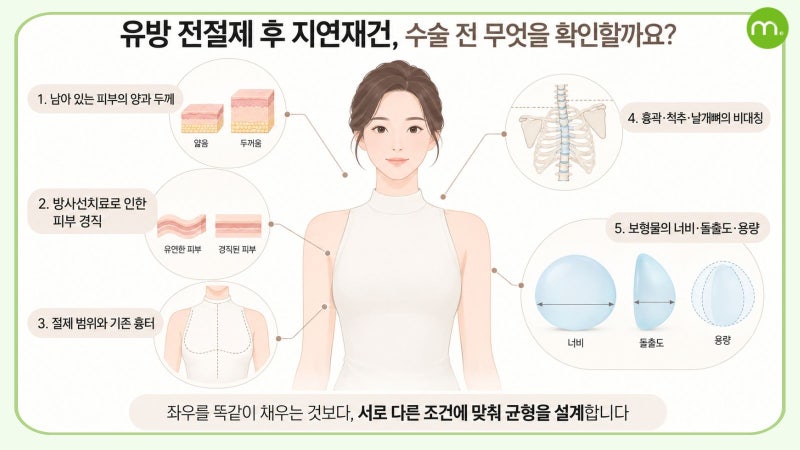
Breast reconstruction requires a different diagnostic focus than cosmetic breast augmentation. In addition to assessing the current breast state and physical conditions, one must meticulously evaluate past treatment history and biological responses to ensure both aesthetic results and overall health.
The patient had a slender physique. The conditions of the right and left breasts were markedly different because the right breast had undergone radiation therapy. Fibrosis had caused the skin to become tight, hardened, and less elastic. The remaining skin over the breast was also thin with minimal laxity.
In such cases, one might ask, "Should a tissue expander be used?" Choosing whether to use an expander requires delicate surgical judgment. If thin remaining skin like this patient's is forced to stretch excessively, rippling—where the implant's outline or folds show through the skin—can occur even if the skin does expand.
Even when proceeding with reconstruction without an expander, implant selection must be made with utmost precision. Beyond considering the implant's softness, width, projection, and mobility, the surgeon must carefully evaluate the maximum volume the skin envelope can safely accommodate.
Weeks 1–2 Post-Op | From Surgery to Everyday Life
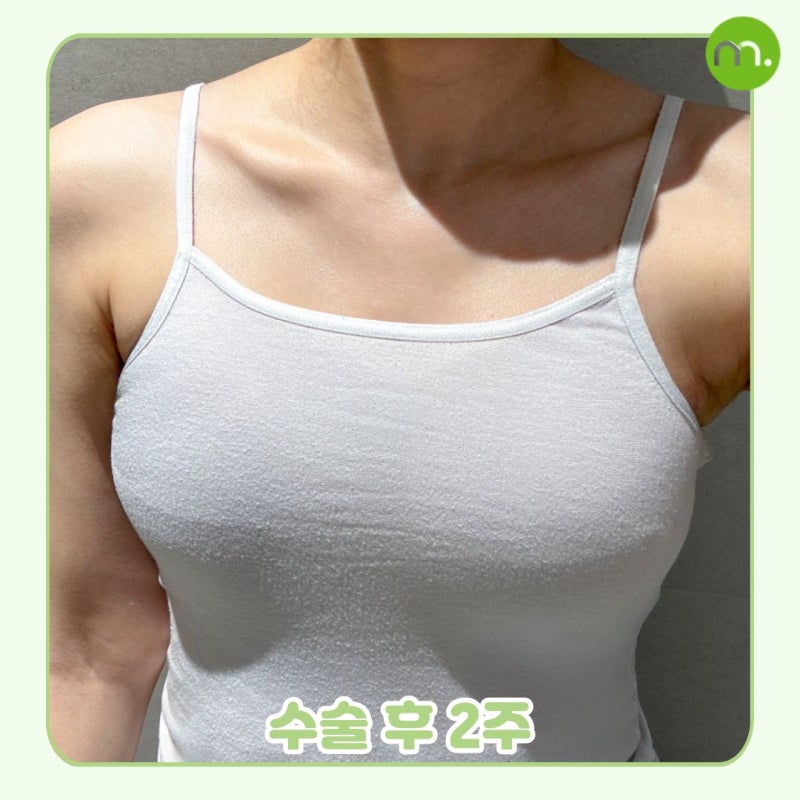
Motiva implants were utilized for this patient's delayed reconstruction.
A 320cc implant was placed on the left side, and a 300cc implant on the right side. This selection took into account her anatomical characteristics—such as a slightly prominent left scapula—and the differing skin elasticity between both breasts.
The advanced engineering of modern implants has reached an impressive standard, significantly minimizing drawbacks while enhancing performance advantages. Motiva implants offer finely segmented sizing options and maintain a firm yet naturally soft mobility. They provide key benefits in balancing asymmetry and lowering the risk of capsular contracture in complex cases, which was ideal for this patient.
Following an overnight hospital stay (2 days, 1 night), the patient was able to wash her hair unassisted starting on the third day, marking a relatively swift return to daily life. However, because the skin on the right breast had hardened from radiation therapy, there was a difference in breast height between the two sides even though volume restoration had been accomplished.
After a mastectomy, breast tissue and implant stabilization rates, along with skin stretching speeds, vary by individual. Recovery is also a gradual process. In the initial post-operative phase, priority is given to monitoring blood supply, tissue conditions, and the general recovery state rather than fine-tuning symmetry.
Breast Reconstruction | Softness and Scars Mature Gradually
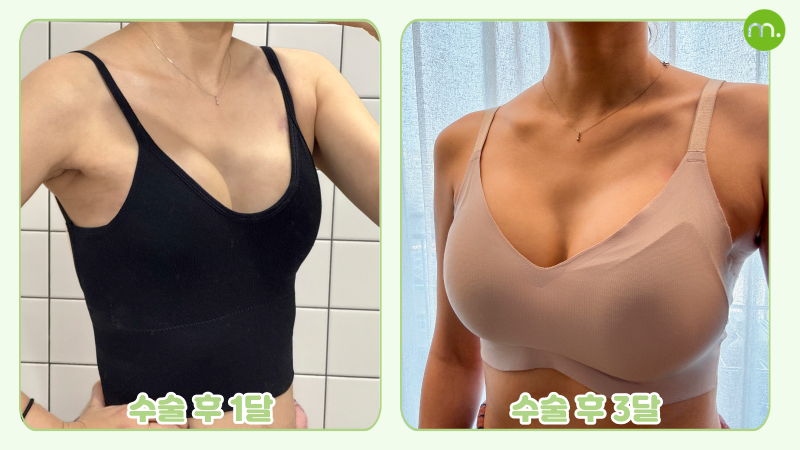
Reconstructed breasts can look pleasing partly because they often feel firmer and more supple compared to natural breasts. This applies to breast reconstruction as well. If substantial skin and fat layers remain after a mastectomy, a soft, resilient feel similar to standard augmentation can be achieved.
Conversely, if there is minimal residual tissue and the skin is thin, rippling—feeling or seeing the edges and wrinkles of the implant—can occur. It is important to consider this factor before surgery.
It is also essential to understand capsular contracture. Breast reconstruction cases carry a relatively higher risk of capsular contracture compared to standard cosmetic surgeries, largely due to treatments like radiation. Radiation therapy is powerful enough to eradicate cancer cells, but it also leaves an impact on surrounding healthy tissues, causing fibrosis and reducing local blood supply. This is one of the key factors that can cause the surrounding capsule to thicken and harden. If capsular contracture develops after breast reconstruction, the breast may become firm, compromising the tactile feel.
Sensation may also differ slightly from standard breast surgery. Since delicate sensory nerves are unavoidably transected during a mastectomy, the breast area may feel numb or detached initially. This reduction in sensation can persist longer than in standard aesthetic procedures.
The resulting scar is comparable to that of a revision surgery. Reconstruction with implants utilizes the pre-existing incision scar from the mastectomy. Because no new incision is made, no additional breast scars are created. This remains true even if a two-stage surgery is performed using a tissue expander followed by implant exchange, as both procedures access the area through the exact same scar line.
Cases using autologous tissue for reconstruction differ. Because tissue must be harvested from another part of the body and transferred to the breast, new scars are inevitable. If tissue is taken from the abdomen, a scar will remain across the lower abdomen—similar to a Cesarean scar, but longer. If harvested from the back, a scar will run along the bra line on the back.
During the initial months following surgery, scars may look reddish and slightly raised. However, this is part of the normal healing process; over time, they will gradually flatten and fade to natural skin tones. However, if there is a history of radiation therapy, the healing timeline may differ, and tissue around the scar might become firmer or undergo hyperpigmentation.
Breast Reconstruction | Complete Only When Daily Life Is Restored
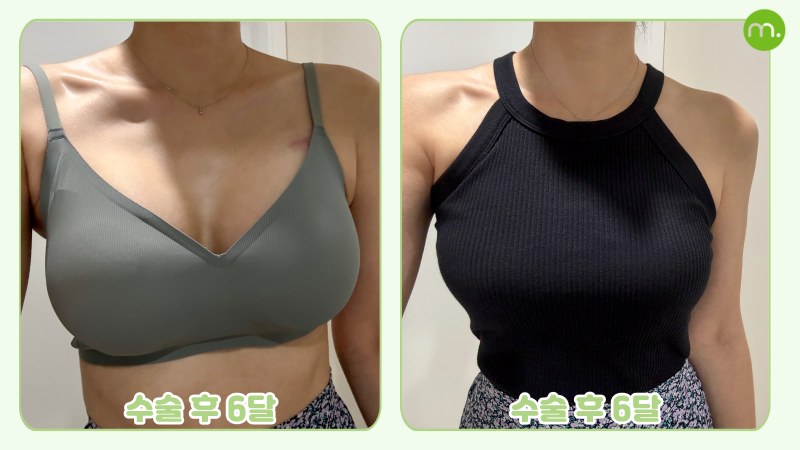
Here is the patient's appearance at 6 months post-op. Both the contour and softness have stabilized notably compared to the early stages, and the swelling has subsided. Even when wearing a turtleneck, a naturally rounded silhouette is visible, marking the return of her pre-cancer contour in everyday wear. The right breast, which had received radiation therapy, was also gradually settling into place and achieving stabilization.
Although nipple reconstruction had not yet been performed, the restoration of breast volume alone appeared to bring significant comfort and confidence. I recall hearing that she had happily returned to swimming.
While the clinical goal of breast reconstruction is to rebuild the lost breast and restore femininity, reclaiming normalcy in daily living is equally vital. Psychological hesitation does not occur only when looking in the mirror. Getting dressed, exercising, grocery shopping, or meeting friends—unexpected moments can trigger feelings of vulnerability. In clinical consultations, many patients share that the motivation to pursue reconstruction came from simple moments in everyday life.
Breast Reconstruction | Mastectomy and Reconstruction Belong to Different Surgical Domains

Mastectomy and breast reconstruction are fundamentally different surgical disciplines. A mastectomy is an oncologic surgical procedure aimed at excising cancer, whereas breast reconstruction is a plastic surgical procedure aimed at restoring volume and aesthetic balance to the reconstructed breast.
If cancer surgery is an aggressive effort to eradicate disease, breast reconstruction is the healing art of restoring the space left behind.
It's been about two years since my total mastectomy. Is reconstruction still possible now?
Please do not feel it is too late simply because time has passed since your mastectomy.
It is never too late to reconstruct both your breast and your daily confidence.
I encourage you to explore the possibilities available to you.
If you would like a detailed solution tailored to your reconstruction case, please feel free to reach out.
#DrJuwonKim #BreastReconstruction #MelonPlasticSurgery #DrKimJuwon
#Melon #MelonPlasticSurgery #MelonSurgery #MelonClinic #MelonCare #MelonConsultation #MelonReview #MelonBreast #MelonReconstruction #DrJuwonKim










Frequently Asked Questions
Can I still undergo breast reconstruction years after a total mastectomy?
Yes, it is entirely feasible through delayed reconstruction. Performed after completing cancer therapies such as chemotherapy and radiation, delayed reconstruction allows for greater freedom in tailoring the implant shape and size to your specific physique and tissue condition.
Does implant-based breast reconstruction create new scars?
No, it does not require additional incision scars. Implant-based reconstruction utilizes the existing incision scar from the oncologic mastectomy, ensuring no new scars are introduced to the breast area.
Can a breast that received radiation therapy still undergo implant reconstruction?
Yes, implant reconstruction is possible following thorough clinical evaluation. However, because irradiated skin undergoes fibrosis and reduced vascularity—which raises the risk of capsular contracture and asymmetry—implant selection must carefully consider skin thickness and elasticity.
When will sensation return to the breast after reconstruction?
Sensory recovery generally takes longer than in standard cosmetic breast procedures. Because fine sensory nerves are severed during the mastectomy, the breast may initially feel numb or foreign; sensation gradually stabilizes over time.
If I have thin skin, can reconstruction be done in a single stage without a tissue expander?
Yes, depending on anatomical conditions, single-stage direct-to-implant reconstruction is possible. However, to prevent overstretching delicate skin and minimize the risk of implant visibility or rippling, an implant volume that the skin envelope can safely tolerate must be selected meticulously.